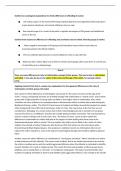
Outline two sociological explanations for ethnic differences in offending (4 marks)
● Left realists argue it is the result of EM being relatively deprived and marginalised which leads them
to join deviant subcultures and commit utilitarian crime to cope.
● Neo marxists argue it is a result of the police’s negative stereotypes of EM groups and institutional
racism in the CJS.
Outline three reasons for differences in offending and conviction rates for ethnic minority groups (6 marks)
● Polices negative stereotypes of EM groups and institutional racism which means they are
overrepresented in the official statistics.
● EMs are relatively deprived and so commit utilitarian crime to cope with this.
● Black boys lack a Father figure and so find it in deviant street gangs which cause them to commit acts
of criminality such as dealing drugs.
Item A
There are many differences in rates of victimisation amongst ethnic groups. This may be due to stereotypes
and labels. It may also be due to the nature of the crime and the age of the victim, for example violent
crime.
Applying material from Item A, analyse two explanations for the apparent differences in the rates of
victimisation of ethnic groups (10 marks)
One reason for ethnic differences of victimisation may be due to “the nature of crime and the age of the
victim”. Young, unemployed and male are all linked strongly with victimisation to “violent crime” and so ethnic
groups with a high proportion of young males are likely to have higher rates of victimisation. Also, ethnic
minorities are twice as likely to be unemployed due to discrimination which is another factor determining the
likelihood of being a victim. The 2014/15 Crime Survey for England and Wales showed that people from mixed
ethnic backgrounds had a 38% risk of becoming a victim of crime. This may be due to the fact they are not
considered as ‘belonging’ to a certain culture due to their mixed background and so members of one group
may perceive them as ‘not fitting in’ and they don’t totally belong to either community. This may lead them to
become a victim of things such as hate crime. Also, “the nature of crime” can be used to explain the
differences in victimisation as studies that look at the targets of online trolling show these seem to be
disempowered groups within a society. This may explain why whites are less likely to be a victim of online
trolling. One example of online trolling was after the Euros 2021 final which saw vile racist abuse online
directed towards Black England players. One weakness is statistical records on victimisation often do not
capture the victims experience, such as the long term psychological damage that should be added to physical
injury.
Another reason for ethnic differences in victimisation is “stereotypes and labels”. Ethnic minorities are victims
of attacks because of their ethnicity. This covers racist incidents, that is any incident perceived to be racist by
the victim or another person and also racially aggravated offences where the offender is motivated by hostility
towards members of a racial or religious group. This results from bias and prejudice of ethnic groups due to
labelling, such as seeing them as ‘terrorists’ or ‘immigrants stealing jobs’. The police recorded 54,000 racist
incidents in England and Wales in 2014/15 and 38,000 racially aggravated offences. One example is the murder
● Left realists argue it is the result of EM being relatively deprived and marginalised which leads them
to join deviant subcultures and commit utilitarian crime to cope.
● Neo marxists argue it is a result of the police’s negative stereotypes of EM groups and institutional
racism in the CJS.
Outline three reasons for differences in offending and conviction rates for ethnic minority groups (6 marks)
● Polices negative stereotypes of EM groups and institutional racism which means they are
overrepresented in the official statistics.
● EMs are relatively deprived and so commit utilitarian crime to cope with this.
● Black boys lack a Father figure and so find it in deviant street gangs which cause them to commit acts
of criminality such as dealing drugs.
Item A
There are many differences in rates of victimisation amongst ethnic groups. This may be due to stereotypes
and labels. It may also be due to the nature of the crime and the age of the victim, for example violent
crime.
Applying material from Item A, analyse two explanations for the apparent differences in the rates of
victimisation of ethnic groups (10 marks)
One reason for ethnic differences of victimisation may be due to “the nature of crime and the age of the
victim”. Young, unemployed and male are all linked strongly with victimisation to “violent crime” and so ethnic
groups with a high proportion of young males are likely to have higher rates of victimisation. Also, ethnic
minorities are twice as likely to be unemployed due to discrimination which is another factor determining the
likelihood of being a victim. The 2014/15 Crime Survey for England and Wales showed that people from mixed
ethnic backgrounds had a 38% risk of becoming a victim of crime. This may be due to the fact they are not
considered as ‘belonging’ to a certain culture due to their mixed background and so members of one group
may perceive them as ‘not fitting in’ and they don’t totally belong to either community. This may lead them to
become a victim of things such as hate crime. Also, “the nature of crime” can be used to explain the
differences in victimisation as studies that look at the targets of online trolling show these seem to be
disempowered groups within a society. This may explain why whites are less likely to be a victim of online
trolling. One example of online trolling was after the Euros 2021 final which saw vile racist abuse online
directed towards Black England players. One weakness is statistical records on victimisation often do not
capture the victims experience, such as the long term psychological damage that should be added to physical
injury.
Another reason for ethnic differences in victimisation is “stereotypes and labels”. Ethnic minorities are victims
of attacks because of their ethnicity. This covers racist incidents, that is any incident perceived to be racist by
the victim or another person and also racially aggravated offences where the offender is motivated by hostility
towards members of a racial or religious group. This results from bias and prejudice of ethnic groups due to
labelling, such as seeing them as ‘terrorists’ or ‘immigrants stealing jobs’. The police recorded 54,000 racist
incidents in England and Wales in 2014/15 and 38,000 racially aggravated offences. One example is the murder