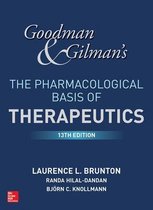
Test Bank For Goodman and Gilmans The Pharmacological
Basis of Therapeutics 13th Edition Brunton | 9781259584732 |
All Chapters with Answers and Rationals
What is clinical pharmacology? - ANSWER: The study of drug action in man, providing the scientific
basis for rational, safe and effective prescribing
What is pharmacodynamics? - ANSWER: The study of what the drug does to the body
What are drug receptors? - ANSWER: They are proteins or glycoproteins that are either on the cell
surface, or on an organelle within the cell, or in the cytoplasm.
Name some common types of receptor. - ANSWER: - Channel-linked
- GPCRs
- Enzyme-linked
- Nuclear receptors
Describe the drug-dose response curve. - ANSWER: Curve which illustrates a drug dose and its efficacy
through measures of Emax and ED50.
What does Emax represent? - ANSWER: The maximal response of a drug
What does ED50 represent? - ANSWER: The level at which 50% of population has therapeutic effects
Define therapeutic index - ANSWER: The ratio between the toxic dose and the therapeutic dose of a
drug, used as a measure of the relative safety of the drug for a particular treatment.
What is suggested by a large therapeutic window? - ANSWER: A drug with good beneficial effects and
low risk of adverse effects
What is an agonist drug? - ANSWER: A drug or substance that binds to a receptor inside a cell or on its
surface and causes the same action as the substance that normally binds to the receptor.
What is an antagonist drug? - ANSWER: A drug that blocks the receptor so they can't be activated by
the substance that would normally bind it.
What effect will an antagonist have on a drug-dose response curve? - ANSWER: Pushes the curve right
Define drug efficacy. - ANSWER: The extent to which a drug can have its effect.
Define drug potency. - ANSWER: The ability of a drug to achieve its effect at lower doses.
What is drug selectivity? - ANSWER: Ability of drug to interact with specific receptors of target tissue
and not with other receptors
What is drug desensitisation? - ANSWER: The reduced sensitivity of a receptor to a drug after a period
of time.
Define tachyphylaxis - ANSWER: Rapid decrease in response to the drug - "acute tolerance"
What are some of the causes of drug desensitisation? - ANSWER: 1. Receptor down-regulation:
reduction in the number of receptors
2. Changes in receptor structure or function
, 3. Exhaustion of mediators e.g. G-proteins
4. Physiological adaptation
What are some of the causes of reduced drug response? - ANSWER: 1. Altered physiology (weight,
age)
2. Disease progression
3. Drug interactions (e.g. starting a new drug)
4. Reduced adherence to regime
What is pharmacokinetics? - ANSWER: What the body does to the drug
What are the 4 phases of pharmacokinetics? - ANSWER: ADME
Absorption
Distribution
Metabolism
Excretion
How are drugs absorbed? - ANSWER: Various different routes, depending on administration:
Oral, buccal, sublingual, rectal, IV, IM, SC, inhalation, transdermal, topical
What is the importance of route of administration on absorption? - ANSWER: Influences the rate of
absorption, also overcomes physiological issues e.g. first pass metabolism
What is the bioavailability of a drug? - ANSWER: Percentage of drug absorbed into systemic
circulation
Describe first-pass metabolism. - ANSWER: When the concentration of a drug is reduced before
systemic circulation, due enzymes in the intestinal wall and liver.
Which system in the liver accounts for most of the first-pass metabolism of drugs (hepatic
extraction)? - ANSWER: Cytochrome P450 (CYP450)
Which GI routes of administration may be utilised to overcome first-pass metabolism? - ANSWER:
Buccal, sublingual and rectal
How are buccal and sublingual drugs absorbed? - ANSWER: Into the capillaries of the oral circulation -
> drained into the vena cava -> returned to the heart -> pumped into systemic circulation
How are rectal drugs absorbed? - ANSWER: Lower 2/3s drained by inferior and middle haemorrhoidal
veins -> vena cava -> heart -> system circulation
What is the most direct route of drug administration into the systemic circulation? - ANSWER:
Intravenous (IV)
Ideal for very ill patients where a rapid response is required
In which case is it preferable to give an IV infusion over an injection? - ANSWER: When a drug has a
low therapeutic index, as high drug concentration in the plasma may not be desirable
In a drug concentration-time curve, what does a smaller area under curve (AUC) indicate? - ANSWER:
Reduced bioavailability
Usually seen in orally administrated drugs when compared to IV.
What are the 3 major compartments that a drug may be distributed into? - ANSWER: 1. Plasma
Basis of Therapeutics 13th Edition Brunton | 9781259584732 |
All Chapters with Answers and Rationals
What is clinical pharmacology? - ANSWER: The study of drug action in man, providing the scientific
basis for rational, safe and effective prescribing
What is pharmacodynamics? - ANSWER: The study of what the drug does to the body
What are drug receptors? - ANSWER: They are proteins or glycoproteins that are either on the cell
surface, or on an organelle within the cell, or in the cytoplasm.
Name some common types of receptor. - ANSWER: - Channel-linked
- GPCRs
- Enzyme-linked
- Nuclear receptors
Describe the drug-dose response curve. - ANSWER: Curve which illustrates a drug dose and its efficacy
through measures of Emax and ED50.
What does Emax represent? - ANSWER: The maximal response of a drug
What does ED50 represent? - ANSWER: The level at which 50% of population has therapeutic effects
Define therapeutic index - ANSWER: The ratio between the toxic dose and the therapeutic dose of a
drug, used as a measure of the relative safety of the drug for a particular treatment.
What is suggested by a large therapeutic window? - ANSWER: A drug with good beneficial effects and
low risk of adverse effects
What is an agonist drug? - ANSWER: A drug or substance that binds to a receptor inside a cell or on its
surface and causes the same action as the substance that normally binds to the receptor.
What is an antagonist drug? - ANSWER: A drug that blocks the receptor so they can't be activated by
the substance that would normally bind it.
What effect will an antagonist have on a drug-dose response curve? - ANSWER: Pushes the curve right
Define drug efficacy. - ANSWER: The extent to which a drug can have its effect.
Define drug potency. - ANSWER: The ability of a drug to achieve its effect at lower doses.
What is drug selectivity? - ANSWER: Ability of drug to interact with specific receptors of target tissue
and not with other receptors
What is drug desensitisation? - ANSWER: The reduced sensitivity of a receptor to a drug after a period
of time.
Define tachyphylaxis - ANSWER: Rapid decrease in response to the drug - "acute tolerance"
What are some of the causes of drug desensitisation? - ANSWER: 1. Receptor down-regulation:
reduction in the number of receptors
2. Changes in receptor structure or function
, 3. Exhaustion of mediators e.g. G-proteins
4. Physiological adaptation
What are some of the causes of reduced drug response? - ANSWER: 1. Altered physiology (weight,
age)
2. Disease progression
3. Drug interactions (e.g. starting a new drug)
4. Reduced adherence to regime
What is pharmacokinetics? - ANSWER: What the body does to the drug
What are the 4 phases of pharmacokinetics? - ANSWER: ADME
Absorption
Distribution
Metabolism
Excretion
How are drugs absorbed? - ANSWER: Various different routes, depending on administration:
Oral, buccal, sublingual, rectal, IV, IM, SC, inhalation, transdermal, topical
What is the importance of route of administration on absorption? - ANSWER: Influences the rate of
absorption, also overcomes physiological issues e.g. first pass metabolism
What is the bioavailability of a drug? - ANSWER: Percentage of drug absorbed into systemic
circulation
Describe first-pass metabolism. - ANSWER: When the concentration of a drug is reduced before
systemic circulation, due enzymes in the intestinal wall and liver.
Which system in the liver accounts for most of the first-pass metabolism of drugs (hepatic
extraction)? - ANSWER: Cytochrome P450 (CYP450)
Which GI routes of administration may be utilised to overcome first-pass metabolism? - ANSWER:
Buccal, sublingual and rectal
How are buccal and sublingual drugs absorbed? - ANSWER: Into the capillaries of the oral circulation -
> drained into the vena cava -> returned to the heart -> pumped into systemic circulation
How are rectal drugs absorbed? - ANSWER: Lower 2/3s drained by inferior and middle haemorrhoidal
veins -> vena cava -> heart -> system circulation
What is the most direct route of drug administration into the systemic circulation? - ANSWER:
Intravenous (IV)
Ideal for very ill patients where a rapid response is required
In which case is it preferable to give an IV infusion over an injection? - ANSWER: When a drug has a
low therapeutic index, as high drug concentration in the plasma may not be desirable
In a drug concentration-time curve, what does a smaller area under curve (AUC) indicate? - ANSWER:
Reduced bioavailability
Usually seen in orally administrated drugs when compared to IV.
What are the 3 major compartments that a drug may be distributed into? - ANSWER: 1. Plasma