EDUCATION
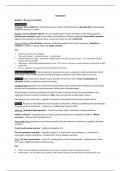
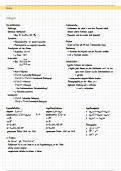
Booklet 1: The role of education
Functionalism:
Durkheim: Social solidarity by transmitting society’s culture from generations, specialist skills and knowledge
needed to play part in society.
Parsons: ‘Focal socialisation agency’ acts as a bridge between family and wider society, family judged by
particularistic standards (apply to that child), school children and society judged by universalistic standards
(apply to all), ascribed vs achieved status, school and society are both meritocratic
Davis and Moore: Role allocation selecting and allocating pupils to their future work roles, inequality is
needed for society to function effectively, higher rewards.
Eval:
Schools do try and foster solidarity.
More work focused – vocational courses. = role allocation
Marxists Bowels and Gintis – ‘giant myth making machine’, meritocracy doesn’t exist, – not all students rewarded
based on talent and ability.
Wolf review – high quality apprenticeships are rare, 1/3 of 16-19 yr. olds are on courses that do not lead to HE or high-
quality jobs.
Wrong – pupils are not puppets that passively affect school values.
Neoliberalism/ New Right - State should not provide services such as education, health, and welfare. Not try
and regulate a free market economy instead encourage competition and privatise state run services.
New Right- State cannot meet people’s needs, best left to meet own needs. Favour marketisation of
education. Schools compete for pupils and funding.
Chubb and Moe: Education not created equal opportunities, fails to produce skills needed for economy, state
schools aren’t answerable to paying consumers, failed needs of disadvantaged.
Voucher system, low-income families do around 5% better in private schools. More competition= more
responsive to parent’s needs. Parentocracy. EVAL: Some parents able to make better choices.
New right see role of the state – imposes a framework of competition and transmits shared culture.
Marxism: Reproduces and legitimates class inequality by failing W/C children and justifying through ideologies.
Transmits ‘myth of meritocracy’ – failure of w/c children due to lack of effort.
Althusser: Ideological state apparatus – Control over ideas, values, and beliefs through institutions.
Hidden curriculum – Untaught lesson to respect authority and become an obedient workforce. Official
curriculum – Transmits idea capitalism is fair.
Bowels and Gintis: Education rewards the personality traits that make for a submissive, compliant, alienated
workforce.
‘A giant myth making machine’ - justifies privileged of M/c.
The correspondence principle – Operates through HC, school mirrors the workplace e.g., emphasis on
punctuality, extrinsic satisfaction… Socialised W/c into an obedient workforce.
Wills: The Lads Counterculture – reject HC, resisting school = slot into inferior jobs = capitalism wins. ‘Shop
floor culture’. Eval: Romanticised, observer bias.
Eval:
Points out the inequalities of opportunity and outcome, recognises conflict of interest in schools.
Deterministic - not all students react passively, Post Fordism recognises diversity, Marxists overemphasise class.
, Postmodernism:
Fordism- Low skilled workers willing to put up with alienating work on mass assembly lines.
Postmodernists believe society is much more diverse and fragmented and the economy is now based on
Flexible specialisation. Post-Fordism requires a skilled adaptable workforce.
Education should encourage self-motivation and creativity to meet individual needs. Cp no longer exists.
Diverse range of qualifications to encourage students to remain educated e.g., Tony Blair Curriculum 2000.
Eval: Coalition gov done things to limit choice: A levels linear again, EBacc, leaving age 18, qualifications create divide.
Feminism:
Byrne: Teachers encourage boys to be tough and show initiative whereas girls are expected to be quiet, helpful,
clean, and tidy.
Double standards-Uniform, behaviour, sexual morality
Male gaze – Girls change their behaviour and thoughts.
Subject choice advice – Sex typed decisions, gender roles, verbal abuse.
Teachers – Male teachers ‘rescue’ female teachers, use boys for comedic effect.
Eval: If system is designed to maintain patriarchy, it would be failing as girls outperform boys .
Booklet 1: The role of education
Functionalism:
Durkheim: Social solidarity by transmitting society’s culture from generations, specialist skills and knowledge
needed to play part in society.
Parsons: ‘Focal socialisation agency’ acts as a bridge between family and wider society, family judged by
particularistic standards (apply to that child), school children and society judged by universalistic standards
(apply to all), ascribed vs achieved status, school and society are both meritocratic
Davis and Moore: Role allocation selecting and allocating pupils to their future work roles, inequality is
needed for society to function effectively, higher rewards.
Eval:
Schools do try and foster solidarity.
More work focused – vocational courses. = role allocation
Marxists Bowels and Gintis – ‘giant myth making machine’, meritocracy doesn’t exist, – not all students rewarded
based on talent and ability.
Wolf review – high quality apprenticeships are rare, 1/3 of 16-19 yr. olds are on courses that do not lead to HE or high-
quality jobs.
Wrong – pupils are not puppets that passively affect school values.
Neoliberalism/ New Right - State should not provide services such as education, health, and welfare. Not try
and regulate a free market economy instead encourage competition and privatise state run services.
New Right- State cannot meet people’s needs, best left to meet own needs. Favour marketisation of
education. Schools compete for pupils and funding.
Chubb and Moe: Education not created equal opportunities, fails to produce skills needed for economy, state
schools aren’t answerable to paying consumers, failed needs of disadvantaged.
Voucher system, low-income families do around 5% better in private schools. More competition= more
responsive to parent’s needs. Parentocracy. EVAL: Some parents able to make better choices.
New right see role of the state – imposes a framework of competition and transmits shared culture.
Marxism: Reproduces and legitimates class inequality by failing W/C children and justifying through ideologies.
Transmits ‘myth of meritocracy’ – failure of w/c children due to lack of effort.
Althusser: Ideological state apparatus – Control over ideas, values, and beliefs through institutions.
Hidden curriculum – Untaught lesson to respect authority and become an obedient workforce. Official
curriculum – Transmits idea capitalism is fair.
Bowels and Gintis: Education rewards the personality traits that make for a submissive, compliant, alienated
workforce.
‘A giant myth making machine’ - justifies privileged of M/c.
The correspondence principle – Operates through HC, school mirrors the workplace e.g., emphasis on
punctuality, extrinsic satisfaction… Socialised W/c into an obedient workforce.
Wills: The Lads Counterculture – reject HC, resisting school = slot into inferior jobs = capitalism wins. ‘Shop
floor culture’. Eval: Romanticised, observer bias.
Eval:
Points out the inequalities of opportunity and outcome, recognises conflict of interest in schools.
Deterministic - not all students react passively, Post Fordism recognises diversity, Marxists overemphasise class.
, Postmodernism:
Fordism- Low skilled workers willing to put up with alienating work on mass assembly lines.
Postmodernists believe society is much more diverse and fragmented and the economy is now based on
Flexible specialisation. Post-Fordism requires a skilled adaptable workforce.
Education should encourage self-motivation and creativity to meet individual needs. Cp no longer exists.
Diverse range of qualifications to encourage students to remain educated e.g., Tony Blair Curriculum 2000.
Eval: Coalition gov done things to limit choice: A levels linear again, EBacc, leaving age 18, qualifications create divide.
Feminism:
Byrne: Teachers encourage boys to be tough and show initiative whereas girls are expected to be quiet, helpful,
clean, and tidy.
Double standards-Uniform, behaviour, sexual morality
Male gaze – Girls change their behaviour and thoughts.
Subject choice advice – Sex typed decisions, gender roles, verbal abuse.
Teachers – Male teachers ‘rescue’ female teachers, use boys for comedic effect.
Eval: If system is designed to maintain patriarchy, it would be failing as girls outperform boys .