

Chemistry 2
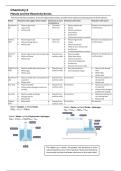
Metals and the Reactivity Series
The more reactive a metal is, the more vigorously it reacts, and the more easily to loses electrons to form cations.
Metal Reaction with oxygen when heated Reaction at room Reaction with water Reaction with steam
temperature
Potassium • Reacts vigorously • Tarnishes • Reacts vigorously Reaction too dangerous to
(K) • Lilac flame when cut • Floats be attempted.
• White solid • Moves and fizzes
• Lilac flame
• Exothermic
• Colourless solution remains
Sodium • Reacts vigorously • Tarnishes • Reacts vigorously Reaction too dangerous to
(Na) • Yellow/orange flame when cut • Floats be attempted.
• White solid • Moves and fizzes
• Melts to form silvery ball
• Exothermic
• Colourless solution remains
Calcium • Reacts vigorously with strong heat • Slowly forms • Reacts readily Reaction too dangerous to
(Ca) • Brick red flame surface oxide • Rises then sinks be attempted.
• White solid • Moves and fizzes
• Grey solid disappears
• Exothermic
• Solution becomes milky
Magnesium • Reacts readily with strong heat • Slowly forms • Very slow reaction • Reacts with strong
(Mg) • White light surface oxide • Some bubbles of gas heat
• White solid • White light
• White solid
Aluminium • Reacts readily with strong heat as • Slowly forms No reaction • Reacts as powder on
(Al) a powder surface oxide strong heat
• White solid • White solid
Zinc (Zn) • Reacts steadily • Slowly forms No reaction • Reacts as powder on
• Yellow solid changes to white on surface oxide strong heat
cooling • Yellow solid changes
to white on cooling
Iron (Fe) • Reacts readily as filings • Slowly forms No reaction • Reacts as powder on
• Orange sparks surface oxide very strong heat
• Black solid • Black solid
Copper • Black solid • Slowly forms No reaction No reaction
(Cu) surface oxide
Metal + Oxygen → Metal Oxide Metal + Steam → Metal Oxide + Hydrogen
2Mg(s) + O2(g) → 2MgO(s) Mg(s) + H2O(g) → MgO(s) + H2(g)
Metal + Water → Metal Hydroxide + Hydrogen
Mg(s) + 2H2O(l) → Mg(OH)2(s) + H2(g)
The higher up a metal, the greater the tendency to form
cations (positive ions). More reactive metals lose electrons
more easily as there are fewer electrons on the outer shell.
, Displacement reactions in solutions
More reactive metals displace less reactive metals from their compound.
e.g. magnesium is more reactive than copper, therefore it displaces copper
from copper (II) sulphate solution:
magnesium + copper (II) sulphate → magnesium sulphate + copper
Balanced symbol equation: Working out a reactivity series
Mg(s) + CuSO4(aq) → MgSO4(aq) + Cu(s) Magnesium Copper (II) Iron (II) No of
sulphate sulphate sulphate reaction
Ionic equation: solution solution solution
Mg + Cu2+ → Mg2+ + Cu Magnesium Brown Black 2
coating coating
Half equation: Copper 0
Mg → Mg2+ + 2e- Iron Brown 1
Cu2+ + 2e- → Cu coating
Magnesium had most reactions, therefore most reactive.
An ore is a rock that contains enough metal/metal compound for
extraction to be economically viable.
Reversible Reactions & Equilibrium
Reversible reactions are where the products can Irreversible reactions go to completion. Reactants covert
react to re-form the reactants. to products, but the products can’t convert back to
When writing a reversible reaction, ⇌, is used. reactants e.g. complete consumption of fuel, most
precipitation reactions, any reaction that produces a gas.
Examples of reversible reactions
Ammonium chloride
Ammonium chloride is a white solid. When heated it breaks down into ammonia and
hydrogen chloride. When cooled, they react together again to form ammonium chloride.
ammonium chloride ⇌ ammonia + hydrogen chloride
NH4Cl(s) ⇌ NH3(g) + HCl(g)
Copper (II) sulphate
Blue copper (II) sulphate is hydrated.
Copper (II) ions are surrounded by water molecules.
When heated, water is driven off, leaving white anhydrous copper (II) sulphate:
hydrated copper (II) sulphate ⇌ anhydrous copper (II) sulphate + water
CuSO4.5H2O(s) ⇌ CuSO4(s) + 5H2O(l)
Dynamic equilibrium is what is achieved when a reversible reaction happens in a closed system.
Closed system: No substances can get in or out
Open system: Substances can enter and exit
At equilibrium:
o forward and backward reactions continue
o rates of forward and backward reactions are the same
o concentrations of reactants and products remain constant
Equilibrium can only be achieved if none of the reactants or products can escape.
Metals and the Reactivity Series
The more reactive a metal is, the more vigorously it reacts, and the more easily to loses electrons to form cations.
Metal Reaction with oxygen when heated Reaction at room Reaction with water Reaction with steam
temperature
Potassium • Reacts vigorously • Tarnishes • Reacts vigorously Reaction too dangerous to
(K) • Lilac flame when cut • Floats be attempted.
• White solid • Moves and fizzes
• Lilac flame
• Exothermic
• Colourless solution remains
Sodium • Reacts vigorously • Tarnishes • Reacts vigorously Reaction too dangerous to
(Na) • Yellow/orange flame when cut • Floats be attempted.
• White solid • Moves and fizzes
• Melts to form silvery ball
• Exothermic
• Colourless solution remains
Calcium • Reacts vigorously with strong heat • Slowly forms • Reacts readily Reaction too dangerous to
(Ca) • Brick red flame surface oxide • Rises then sinks be attempted.
• White solid • Moves and fizzes
• Grey solid disappears
• Exothermic
• Solution becomes milky
Magnesium • Reacts readily with strong heat • Slowly forms • Very slow reaction • Reacts with strong
(Mg) • White light surface oxide • Some bubbles of gas heat
• White solid • White light
• White solid
Aluminium • Reacts readily with strong heat as • Slowly forms No reaction • Reacts as powder on
(Al) a powder surface oxide strong heat
• White solid • White solid
Zinc (Zn) • Reacts steadily • Slowly forms No reaction • Reacts as powder on
• Yellow solid changes to white on surface oxide strong heat
cooling • Yellow solid changes
to white on cooling
Iron (Fe) • Reacts readily as filings • Slowly forms No reaction • Reacts as powder on
• Orange sparks surface oxide very strong heat
• Black solid • Black solid
Copper • Black solid • Slowly forms No reaction No reaction
(Cu) surface oxide
Metal + Oxygen → Metal Oxide Metal + Steam → Metal Oxide + Hydrogen
2Mg(s) + O2(g) → 2MgO(s) Mg(s) + H2O(g) → MgO(s) + H2(g)
Metal + Water → Metal Hydroxide + Hydrogen
Mg(s) + 2H2O(l) → Mg(OH)2(s) + H2(g)
The higher up a metal, the greater the tendency to form
cations (positive ions). More reactive metals lose electrons
more easily as there are fewer electrons on the outer shell.
, Displacement reactions in solutions
More reactive metals displace less reactive metals from their compound.
e.g. magnesium is more reactive than copper, therefore it displaces copper
from copper (II) sulphate solution:
magnesium + copper (II) sulphate → magnesium sulphate + copper
Balanced symbol equation: Working out a reactivity series
Mg(s) + CuSO4(aq) → MgSO4(aq) + Cu(s) Magnesium Copper (II) Iron (II) No of
sulphate sulphate sulphate reaction
Ionic equation: solution solution solution
Mg + Cu2+ → Mg2+ + Cu Magnesium Brown Black 2
coating coating
Half equation: Copper 0
Mg → Mg2+ + 2e- Iron Brown 1
Cu2+ + 2e- → Cu coating
Magnesium had most reactions, therefore most reactive.
An ore is a rock that contains enough metal/metal compound for
extraction to be economically viable.
Reversible Reactions & Equilibrium
Reversible reactions are where the products can Irreversible reactions go to completion. Reactants covert
react to re-form the reactants. to products, but the products can’t convert back to
When writing a reversible reaction, ⇌, is used. reactants e.g. complete consumption of fuel, most
precipitation reactions, any reaction that produces a gas.
Examples of reversible reactions
Ammonium chloride
Ammonium chloride is a white solid. When heated it breaks down into ammonia and
hydrogen chloride. When cooled, they react together again to form ammonium chloride.
ammonium chloride ⇌ ammonia + hydrogen chloride
NH4Cl(s) ⇌ NH3(g) + HCl(g)
Copper (II) sulphate
Blue copper (II) sulphate is hydrated.
Copper (II) ions are surrounded by water molecules.
When heated, water is driven off, leaving white anhydrous copper (II) sulphate:
hydrated copper (II) sulphate ⇌ anhydrous copper (II) sulphate + water
CuSO4.5H2O(s) ⇌ CuSO4(s) + 5H2O(l)
Dynamic equilibrium is what is achieved when a reversible reaction happens in a closed system.
Closed system: No substances can get in or out
Open system: Substances can enter and exit
At equilibrium:
o forward and backward reactions continue
o rates of forward and backward reactions are the same
o concentrations of reactants and products remain constant
Equilibrium can only be achieved if none of the reactants or products can escape.


