

PSI Perinatal Mental Health Certification Exam Complete Solutions
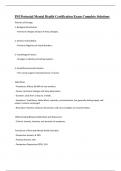
Theories of Etiology
1. Biological Sensitivities:
- Hormonal changes (impact of sleep changes).
2. Genetic Vulnerability:
- Previous diagnoses of mood disorders.
3. Psychological Factors:
- Changes in identity and self-perception.
4. Social/Environmental Factors:
- Poor social support and experiences of racism.
Baby Blues
- Prevalence: Affects 60-80% of new mothers.
- Causes: Hormonal changes and sleep deprivation.
- Duration: Lasts from 2 days to 2 weeks.
- Symptoms: Tearfulness, labile affect, reactivity, and exhaustion, but generally feeling happy; self-
esteem remains unchanged.
- Resolution: Resolves without intervention; self-care strategies are recommended.
Differentiating Between Baby Blues and Depression
- Criteria: Severity, intensity, and duration of symptoms.
Prevalence of Perinatal Mental Health Disorders
- Postpartum Anxiety: 8-20%
- Prenatal Anxiety: 15%
- Postpartum Depression (PPD): 21%
,- Postpartum Panic Disorder: 11%
- Postpartum OCD: 11%
- Postpartum PTSD: 9%
- Bipolar Symptoms Relapse Off Medication: 70%
- Postpartum Psychosis: 1-2 out of 1,000
- Prevalence of PPD in Fathers: 10%
- Prevalence of Psychosis in Women with Known Bipolar Disorder: 20-30%
Traits of Different Conditions
Obsessive-Compulsive Disorder (OCD)
- Recognition: Understands that thoughts are unhealthy.
- Symptoms: Extreme anxiety related to thoughts/images, fear of "snapping," and concerns about
harming the baby without wanting to do so.
Psychosis
- Recognition: Lacks insight into the unhealthiness of thoughts/actions.
- Symptoms: May experience less anxiety when indulging in delusional thoughts/behaviors, delusions
about the baby, and thoughts of harm that are ego-syntonic.
Post-Traumatic Stress Disorder (PTSD)
- Symptoms: Intrusive thoughts (flashbacks), avoidance, negative cognitions and mood, arousal
symptoms (sleep disturbances, poor concentration, aggression, hyper-vigilance).
Maternal Mortality Rates
- All Women: 1,200 deaths per year, or 14.4 per 100,000 live births.
- Black Women: 43.5 per 100,000 live births.
Bipolar Disorder
- Bipolar I Disorder: Characterized by at least one full manic episode and major depressive episodes.
, - Hypomania: A mild manic state lasting up to 4 days, characterized by extreme talkativeness and charm.
- Mania: A mood state marked by hyperactivity and impaired functioning, lasting 7 days.
- First Diagnosis Postpartum: 50% of first diagnoses occur in the postpartum period.
Risk Factors for Postpartum Psychosis
- History of bipolar or psychotic disorders.
- First pregnancy.
- Family history of mental health disorders.
- Recent discontinuation of psychotropic medication.
Symptoms of Postpartum Psychosis
- Onset: Typically occurs within the first 2 weeks postpartum.
- General Symptoms: Poor concentration, disorientation, agitation, aloofness, lack of self-care,
elated/labile mood, rambling speech, thought broadcasting, grandiosity, disorganized thoughts, flight of
ideas, and hallucinations.
Reducing the Risk of Postpartum Psychosis
- Continue taking bipolar medications.
- Immediate treatment for women with a history of psychosis or bipolar disorder.
- Prioritize good sleep practices.
Evidence based risk factors for PMADS ✔️previous PMADS (family history, personal history, symptoms
during pregnancy), history of mood/anxiety disorders (personal or family history of depression, anxiety,
OCD, eating disorders, bipolar disorders), significant mood reactions of hormonal changes (puberty,
PMS, hormonal birth control)
More evidence based risk factors for PMADS ✔️endocrine dysfunction (diabetes, thyroid imbalance,
fertility challenges), social factors (IPV, low support, financial stress, racism), high stress parenting
(military families, adolescent parents, parents of multiples, single parents)
Exacerbating factors of postpartum depression ✔️pain, lack of sleep, abrupt discontinuing of breast
feeding, childcare stress, relationship stress, losses, history of childhood sexual abuse, complicated
pregnancy, health changes in baby or parents, temperament of baby, climate stressors: seasonal
Theories of Etiology
1. Biological Sensitivities:
- Hormonal changes (impact of sleep changes).
2. Genetic Vulnerability:
- Previous diagnoses of mood disorders.
3. Psychological Factors:
- Changes in identity and self-perception.
4. Social/Environmental Factors:
- Poor social support and experiences of racism.
Baby Blues
- Prevalence: Affects 60-80% of new mothers.
- Causes: Hormonal changes and sleep deprivation.
- Duration: Lasts from 2 days to 2 weeks.
- Symptoms: Tearfulness, labile affect, reactivity, and exhaustion, but generally feeling happy; self-
esteem remains unchanged.
- Resolution: Resolves without intervention; self-care strategies are recommended.
Differentiating Between Baby Blues and Depression
- Criteria: Severity, intensity, and duration of symptoms.
Prevalence of Perinatal Mental Health Disorders
- Postpartum Anxiety: 8-20%
- Prenatal Anxiety: 15%
- Postpartum Depression (PPD): 21%
,- Postpartum Panic Disorder: 11%
- Postpartum OCD: 11%
- Postpartum PTSD: 9%
- Bipolar Symptoms Relapse Off Medication: 70%
- Postpartum Psychosis: 1-2 out of 1,000
- Prevalence of PPD in Fathers: 10%
- Prevalence of Psychosis in Women with Known Bipolar Disorder: 20-30%
Traits of Different Conditions
Obsessive-Compulsive Disorder (OCD)
- Recognition: Understands that thoughts are unhealthy.
- Symptoms: Extreme anxiety related to thoughts/images, fear of "snapping," and concerns about
harming the baby without wanting to do so.
Psychosis
- Recognition: Lacks insight into the unhealthiness of thoughts/actions.
- Symptoms: May experience less anxiety when indulging in delusional thoughts/behaviors, delusions
about the baby, and thoughts of harm that are ego-syntonic.
Post-Traumatic Stress Disorder (PTSD)
- Symptoms: Intrusive thoughts (flashbacks), avoidance, negative cognitions and mood, arousal
symptoms (sleep disturbances, poor concentration, aggression, hyper-vigilance).
Maternal Mortality Rates
- All Women: 1,200 deaths per year, or 14.4 per 100,000 live births.
- Black Women: 43.5 per 100,000 live births.
Bipolar Disorder
- Bipolar I Disorder: Characterized by at least one full manic episode and major depressive episodes.
, - Hypomania: A mild manic state lasting up to 4 days, characterized by extreme talkativeness and charm.
- Mania: A mood state marked by hyperactivity and impaired functioning, lasting 7 days.
- First Diagnosis Postpartum: 50% of first diagnoses occur in the postpartum period.
Risk Factors for Postpartum Psychosis
- History of bipolar or psychotic disorders.
- First pregnancy.
- Family history of mental health disorders.
- Recent discontinuation of psychotropic medication.
Symptoms of Postpartum Psychosis
- Onset: Typically occurs within the first 2 weeks postpartum.
- General Symptoms: Poor concentration, disorientation, agitation, aloofness, lack of self-care,
elated/labile mood, rambling speech, thought broadcasting, grandiosity, disorganized thoughts, flight of
ideas, and hallucinations.
Reducing the Risk of Postpartum Psychosis
- Continue taking bipolar medications.
- Immediate treatment for women with a history of psychosis or bipolar disorder.
- Prioritize good sleep practices.
Evidence based risk factors for PMADS ✔️previous PMADS (family history, personal history, symptoms
during pregnancy), history of mood/anxiety disorders (personal or family history of depression, anxiety,
OCD, eating disorders, bipolar disorders), significant mood reactions of hormonal changes (puberty,
PMS, hormonal birth control)
More evidence based risk factors for PMADS ✔️endocrine dysfunction (diabetes, thyroid imbalance,
fertility challenges), social factors (IPV, low support, financial stress, racism), high stress parenting
(military families, adolescent parents, parents of multiples, single parents)
Exacerbating factors of postpartum depression ✔️pain, lack of sleep, abrupt discontinuing of breast
feeding, childcare stress, relationship stress, losses, history of childhood sexual abuse, complicated
pregnancy, health changes in baby or parents, temperament of baby, climate stressors: seasonal


