● A01 Agentic state and legitimacy of authority
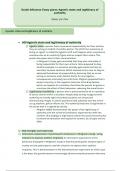
Agentic state: a person feels no personal responsibility for their actions,
they are acting on behalf of another person. The shift from autonomy to
being an 'agent' is called the agentic shift and happens when we perceive
someone else as an authority figure and we respect their orders. This
person has power due to their social position.
- In Milgram’s study, ppts reminded that they were reminded of
being responsible for their own actions. None prepared to obey.
Another example is a variation whereby ppts would instruct an
assistant to press switches. 92.5% shocked to the max. As they’ve
absolved themselves of responsibility, believing that as we are
acting on someone else's behalf, blame for any negative
consequences ultimately lies with them. Milgram proposed that a
person may stay in their agentic state due to binding factors,
which are aspects of a situation that allow the person to ignore or
minimise the effect of their behaviour, reducing the moral strain.
Legitimacy of authority: a person who is preconceived to be in a position
of social control within a situation. People obey as they recognise their
authority as morally right since Most societies are structured
hierarchically. People in certain positions hold authority over the rest of
us e.g teachers, police officers etc. The authority they have is legitimate in
the sense that it is agreed by society.
- Milgram (1963) demonstrates the power of the legitimacy of
authority with the scientist/ professor/ experimenter. With the
uniform, this displays a high status within the social hierarchy due
to extensive education and respect for science. So, all ppts went to
300v
● A03 strengths and weaknesses
Alternative explanation of participant's behaviour in Milgram's study- using
situation to express sadistic impulses: An alternative explanation of the
behaviour displayed in Milgram's study is that the participants showed signs of
cruelty and the participants used the situation to express their sadistic
impulses. This is demonstrated in the Stanford prison experiment as within just
a few days, the guards became increasingly abusive towards prisoners who were
Agentic state: a person feels no personal responsibility for their actions,
they are acting on behalf of another person. The shift from autonomy to
being an 'agent' is called the agentic shift and happens when we perceive
someone else as an authority figure and we respect their orders. This
person has power due to their social position.
- In Milgram’s study, ppts reminded that they were reminded of
being responsible for their own actions. None prepared to obey.
Another example is a variation whereby ppts would instruct an
assistant to press switches. 92.5% shocked to the max. As they’ve
absolved themselves of responsibility, believing that as we are
acting on someone else's behalf, blame for any negative
consequences ultimately lies with them. Milgram proposed that a
person may stay in their agentic state due to binding factors,
which are aspects of a situation that allow the person to ignore or
minimise the effect of their behaviour, reducing the moral strain.
Legitimacy of authority: a person who is preconceived to be in a position
of social control within a situation. People obey as they recognise their
authority as morally right since Most societies are structured
hierarchically. People in certain positions hold authority over the rest of
us e.g teachers, police officers etc. The authority they have is legitimate in
the sense that it is agreed by society.
- Milgram (1963) demonstrates the power of the legitimacy of
authority with the scientist/ professor/ experimenter. With the
uniform, this displays a high status within the social hierarchy due
to extensive education and respect for science. So, all ppts went to
300v
● A03 strengths and weaknesses
Alternative explanation of participant's behaviour in Milgram's study- using
situation to express sadistic impulses: An alternative explanation of the
behaviour displayed in Milgram's study is that the participants showed signs of
cruelty and the participants used the situation to express their sadistic
impulses. This is demonstrated in the Stanford prison experiment as within just
a few days, the guards became increasingly abusive towards prisoners who were