Hazmat Operations Test Prep
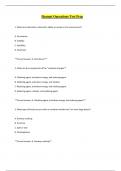
1. What term describes a chemical's ability to remain in the environment?
A. Persistence
B. Stability
C. Solubility
D. Reactivity
**Correct answer: A. Persistence**
2. What are the components of the "reactivity triangle"?
A. Oxidizing agent, activation energy, and reducing agent
B. Oxidizing agent, activation energy, and catalyst
C. Reducing agent, activation energy, and oxidizing agent
D. Reducing agent, catalyst, and oxidizing agent
**Correct answer: A. Oxidizing agent, activation energy, and reducing agent**
3. What type of breach occurs when a container breaks into 2 or more large pieces?
A. Runway cracking
B. Puncture
C. Split or tear
D. Disintegration
**Correct answer: A. Runway cracking**
, 4. What type of Hazmat PPE is one piece and protects against splashes, vapors, and gases?
A. Encapsulating suit
B. Coverall
C. Gown
D. Apron
**Correct answer: A. Encapsulating suit**
5. What are the types of WMD incidents or "attacks"?
A. Chemical, biological, radiological, nuclear, etiological
B. Chemical, biological, radiological, nuclear, chemical
C. Chemical, biological, etiological, nuclear
D. Radiological, nuclear, biological, chemical
**Correct answer: A. Chemical, biological, radiological, nuclear, etiological**
Hazardous materials hazards include: ✔️TRACEM
•Thermal
•Radiological
•Asphyxiation
•Chemical
•Etiological/biological (viruses, bacteria)
•Mechanical (trauma- direct contact with object)
What are the types of radiation? ✔️Alpha
Beta
1. What term describes a chemical's ability to remain in the environment?
A. Persistence
B. Stability
C. Solubility
D. Reactivity
**Correct answer: A. Persistence**
2. What are the components of the "reactivity triangle"?
A. Oxidizing agent, activation energy, and reducing agent
B. Oxidizing agent, activation energy, and catalyst
C. Reducing agent, activation energy, and oxidizing agent
D. Reducing agent, catalyst, and oxidizing agent
**Correct answer: A. Oxidizing agent, activation energy, and reducing agent**
3. What type of breach occurs when a container breaks into 2 or more large pieces?
A. Runway cracking
B. Puncture
C. Split or tear
D. Disintegration
**Correct answer: A. Runway cracking**
, 4. What type of Hazmat PPE is one piece and protects against splashes, vapors, and gases?
A. Encapsulating suit
B. Coverall
C. Gown
D. Apron
**Correct answer: A. Encapsulating suit**
5. What are the types of WMD incidents or "attacks"?
A. Chemical, biological, radiological, nuclear, etiological
B. Chemical, biological, radiological, nuclear, chemical
C. Chemical, biological, etiological, nuclear
D. Radiological, nuclear, biological, chemical
**Correct answer: A. Chemical, biological, radiological, nuclear, etiological**
Hazardous materials hazards include: ✔️TRACEM
•Thermal
•Radiological
•Asphyxiation
•Chemical
•Etiological/biological (viruses, bacteria)
•Mechanical (trauma- direct contact with object)
What are the types of radiation? ✔️Alpha
Beta