WEEK CONTENT
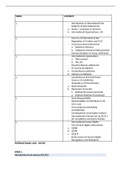
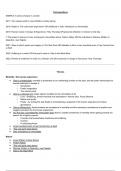
1 - Introduction to International law
- Subjects of international law
a. States + acuisition of territory
b. International Organizations: UN
2 - Sources of International law
- Regulation of Treaties and VCLT
- Customary International law
a. Objective element
b. Subjective element (State practice)
- Monism/Dualism of treaty ratification
3 - International organizations
a. Their powers
b. The UN
- Peaceful dispute settlement
- ICJ and its jurisdiction
a. Contentious jurisdiction
b. Advisory Jurisdiction
4 - Jurisdiction (p.83 Henricksen)
- Sources of Jurisdiction
- Immunity (p.99 Henricksen)
a. State Immunity
b. Diplomatic Immunity
1. Ratione Personae (personal)
2. Ratione Materiae (functional)
5 - State Responsibility
- Responsability of individuals in Int.
Crim. Law
- Circumstances precluding
wrongfulness
- Consequences of wrongful conduct
- International Criminal Law (p.303 H.)
- ICC Jurisdiction and Rome Statute
6 - International Human Rights
- Core Human Rights instruments
a. UDHR
b. ICCPR
c. ICESCR
- Enforcement of Human Rights
- Derogations and limitations
INTERNATIONAL LAW - NOTES
WEEK 1
Introduction from lecture (01/02)
,Structure of the Course
Why does International Law matter?
Int. Law is everywhere – from recent developments during the 70s
Law: standard scheme to identify law reference to an authority/institution that have legal
power to make the laws
1) Domestical law – law comes from centralized legal system (e.g. tribunals/police)
System with institutions that create, enforce and apply law
Hierarchical structure: Citizens are subjects to whom rules apply vs. institutions. Belief of
discrepancy between “official organs” and “the people”. Rules avoid abuse of powers.
2) International Law
- Made by States to guide interactions with each other
- Scope: domestic law is ill-suited for international relations between States
- Public International law: regulation of conduct of States
- Int. Law is not as centralized as domestic law – up to subjects (member states) to
create, interpret and apply the law. States create themselves for themselves.
States reluctant to have a superior authority above them (concept of sovereignty)
- Considered horizontal (no vertical body)
- No parliament, no executive (no world government)
- There is a Court and specialized courts. E.g. International criminal courts (for
Yugoslavia, Ruanda …)
Courts have very limited jurisdiction for states to bring other states to Court – States
must agree on the opening of proceedings.
Public Law (e.g. constitutional, criminal, administrative) – regulates relations between
state/citizens or the 3 branches of power. Vertical
Private Law (e.g. civil, commercial) – relations between equal subjects of law. Horizontal
Private International Law: body of rules that regulates relations between persons and
entities in different states
,E.g. Dutch citizen marries a French citizen what is the nationality of the children?
Different countries define nationality in a different way. International element involved:
rules decide this conflict of law. What if both apply? Do we apply Dutch/French law?
Public International Law: body of rules that regulates relations between States (also
referred to only as “international law”)
European Law: body of law developed within the EU (still regarded as part of Int. Law – EU is
an international organization)
- EU is a unique international organization not comparable to UN, degree of
centralization resembles supernational governance. Early 2000s discussions about
confederation
- Differs widely from international law.
International Law can be seen as through metaphor of a tree:
Trunk: unifies the system
Branches: particular areas that regulate specific matters, today many areas – result of
globalization.
(question for wg – Is there a necessity to add a branch for international internet/cyber law?
If so, will it happen in the near future? There has been a lot of debate as to how to regulate
sovereign territoriality in cyberspace or how to hold States liable for cybercrimes)
Henriksen chp. 1 Foundations and structure of International Law
1.1 Introduction
Public International law: system of law that regulates the interrelationship of sovereign
states and their rights/duties to one another*
- Reflection of society to which is applied
- More specialized and intertwined
Main topics:
- Creation of states
- State immunity
- Jurisdiction
- Peaceful settlement of disputes
- Prevention/regulation of armed conflict
- Governing of sea/oceans
Also covers:
, - Mundane aspects of life
Ever-expanding reach development of sub-disciplines (e.g. int. law of the sea, int.
law of human rights, int. economic law)
Sub-disciplines often need own distinct institutions + adjudicatory bodies
E.g. with establishment of international criminal tribunals there is the need to have expertise in
different spheres of int. law (human rights law + international criminal law)
*Not only applicable to states:
Existence of international organizations and individuals who possess rights/obligations
under international law.
Public Int. Law Private Int. Law
Public International law: deals with conflicts of law + establishment of rules for cases
involving foreign elements
International Law National legal systems
- No executive/legislative branch
- No mandatory/well-established procedure for settlement of legal disputes (however
there are courts)
- Decentralized legal system individual legal subjects create/interpret/enforce laws
1.2 Brief History of International Law
Invented in Europe
Late Middle Ages (15th – 16th century) a) Transnational nature of networks of
- Different knights/merchant
allegiances/rights/obligations - Populations felt closer sense of allegiance
- Universal political/religious forces to them
(Holy Roman Empire and Catholic b) Domination of natural law in ideas of
Church) normative structure of world
- EU in a pluralistic context: national Natural law (ius naturale) ideas of
states did not exist as political natural/social life
entities. Multiple legal orders - Also applied to states rulers were
overlapped each other. individuals subject to nat. law
- Bodies of law regulated c) Law of people/nations (ius gentium)
communities (e.g. of traders, sailors) - Inferior to natural law, derived from it
- Internal/External rules d) Presence of legal obligations and
- External: regulation between contracts
communities - Agreements on issues such as:
e.g. treatment of merchants, maritime traders,
conduct of war, exchange of prisoners of war.
1 - Introduction to International law
- Subjects of international law
a. States + acuisition of territory
b. International Organizations: UN
2 - Sources of International law
- Regulation of Treaties and VCLT
- Customary International law
a. Objective element
b. Subjective element (State practice)
- Monism/Dualism of treaty ratification
3 - International organizations
a. Their powers
b. The UN
- Peaceful dispute settlement
- ICJ and its jurisdiction
a. Contentious jurisdiction
b. Advisory Jurisdiction
4 - Jurisdiction (p.83 Henricksen)
- Sources of Jurisdiction
- Immunity (p.99 Henricksen)
a. State Immunity
b. Diplomatic Immunity
1. Ratione Personae (personal)
2. Ratione Materiae (functional)
5 - State Responsibility
- Responsability of individuals in Int.
Crim. Law
- Circumstances precluding
wrongfulness
- Consequences of wrongful conduct
- International Criminal Law (p.303 H.)
- ICC Jurisdiction and Rome Statute
6 - International Human Rights
- Core Human Rights instruments
a. UDHR
b. ICCPR
c. ICESCR
- Enforcement of Human Rights
- Derogations and limitations
INTERNATIONAL LAW - NOTES
WEEK 1
Introduction from lecture (01/02)
,Structure of the Course
Why does International Law matter?
Int. Law is everywhere – from recent developments during the 70s
Law: standard scheme to identify law reference to an authority/institution that have legal
power to make the laws
1) Domestical law – law comes from centralized legal system (e.g. tribunals/police)
System with institutions that create, enforce and apply law
Hierarchical structure: Citizens are subjects to whom rules apply vs. institutions. Belief of
discrepancy between “official organs” and “the people”. Rules avoid abuse of powers.
2) International Law
- Made by States to guide interactions with each other
- Scope: domestic law is ill-suited for international relations between States
- Public International law: regulation of conduct of States
- Int. Law is not as centralized as domestic law – up to subjects (member states) to
create, interpret and apply the law. States create themselves for themselves.
States reluctant to have a superior authority above them (concept of sovereignty)
- Considered horizontal (no vertical body)
- No parliament, no executive (no world government)
- There is a Court and specialized courts. E.g. International criminal courts (for
Yugoslavia, Ruanda …)
Courts have very limited jurisdiction for states to bring other states to Court – States
must agree on the opening of proceedings.
Public Law (e.g. constitutional, criminal, administrative) – regulates relations between
state/citizens or the 3 branches of power. Vertical
Private Law (e.g. civil, commercial) – relations between equal subjects of law. Horizontal
Private International Law: body of rules that regulates relations between persons and
entities in different states
,E.g. Dutch citizen marries a French citizen what is the nationality of the children?
Different countries define nationality in a different way. International element involved:
rules decide this conflict of law. What if both apply? Do we apply Dutch/French law?
Public International Law: body of rules that regulates relations between States (also
referred to only as “international law”)
European Law: body of law developed within the EU (still regarded as part of Int. Law – EU is
an international organization)
- EU is a unique international organization not comparable to UN, degree of
centralization resembles supernational governance. Early 2000s discussions about
confederation
- Differs widely from international law.
International Law can be seen as through metaphor of a tree:
Trunk: unifies the system
Branches: particular areas that regulate specific matters, today many areas – result of
globalization.
(question for wg – Is there a necessity to add a branch for international internet/cyber law?
If so, will it happen in the near future? There has been a lot of debate as to how to regulate
sovereign territoriality in cyberspace or how to hold States liable for cybercrimes)
Henriksen chp. 1 Foundations and structure of International Law
1.1 Introduction
Public International law: system of law that regulates the interrelationship of sovereign
states and their rights/duties to one another*
- Reflection of society to which is applied
- More specialized and intertwined
Main topics:
- Creation of states
- State immunity
- Jurisdiction
- Peaceful settlement of disputes
- Prevention/regulation of armed conflict
- Governing of sea/oceans
Also covers:
, - Mundane aspects of life
Ever-expanding reach development of sub-disciplines (e.g. int. law of the sea, int.
law of human rights, int. economic law)
Sub-disciplines often need own distinct institutions + adjudicatory bodies
E.g. with establishment of international criminal tribunals there is the need to have expertise in
different spheres of int. law (human rights law + international criminal law)
*Not only applicable to states:
Existence of international organizations and individuals who possess rights/obligations
under international law.
Public Int. Law Private Int. Law
Public International law: deals with conflicts of law + establishment of rules for cases
involving foreign elements
International Law National legal systems
- No executive/legislative branch
- No mandatory/well-established procedure for settlement of legal disputes (however
there are courts)
- Decentralized legal system individual legal subjects create/interpret/enforce laws
1.2 Brief History of International Law
Invented in Europe
Late Middle Ages (15th – 16th century) a) Transnational nature of networks of
- Different knights/merchant
allegiances/rights/obligations - Populations felt closer sense of allegiance
- Universal political/religious forces to them
(Holy Roman Empire and Catholic b) Domination of natural law in ideas of
Church) normative structure of world
- EU in a pluralistic context: national Natural law (ius naturale) ideas of
states did not exist as political natural/social life
entities. Multiple legal orders - Also applied to states rulers were
overlapped each other. individuals subject to nat. law
- Bodies of law regulated c) Law of people/nations (ius gentium)
communities (e.g. of traders, sailors) - Inferior to natural law, derived from it
- Internal/External rules d) Presence of legal obligations and
- External: regulation between contracts
communities - Agreements on issues such as:
e.g. treatment of merchants, maritime traders,
conduct of war, exchange of prisoners of war.