Comedy Comparison practice essay 6
'The comedic genre always satirises religion and never takes it seriously.' To what extent do you
agree with this view?
Despite the theoretically pro-religious nature of the comedic genre, symbolised by the
typical resolution of three marriages, it could be argued that religion is always satirised and is never
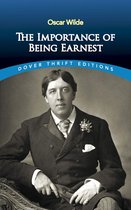
taken seriously in The Importance of Being Earnest, whose protagonists marry based on a lie and a
misunderstanding. In addition, as in Tam o’Shanter, characters guilty of sinning and shunning social
responsibilities are not punished in the play and are in fact rewarded during the comic resolution. In
The Flea and Mrs Sisyphus, the poets concern themselves with reducing the influence of religion and
myth on the behaviour of human beings and certainly satirises the worth of a religious belief.
It is possible to suggest that the ending with three marriages in Earnest is essentially
conservative, reinforcing social hierarchies and the importance of devotion to the Church’s
teachings. This is clearly a viable interpretation given that the final line links neatly back to the play’s
title in a manner customary of the well-made play; Jack has ‘realised for the first time in (his) life the
vital importance of being Earnest’. The verb ‘realised’ here implies that Jack has been educated on
his journey towards happiness and that his sins have subsequently been cleansed. From this
perspective, religion is taken seriously and reinforced by Wilde. However, it would be a mistake to
view Jack as a changed man at the end of the play in spite of his realisation that ‘all his life he has
been speaking nothing but the truth’. It is not difficult to see beneath the artificiality of this
utterance as Jack still lied in intention if not in actuality that his name was Ernest in order to gain
Gwendolen’s favour. In this way, Wilde presents marriage in the play as being founded on lies and
deceit in the form of Jack’s disguise. This view gains credibility when we consider Algernon’s
impersonation of Jack’s ‘wicked brother Ernest’, thus gaining Cecily’s hand under false pretences.
Clearly, marriages in the play are not supposed to emphasise the value of religion and paradoxically,
their flawed origins satirise the institution. The unions at the end of the play are presented as absurd
more than instructive thanks to the melodramatic nature of Gwendolen’s exclamation ‘My own
Ernest! I felt from the first that you could have no other name’. From this, it can reasonably be
argued that the name is Gwendolen’s only motive in marrying Jack and she sees the religious worth
of forming a union as completely unimportant. If marriage is therefore founded on lies and a mere
name in the play, then religion is undoubtedly satirised. Beneath the satire, however, there is
perhaps a tinge of tragedy in Wilde’s commentary on marriage as just a tool of social mobility; in her
cynical analysis of society, Lady Bracknell declares that marriage ‘is hardly a matter that (a woman)
could be allowed to arrange for herself’. Instead of being a sacrament made before God, marriage is
henceforth portrayed as nothing more than a means of guaranteeing social positions which needs no
love or connection with God to take place, merely requiring a parent’s acquiescence. In this sense,
religion is not satirised and is rather criticised as being firmly second to society.
Nevertheless, it could be argued that the ineffectual presentation of Canon Chasuble is a
more satirical approach to religion as opposed to being tragic. The interrogative contained in Jack’s
utterance ‘you are continually christening, aren’t you?’ minimises the role of the Church to one of
procedure and not one of educating the masses. It is implied that the Church provides a service, in
this case one that is illicit, and not any enlightenment, which was an inversion of the perception of
religion at the time among the devout population. Chasuble is also satirised as being somewhat lax
'The comedic genre always satirises religion and never takes it seriously.' To what extent do you
agree with this view?
Despite the theoretically pro-religious nature of the comedic genre, symbolised by the
typical resolution of three marriages, it could be argued that religion is always satirised and is never
taken seriously in The Importance of Being Earnest, whose protagonists marry based on a lie and a
misunderstanding. In addition, as in Tam o’Shanter, characters guilty of sinning and shunning social
responsibilities are not punished in the play and are in fact rewarded during the comic resolution. In
The Flea and Mrs Sisyphus, the poets concern themselves with reducing the influence of religion and
myth on the behaviour of human beings and certainly satirises the worth of a religious belief.
It is possible to suggest that the ending with three marriages in Earnest is essentially
conservative, reinforcing social hierarchies and the importance of devotion to the Church’s
teachings. This is clearly a viable interpretation given that the final line links neatly back to the play’s
title in a manner customary of the well-made play; Jack has ‘realised for the first time in (his) life the
vital importance of being Earnest’. The verb ‘realised’ here implies that Jack has been educated on
his journey towards happiness and that his sins have subsequently been cleansed. From this
perspective, religion is taken seriously and reinforced by Wilde. However, it would be a mistake to
view Jack as a changed man at the end of the play in spite of his realisation that ‘all his life he has
been speaking nothing but the truth’. It is not difficult to see beneath the artificiality of this
utterance as Jack still lied in intention if not in actuality that his name was Ernest in order to gain
Gwendolen’s favour. In this way, Wilde presents marriage in the play as being founded on lies and
deceit in the form of Jack’s disguise. This view gains credibility when we consider Algernon’s
impersonation of Jack’s ‘wicked brother Ernest’, thus gaining Cecily’s hand under false pretences.
Clearly, marriages in the play are not supposed to emphasise the value of religion and paradoxically,
their flawed origins satirise the institution. The unions at the end of the play are presented as absurd
more than instructive thanks to the melodramatic nature of Gwendolen’s exclamation ‘My own
Ernest! I felt from the first that you could have no other name’. From this, it can reasonably be
argued that the name is Gwendolen’s only motive in marrying Jack and she sees the religious worth
of forming a union as completely unimportant. If marriage is therefore founded on lies and a mere
name in the play, then religion is undoubtedly satirised. Beneath the satire, however, there is
perhaps a tinge of tragedy in Wilde’s commentary on marriage as just a tool of social mobility; in her
cynical analysis of society, Lady Bracknell declares that marriage ‘is hardly a matter that (a woman)
could be allowed to arrange for herself’. Instead of being a sacrament made before God, marriage is
henceforth portrayed as nothing more than a means of guaranteeing social positions which needs no
love or connection with God to take place, merely requiring a parent’s acquiescence. In this sense,
religion is not satirised and is rather criticised as being firmly second to society.
Nevertheless, it could be argued that the ineffectual presentation of Canon Chasuble is a
more satirical approach to religion as opposed to being tragic. The interrogative contained in Jack’s
utterance ‘you are continually christening, aren’t you?’ minimises the role of the Church to one of
procedure and not one of educating the masses. It is implied that the Church provides a service, in
this case one that is illicit, and not any enlightenment, which was an inversion of the perception of
religion at the time among the devout population. Chasuble is also satirised as being somewhat lax