Comedy Comparison practice essay 7
‘Comedic literature celebrates the resourcefulness and power of female characters.’ To what extent
do you agree with this view?
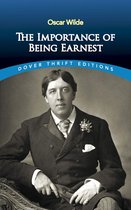
Arguably, the reversal of gender roles in The Importance of Being Earnest together with the
promotion of the female ‘underdogs’ in Not My Best Side and Mrs Sisyphus establish compelling
grounds to advocate the view that comedic literature celebrates the resourcefulness and power of
female characters. Nevertheless, it is vital to consider the extent to which the three marriages
undermine Wilde’s satirical presentation of gender roles and whether the ultimately silenced female
voices in the two poems actually reinforce traditional expectations of femininity.
Despite this, there are undoubtedly moments of Earnest in which gender roles are reversed,
so that female characters become, in many respects, more powerful than the men. The main conduit
for this inversion has to be Lady Bracknell; the use of the imperative in her utterance ‘Rise, sir, from
this semi-recumbent posture’ immediately depicts her as a strong and decisive woman. As seen on
the stage, Lady Bracknell would have towered over Jack in his proposal to Gwendolen, setting her up
as a physical obstacle to love in terms of their union. Indeed, the incredulity contained in Lady
Bracknell’s interrogative ‘a handbag?’ – a line which has become one of the most widely interpreted
in all of British theatre – is indicative of her objection to Jack and Gwendolen’s marriage on grounds
of lineage, which forms the central complication of the plot. From this perspective, Lady Bracknell
wields enormous power in the play, perhaps the most of all characters. Her resourcefulness is also
inferred by her admission ‘When I married Lord Bracknell I had no fortune of any kind’, since she is
able to climb the social ladder by marrying above her station at a time when it was difficult to do so.
Not only should Lady Bracknell be commended for this, but also for her apparent ability to dominate
her husband, who is comically shut up in the attic in fear of his superior’s wrath in a clear inversion
of gender roles. In addition, given her background of social obscurity, there is a glorious illogicality in
her objection to Jack and Gwendolen’s marriage on lineage grounds. Clearly, she is unmotivated
except by the pleasure she takes in power.
One can possibly see a family resemblance in the character of Gwendolen, who seems to
have inherited her mother’s domineering qualities and will convert the apparently submissive and
weak Jack into a hen-pecked husband akin to Lord Bracknell. It could even be argued that
Gwendolen and Cecily identify themselves as New Women, who emerged in the late-19 th century as
citizens dissatisfied with their conventional roles and seeking wider fields of action than mere
domesticity. In spite of her upbringing in the country, Cecily is certainly resourceful and scheming in
her ability to secure Algernon’s affection; the matter-of-fact tone contained in her utterances ‘I
bought this little ring in your name’ and ‘I was forced to write your letters for you’ demonstrates her
lack of shame in pre-determining her marriage to ‘Ernest’ (Algernon in disguise). Subsequently, it is
suggested that she takes matters into her own hands and decides her fate without influence by
others, which is a strong indication of female power. The verbal sparring match between the two
young women could be seen as Wilde’s desire to champion female resourcefulness, since
Gwendolen and Cecily both demonstrate mutual contempt and attempt to psychologically defeat
one another. Gwendolen’s utterance ‘the country always bores me to death’ is indicative of the
conflict between the two characters which parallels the juxtaposition between urban and rural areas
in the play. Gwendolen tries to use the sophistication nurtured in the city to score a psychological
‘Comedic literature celebrates the resourcefulness and power of female characters.’ To what extent
do you agree with this view?
Arguably, the reversal of gender roles in The Importance of Being Earnest together with the
promotion of the female ‘underdogs’ in Not My Best Side and Mrs Sisyphus establish compelling
grounds to advocate the view that comedic literature celebrates the resourcefulness and power of
female characters. Nevertheless, it is vital to consider the extent to which the three marriages
undermine Wilde’s satirical presentation of gender roles and whether the ultimately silenced female
voices in the two poems actually reinforce traditional expectations of femininity.
Despite this, there are undoubtedly moments of Earnest in which gender roles are reversed,
so that female characters become, in many respects, more powerful than the men. The main conduit
for this inversion has to be Lady Bracknell; the use of the imperative in her utterance ‘Rise, sir, from
this semi-recumbent posture’ immediately depicts her as a strong and decisive woman. As seen on
the stage, Lady Bracknell would have towered over Jack in his proposal to Gwendolen, setting her up
as a physical obstacle to love in terms of their union. Indeed, the incredulity contained in Lady
Bracknell’s interrogative ‘a handbag?’ – a line which has become one of the most widely interpreted
in all of British theatre – is indicative of her objection to Jack and Gwendolen’s marriage on grounds
of lineage, which forms the central complication of the plot. From this perspective, Lady Bracknell
wields enormous power in the play, perhaps the most of all characters. Her resourcefulness is also
inferred by her admission ‘When I married Lord Bracknell I had no fortune of any kind’, since she is
able to climb the social ladder by marrying above her station at a time when it was difficult to do so.
Not only should Lady Bracknell be commended for this, but also for her apparent ability to dominate
her husband, who is comically shut up in the attic in fear of his superior’s wrath in a clear inversion
of gender roles. In addition, given her background of social obscurity, there is a glorious illogicality in
her objection to Jack and Gwendolen’s marriage on lineage grounds. Clearly, she is unmotivated
except by the pleasure she takes in power.
One can possibly see a family resemblance in the character of Gwendolen, who seems to
have inherited her mother’s domineering qualities and will convert the apparently submissive and
weak Jack into a hen-pecked husband akin to Lord Bracknell. It could even be argued that
Gwendolen and Cecily identify themselves as New Women, who emerged in the late-19 th century as
citizens dissatisfied with their conventional roles and seeking wider fields of action than mere
domesticity. In spite of her upbringing in the country, Cecily is certainly resourceful and scheming in
her ability to secure Algernon’s affection; the matter-of-fact tone contained in her utterances ‘I
bought this little ring in your name’ and ‘I was forced to write your letters for you’ demonstrates her
lack of shame in pre-determining her marriage to ‘Ernest’ (Algernon in disguise). Subsequently, it is
suggested that she takes matters into her own hands and decides her fate without influence by
others, which is a strong indication of female power. The verbal sparring match between the two
young women could be seen as Wilde’s desire to champion female resourcefulness, since
Gwendolen and Cecily both demonstrate mutual contempt and attempt to psychologically defeat
one another. Gwendolen’s utterance ‘the country always bores me to death’ is indicative of the
conflict between the two characters which parallels the juxtaposition between urban and rural areas
in the play. Gwendolen tries to use the sophistication nurtured in the city to score a psychological