Comedy Comparison practice essay 8
‘Comedic literature entertains rather than instructs: it aims only to please.’ To what extent do you
agree with this view?
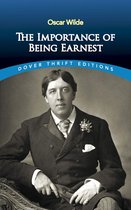
Given the absurdity of the world created in The Importance of Being Earnest and the comedy
of language present in both Sunny Prestatyn and Mrs Sisyphus, it could be argued that comedic
literature merely aims to please and entertain audiences and readers. Nevertheless, it is vital to
consider the extent to which the play and the two poems hide instructive criticisms of aspects of
society, specifically by satirising marriage and patriarchy, which could leave a tinge of tragedy as
opposed to a comic resolution.
Indeed, in Earnest, Wilde appears to present us with a world filled with lies and deceptions,
as the upper-classes seem more concerned with style and public image rather than actual substance.
This view is supported by the periphrastic speech of the characters, who are unable to speak their
minds because of the social confines imposed upon them; Gwendolen forbids Jack from calling a
‘spade’ a ‘spade’, as to speak plainly is to break up the social-game playing on which this society is
based. To a modern audience especially, it is possible to look beyond the entertaining quality of
Gwendolen’s absurd reproach and realise that the characters really cannot speak their minds. To do
so would represent a failure of upper-class manners, and as a result, we feel instructed about the
confines of the society. In the tea-scene involving Gwendolen and Cecily, Wilde brings our attention
to the gap between the behaviour of the characters in front of the servants compared to when they
are alone, as ‘the presence of the servants exercises a restraining influence, under which both girls
chafe’. The use of the verb ‘chafe’ as a stage direction could indicate the repression of the mind
brought about by the upper-class obsession with style over substance, as the two women actually
interrupt their argument for the sake of good appearances. Although this is entertaining in the sense
that we revel in their discomfort, it hides the grim truth that the upper-classes could not speak their
minds. Further disconcerting for some audiences will be the superficiality of the play’s two main
marriages, which are essentially based on a mere name. The exclamatives contained in Gwendolen’s
utterance ‘my own Ernest! I felt from the first that you could have no other name!’ upon realising
Jack’s true identity really highlight the lack of feeling or worth of the union, with love seeming
absent in what should be a romantic comedy. Subsequently, the view of the comic resolution as a
return to unity has to be questioned, as concerning problems still remain at the time of the curtain’s
fall to such an extent that it is perhaps no longer an entertaining play.
The idea that Earnest is therefore an instructive drama gains credibility when we consider
the double lives of Jack and Algernon, both of which suggest that the marriages are based on deceit
and a lie. The latter has ‘invented an invaluable permanent invalid called Bunbury’, while Jack’s
‘name is Ernest in town and Jack in the country’, both of which hide a grim reality. As wealthy and
high-ranking individuals in society, Jack and Algernon would have been expected to live strictly by a
series of rules and norms at the expense of their personal desires. Their invention of double lives
henceforth implies that they have tired of keeping up appearances and need to escape from such
oppression. As a result, there is perhaps a tinge of tragedy here beneath the entertaining quality of
the sonically-satisfying word ‘Bunbury’, which certainly instructs audiences. Both men pretend to be
called Ernest when they know that is a lie, and it could be argued that this is the basis for their
marriages to Gwendolen and Cecily. In that respect, marriage is satirised and is hardly presented as a
‘Comedic literature entertains rather than instructs: it aims only to please.’ To what extent do you
agree with this view?
Given the absurdity of the world created in The Importance of Being Earnest and the comedy
of language present in both Sunny Prestatyn and Mrs Sisyphus, it could be argued that comedic
literature merely aims to please and entertain audiences and readers. Nevertheless, it is vital to
consider the extent to which the play and the two poems hide instructive criticisms of aspects of
society, specifically by satirising marriage and patriarchy, which could leave a tinge of tragedy as
opposed to a comic resolution.
Indeed, in Earnest, Wilde appears to present us with a world filled with lies and deceptions,
as the upper-classes seem more concerned with style and public image rather than actual substance.
This view is supported by the periphrastic speech of the characters, who are unable to speak their
minds because of the social confines imposed upon them; Gwendolen forbids Jack from calling a
‘spade’ a ‘spade’, as to speak plainly is to break up the social-game playing on which this society is
based. To a modern audience especially, it is possible to look beyond the entertaining quality of
Gwendolen’s absurd reproach and realise that the characters really cannot speak their minds. To do
so would represent a failure of upper-class manners, and as a result, we feel instructed about the
confines of the society. In the tea-scene involving Gwendolen and Cecily, Wilde brings our attention
to the gap between the behaviour of the characters in front of the servants compared to when they
are alone, as ‘the presence of the servants exercises a restraining influence, under which both girls
chafe’. The use of the verb ‘chafe’ as a stage direction could indicate the repression of the mind
brought about by the upper-class obsession with style over substance, as the two women actually
interrupt their argument for the sake of good appearances. Although this is entertaining in the sense
that we revel in their discomfort, it hides the grim truth that the upper-classes could not speak their
minds. Further disconcerting for some audiences will be the superficiality of the play’s two main
marriages, which are essentially based on a mere name. The exclamatives contained in Gwendolen’s
utterance ‘my own Ernest! I felt from the first that you could have no other name!’ upon realising
Jack’s true identity really highlight the lack of feeling or worth of the union, with love seeming
absent in what should be a romantic comedy. Subsequently, the view of the comic resolution as a
return to unity has to be questioned, as concerning problems still remain at the time of the curtain’s
fall to such an extent that it is perhaps no longer an entertaining play.
The idea that Earnest is therefore an instructive drama gains credibility when we consider
the double lives of Jack and Algernon, both of which suggest that the marriages are based on deceit
and a lie. The latter has ‘invented an invaluable permanent invalid called Bunbury’, while Jack’s
‘name is Ernest in town and Jack in the country’, both of which hide a grim reality. As wealthy and
high-ranking individuals in society, Jack and Algernon would have been expected to live strictly by a
series of rules and norms at the expense of their personal desires. Their invention of double lives
henceforth implies that they have tired of keeping up appearances and need to escape from such
oppression. As a result, there is perhaps a tinge of tragedy here beneath the entertaining quality of
the sonically-satisfying word ‘Bunbury’, which certainly instructs audiences. Both men pretend to be
called Ernest when they know that is a lie, and it could be argued that this is the basis for their
marriages to Gwendolen and Cecily. In that respect, marriage is satirised and is hardly presented as a