P6 Business resouces
Items 2016 2016 Variances Favourable or Significant or
Budgeted Actual Adverse insignificant
Revenues 79,000 86,500 7,500 Favourable Insignificant
(9.49%)
Materials 16,000 17,000 1,000 Adverse Insignificant
(6.25%)
Wages 9,850 8,360 1,490 Favourable Significant
(15.12%)
Advertisement 1900 1800 100 Favourable Insignificant
(5.26%)
Insurance 500 400 100 Favourable Significant
(20%)
Utilities 1,200 1,350 150 Adverse Significant
(12.5%)
Fixed assets 8,900 7,000 1,900 Favourable Significant
(21.35)
Lease rentals 4,200 3,300 900 Favourable Significant
(21.4)
Rent 9,400 9,700 300 Adverse Insignificant
(3.19)
Loan payments 13,000 11,900 1,100 Favourable Insignificant
(8.46)
Sundry income 2,400 2,200 200 Adverse Insignificant
(8.33)
A budget is mostly just a summary of the likely income and expenditure for a specific
time period. A budget helps a business determine whether it can afford certain facilities
and carry out particular activities or not.
There are many uses of budgets which include:
- Set targets in numerical terms
- To provide direction for directors, managers and staff
- Allows businesses to allocate money towards resources
- To monitor business performance against the budget to therefore make
comparisons easier within the business
- To control expenditures
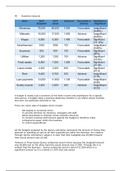
All the budgets prepared by the Quincy enterprise represents the amount of money they
planned on spending as well as all their expenditures within the business. For instance
through Quincy enterprise’s wages it is clear that their budgeted was £9,850 however
their actual amount was £8,360.
However in Fixed assets Quincy enterprise saved money because the budgeted amount
was £8,900 and on the other hand the actual amount was £7,000. Through this it is
evident that the business – Quincy enterprise saved a total of £1,900 which is a
significant amount as it is a whole 21.35% that was saved.
Items 2016 2016 Variances Favourable or Significant or
Budgeted Actual Adverse insignificant
Revenues 79,000 86,500 7,500 Favourable Insignificant
(9.49%)
Materials 16,000 17,000 1,000 Adverse Insignificant
(6.25%)
Wages 9,850 8,360 1,490 Favourable Significant
(15.12%)
Advertisement 1900 1800 100 Favourable Insignificant
(5.26%)
Insurance 500 400 100 Favourable Significant
(20%)
Utilities 1,200 1,350 150 Adverse Significant
(12.5%)
Fixed assets 8,900 7,000 1,900 Favourable Significant
(21.35)
Lease rentals 4,200 3,300 900 Favourable Significant
(21.4)
Rent 9,400 9,700 300 Adverse Insignificant
(3.19)
Loan payments 13,000 11,900 1,100 Favourable Insignificant
(8.46)
Sundry income 2,400 2,200 200 Adverse Insignificant
(8.33)
A budget is mostly just a summary of the likely income and expenditure for a specific
time period. A budget helps a business determine whether it can afford certain facilities
and carry out particular activities or not.
There are many uses of budgets which include:
- Set targets in numerical terms
- To provide direction for directors, managers and staff
- Allows businesses to allocate money towards resources
- To monitor business performance against the budget to therefore make
comparisons easier within the business
- To control expenditures
All the budgets prepared by the Quincy enterprise represents the amount of money they
planned on spending as well as all their expenditures within the business. For instance
through Quincy enterprise’s wages it is clear that their budgeted was £9,850 however
their actual amount was £8,360.
However in Fixed assets Quincy enterprise saved money because the budgeted amount
was £8,900 and on the other hand the actual amount was £7,000. Through this it is
evident that the business – Quincy enterprise saved a total of £1,900 which is a
significant amount as it is a whole 21.35% that was saved.