
Unit 3. Introduction to marketing. Assignment 3
Segmenting and Targeting.
P5
Target markets of different products
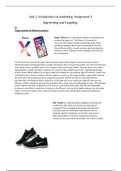
Apple’s iPhone X is a smartphone designed, developed, and
marketed by Apple Inc. The iPhone X is intended to
showcase what Apple considers technology of the future,
specifically adopting OLED screen technology for the first
time in iPhone history, as well as using a glass and stainless-
steel form factor, offering wireless charging, and removing
the home button
The iPhone X has a specifically segmented consumer target market. Apple’s consumer target market is
segmented mainly demographically by wealth and income, this is because the product was the most expensive
mass-market phone available when it was released, with a price tag of $1000+. Basically Apple uses market
segmentation to target particular customers on account of their wealth and income. Segmenting the high
income market allows Apple to focus their resources on selling to that particular type of customer, rather than
wasting time and money on trying to sell the product to everyone. The target market is segmented mainly by
the price tag of the product and any accompanying products and services but it is also segmented by
advertisements showing the iPhone using face id and Apple pay to buy expensive products with ease and
efficiency which is obviously aimed at the population with a large amount of disposable income. This particular
market segment has been targeted for a few reasons; most simply that people with the most disposable
income are more likely to spend lots of money on the IPhone X and any other Apple products, but also Apple
wants to create an image of their customers being successful and well educated using their products for
intellectual tasks.
Nike Trainers are sporting trainers designed, produced and
marketed by Nike which is an American multinational
corporation that is engaged in the design, development,
manufacturing, and worldwide marketing and sales of
footwear, apparel, equipment, accessories, and services.
Nikes first products were track running shoes and they
continue to innovate and be successful in the trainers market.
Segmenting and Targeting.
P5
Target markets of different products
Apple’s iPhone X is a smartphone designed, developed, and
marketed by Apple Inc. The iPhone X is intended to
showcase what Apple considers technology of the future,
specifically adopting OLED screen technology for the first
time in iPhone history, as well as using a glass and stainless-
steel form factor, offering wireless charging, and removing
the home button
The iPhone X has a specifically segmented consumer target market. Apple’s consumer target market is
segmented mainly demographically by wealth and income, this is because the product was the most expensive
mass-market phone available when it was released, with a price tag of $1000+. Basically Apple uses market
segmentation to target particular customers on account of their wealth and income. Segmenting the high
income market allows Apple to focus their resources on selling to that particular type of customer, rather than
wasting time and money on trying to sell the product to everyone. The target market is segmented mainly by
the price tag of the product and any accompanying products and services but it is also segmented by
advertisements showing the iPhone using face id and Apple pay to buy expensive products with ease and
efficiency which is obviously aimed at the population with a large amount of disposable income. This particular
market segment has been targeted for a few reasons; most simply that people with the most disposable
income are more likely to spend lots of money on the IPhone X and any other Apple products, but also Apple
wants to create an image of their customers being successful and well educated using their products for
intellectual tasks.
Nike Trainers are sporting trainers designed, produced and
marketed by Nike which is an American multinational
corporation that is engaged in the design, development,
manufacturing, and worldwide marketing and sales of
footwear, apparel, equipment, accessories, and services.
Nikes first products were track running shoes and they
continue to innovate and be successful in the trainers market.


