University of Leicester - BS1070 - Week 4 - Adaptation and diversity
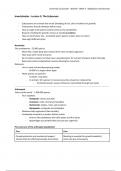
Invertebrates - Lecture 3: The Ecdysozoa
- Ecdysozoans are animals that moult (shedding of hair, skin or feathers for growth)
- Protostomes (mouth develops before anus)
- Have a tough multi-layered cuticle known as the exoskeleton
- Requires shedding for growth, known as moutling (ecdysis)
- Have no locomotory cilia - amoeboid sperm (sperm crawls, does not swim)
- Have eight different phyla
Nematoda
The roundworms - 25 000 species
- Worm-like, simple body plan evolved from more complex organisms
- Have a gut with mouth and anus
- No circulatory system, but they have a pseudocoelom for nutrient transport within the body
- Body wall contains longitudinal muscles allowing for movement
Relevance
- Live in moist soil and decomposing matter
- 90 000 in a single rotten apple
- Many species are parasitic
- In plants: crop pests
- In animals: 50+ species in humans (ascarids, pinworms, hookworms)
- Trichinella spiralis: causes trichinosis, transmitted through raw meats
Arthropods
‘Rulers of the earth’ - 1 000 000 species
- Four subphyla:
- Hexapoda: insects and allies
- Crustacea: crabs, shrimp and woodlice
- Chelicerata: spiders, mites and scorpions
- Myriapoda: centipedes and millipedes
- Metamerically segmented (like annelids)
- Completely covered by a protein (chitin) cuticle
- Armour like exoskeleton with thick plates and thin joints
- Appendages are jointed limbs (one pair per segment)
Pros and cons of the arthropod exoskeleton
Pros Cons
Provide protection and mechanical support Moulting is essential for growth (wasteful)
Jointed limbs for effective/complex locomotion Limits size due to buoyancy
Invertebrates - Lecture 3: The Ecdysozoa
- Ecdysozoans are animals that moult (shedding of hair, skin or feathers for growth)
- Protostomes (mouth develops before anus)
- Have a tough multi-layered cuticle known as the exoskeleton
- Requires shedding for growth, known as moutling (ecdysis)
- Have no locomotory cilia - amoeboid sperm (sperm crawls, does not swim)
- Have eight different phyla
Nematoda
The roundworms - 25 000 species
- Worm-like, simple body plan evolved from more complex organisms
- Have a gut with mouth and anus
- No circulatory system, but they have a pseudocoelom for nutrient transport within the body
- Body wall contains longitudinal muscles allowing for movement
Relevance
- Live in moist soil and decomposing matter
- 90 000 in a single rotten apple
- Many species are parasitic
- In plants: crop pests
- In animals: 50+ species in humans (ascarids, pinworms, hookworms)
- Trichinella spiralis: causes trichinosis, transmitted through raw meats
Arthropods
‘Rulers of the earth’ - 1 000 000 species
- Four subphyla:
- Hexapoda: insects and allies
- Crustacea: crabs, shrimp and woodlice
- Chelicerata: spiders, mites and scorpions
- Myriapoda: centipedes and millipedes
- Metamerically segmented (like annelids)
- Completely covered by a protein (chitin) cuticle
- Armour like exoskeleton with thick plates and thin joints
- Appendages are jointed limbs (one pair per segment)
Pros and cons of the arthropod exoskeleton
Pros Cons
Provide protection and mechanical support Moulting is essential for growth (wasteful)
Jointed limbs for effective/complex locomotion Limits size due to buoyancy