The Elizabethan Church Settlement
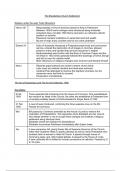
Religion under the early Tudor Monarchs
Henry VIII - Responsibility of Church doctrine passed to King in Parliament
- Between 1536-9 some changes were introduced along moderate
protestant lines, but after 1539 Henry returned to an orthodox catholic
position on doctrine
- Dissolved monastic institutions to seize their land and wealth
- By end of reign many courtiers and his son were protestant
Edward VI - Duke of Somerset introduced a Protestant prayer book and communion
service, ordered the destruction of all images in churches, allowed
priests to marry and decided that services should be in english
- Northumberland went further with the Book of Common Prayer and the
42 Article in 1552 which generally followed the teachings of Ulrich Zwingli
and left no room for catholic belief
- Main influences on religious changes were Cranmer and Edward himself
Mary I - Restored papal authority but couldn’t restore church lands
- Latin mass and catholic doctrine and ritual were enforced
- Cardinal Pole attempted to improve the standard of priests, but his
measures never had time to succeed
- Persecution of protestants
The Act of Supremacy and The Act of Uniformity, 1559
Key Dates:
9 Feb Three separate bills introduced into the House of Commons. One reestablished
1559 the monarch as Head of the Church, the other two established a Protestant form
of worship probably based on Northumberland’s Prayer Book of 1552.
21 Feb A new bill was introduced, combining the three separate ones on the 9th.
1559 Passed at Commons.
Mar Bill passed by Commons amended by the House of Lords to remove the
restoration of Protestantism. This opposition stuns Elizabeth and her council,
who debate whether or not to accept these changes and institute a religious
settlement along Henrican lines.
Elizabeth arrests two bishops for disobedience.
Elizabeth reconvenes Parliament immediately after Easter break.
Apr A new supremacy bill, giving Queen title of Supreme Governor of the Church
rather than Supreme Head, to pacify catholics as well as many Protestants who
doubted claim of woman to Head of Church. It passes through House of
Commons easily, and, after heated debate, it passed by the House of Lords.
A new uniformity bill is drafted to include concessions to catholics. Passed by 21
to 18 votes.
Religion under the early Tudor Monarchs
Henry VIII - Responsibility of Church doctrine passed to King in Parliament
- Between 1536-9 some changes were introduced along moderate
protestant lines, but after 1539 Henry returned to an orthodox catholic
position on doctrine
- Dissolved monastic institutions to seize their land and wealth
- By end of reign many courtiers and his son were protestant
Edward VI - Duke of Somerset introduced a Protestant prayer book and communion
service, ordered the destruction of all images in churches, allowed
priests to marry and decided that services should be in english
- Northumberland went further with the Book of Common Prayer and the
42 Article in 1552 which generally followed the teachings of Ulrich Zwingli
and left no room for catholic belief
- Main influences on religious changes were Cranmer and Edward himself
Mary I - Restored papal authority but couldn’t restore church lands
- Latin mass and catholic doctrine and ritual were enforced
- Cardinal Pole attempted to improve the standard of priests, but his
measures never had time to succeed
- Persecution of protestants
The Act of Supremacy and The Act of Uniformity, 1559
Key Dates:
9 Feb Three separate bills introduced into the House of Commons. One reestablished
1559 the monarch as Head of the Church, the other two established a Protestant form
of worship probably based on Northumberland’s Prayer Book of 1552.
21 Feb A new bill was introduced, combining the three separate ones on the 9th.
1559 Passed at Commons.
Mar Bill passed by Commons amended by the House of Lords to remove the
restoration of Protestantism. This opposition stuns Elizabeth and her council,
who debate whether or not to accept these changes and institute a religious
settlement along Henrican lines.
Elizabeth arrests two bishops for disobedience.
Elizabeth reconvenes Parliament immediately after Easter break.
Apr A new supremacy bill, giving Queen title of Supreme Governor of the Church
rather than Supreme Head, to pacify catholics as well as many Protestants who
doubted claim of woman to Head of Church. It passes through House of
Commons easily, and, after heated debate, it passed by the House of Lords.
A new uniformity bill is drafted to include concessions to catholics. Passed by 21
to 18 votes.