

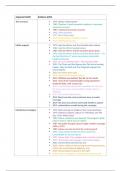
Argument (AO2) Evidence (AO1)
The economy 1979: Winter of Discontent
1983: Thatcher’s harsh economic medicine + recession -
economic recovery
1987: continued economic recovery
1992: 1991 recession
1997: Black Wednesday
2010: Parliamentary expenses scandal
2010: 2008 financial crisis
Media support 1979: only the Mirror and The Guardian back Labour
1983: only the Mirror backed Labour
1987: only the Mirror and the Guardian back Labour
1992: only the Mirror and the Guardian back Labour - ‘It’s
the Sun Wot Won It’: press were almost universally
hostile to Kinnock
1997: The Sun switched sides: ‘The Sun Backs Blair’
2001: The Times and the Express join The Sun in backing
Labour. Only the Mail and The Telegraph support the
Conservatives
2005: the media were split
2010: only the Mirror backs Labour
2015: Miliband was dubbed ‘Red Ed’ by the media
2015: most of the media thought a hung parliament
would be likely, with a close race
2017: commentators predicted a landslide for May and
the press were even more hostile to Corbyn than to
Miliband
2017: the social media election
2019: Brexit was the most prominent issue in media
coverage
2019: the press was almost universally hostile to Labour
2019: antisemitism scandal during the campaign
Manifestos/campaigns 1979: Both running on middle-of-the-road manifestos.
1979: Saatchi & Saatchi ‘Labour isn’t Working’ and The
Sun ‘Crisis, What Crisis?’
1983: Labour manifesto was deemed ‘The longest suicide
note in history’ and it was too radical
1987: the public thought Labour fought a better campaign
(40% vs 37%)
1987: Labour was too far from the centre ground
1992: more centrist manifesto from Labour but
commitment to ‘tax and spend’
1997: Labour offer 5 key pledges and a centrist manifesto
1997: ‘New Labour New Danger’ from Conservatives
2001: Conservatives promise tax cuts
2005: Labour relied on their strong record in government,
which was overshadowed slightly by Iraq
2005: Howard kept the party on the right
2010: Labour campaigns on competence whereas the
The economy 1979: Winter of Discontent
1983: Thatcher’s harsh economic medicine + recession -
economic recovery
1987: continued economic recovery
1992: 1991 recession
1997: Black Wednesday
2010: Parliamentary expenses scandal
2010: 2008 financial crisis
Media support 1979: only the Mirror and The Guardian back Labour
1983: only the Mirror backed Labour
1987: only the Mirror and the Guardian back Labour
1992: only the Mirror and the Guardian back Labour - ‘It’s
the Sun Wot Won It’: press were almost universally
hostile to Kinnock
1997: The Sun switched sides: ‘The Sun Backs Blair’
2001: The Times and the Express join The Sun in backing
Labour. Only the Mail and The Telegraph support the
Conservatives
2005: the media were split
2010: only the Mirror backs Labour
2015: Miliband was dubbed ‘Red Ed’ by the media
2015: most of the media thought a hung parliament
would be likely, with a close race
2017: commentators predicted a landslide for May and
the press were even more hostile to Corbyn than to
Miliband
2017: the social media election
2019: Brexit was the most prominent issue in media
coverage
2019: the press was almost universally hostile to Labour
2019: antisemitism scandal during the campaign
Manifestos/campaigns 1979: Both running on middle-of-the-road manifestos.
1979: Saatchi & Saatchi ‘Labour isn’t Working’ and The
Sun ‘Crisis, What Crisis?’
1983: Labour manifesto was deemed ‘The longest suicide
note in history’ and it was too radical
1987: the public thought Labour fought a better campaign
(40% vs 37%)
1987: Labour was too far from the centre ground
1992: more centrist manifesto from Labour but
commitment to ‘tax and spend’
1997: Labour offer 5 key pledges and a centrist manifesto
1997: ‘New Labour New Danger’ from Conservatives
2001: Conservatives promise tax cuts
2005: Labour relied on their strong record in government,
which was overshadowed slightly by Iraq
2005: Howard kept the party on the right
2010: Labour campaigns on competence whereas the


