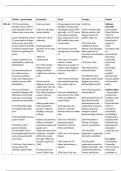
Lenin 1919 Comintern established to spread international revolution
after the success of the Bolshevik revolution
Russia along with Germany where excluded from the league of nations and
post-war arrangements for collective security
March 1st founding congress of the Comintern in Moscow, over 50 delegates with
Zinoviev as chairman
1920 2nd comintern conference in Petrograd during the height of the Russo-Polish
July- war, dominated by debates over Lenin’s ‘21 conditions’ so some European
August delegations broke away
1921 Anglo-Soviet Treaty: Britain agreed to advance £30 million loan to the USSR,
summer in compensation they would pay for British nancial assets Bolsheviks seized
after the October revolution
1922 The Rapallo Treaty with Germany: article 4 and 5 concerned with ‘mutual
April goodwill’ in commercial and economic relations
July secret additional agreement authorised German army to carry out training in
USSR
Stalin 1924 Georgii Chicherin was Chief representative of foreign a airs
1925 Germany signing the Lacarno Treaties and joining the League of Nations
showed commitment to western Europe compromising relations with Russia,
only being due to joint isolation and contradicting Stalin’s policy of ‘world
revolution’
1926 British government saw the general strike in Russia as subversive behaviour
and relations ruptured
March Treaty of Berlin aimed at building a ‘trustful cooperation’
June large nancial credits received from German banks
1927 GMD’s second massacre of c.30,000 striking workers in Wuhan
1929 Russia in a good position to survive the World Economic Crisis following the
Wall Street Crash as isolated from world trade
1930 Maksim Litvinov appointed Foreign Commissar
1931 Japanese military expansion into Manchuria sparked Stalin’s concern
1932 non-aggression pact with Poland (made into ten-year agreement 1934)
December
1933 diplomatic relations with America established opening an embassy in Moscow
1934 The USSR was invited to join the League of Nations as the West thought Stalin
September could strengthen resistance against Germany or Japan and Stalin could
in uence the actions of Britain and France
1935 Franco-Soviet Pact of Mutual Assistance but vague on the conditions of
May military cooperation
1936 Britain and France intervene in the Spanish Civil War after its agreeing with the
USSR to avoid internationalisation
Anti-Comintern Pact between Japan, Germany and Italy began the anti-Soviet
‘axis’ alliance
1937 the USSR change their approach to pursuing an ‘anti-fascist crusade’ sending
Spring hundreds of advisors with military backing to support the Spanish Republican
Government
fl fi
fi ff
after the success of the Bolshevik revolution
Russia along with Germany where excluded from the league of nations and
post-war arrangements for collective security
March 1st founding congress of the Comintern in Moscow, over 50 delegates with
Zinoviev as chairman
1920 2nd comintern conference in Petrograd during the height of the Russo-Polish
July- war, dominated by debates over Lenin’s ‘21 conditions’ so some European
August delegations broke away
1921 Anglo-Soviet Treaty: Britain agreed to advance £30 million loan to the USSR,
summer in compensation they would pay for British nancial assets Bolsheviks seized
after the October revolution
1922 The Rapallo Treaty with Germany: article 4 and 5 concerned with ‘mutual
April goodwill’ in commercial and economic relations
July secret additional agreement authorised German army to carry out training in
USSR
Stalin 1924 Georgii Chicherin was Chief representative of foreign a airs
1925 Germany signing the Lacarno Treaties and joining the League of Nations
showed commitment to western Europe compromising relations with Russia,
only being due to joint isolation and contradicting Stalin’s policy of ‘world
revolution’
1926 British government saw the general strike in Russia as subversive behaviour
and relations ruptured
March Treaty of Berlin aimed at building a ‘trustful cooperation’
June large nancial credits received from German banks
1927 GMD’s second massacre of c.30,000 striking workers in Wuhan
1929 Russia in a good position to survive the World Economic Crisis following the
Wall Street Crash as isolated from world trade
1930 Maksim Litvinov appointed Foreign Commissar
1931 Japanese military expansion into Manchuria sparked Stalin’s concern
1932 non-aggression pact with Poland (made into ten-year agreement 1934)
December
1933 diplomatic relations with America established opening an embassy in Moscow
1934 The USSR was invited to join the League of Nations as the West thought Stalin
September could strengthen resistance against Germany or Japan and Stalin could
in uence the actions of Britain and France
1935 Franco-Soviet Pact of Mutual Assistance but vague on the conditions of
May military cooperation
1936 Britain and France intervene in the Spanish Civil War after its agreeing with the
USSR to avoid internationalisation
Anti-Comintern Pact between Japan, Germany and Italy began the anti-Soviet
‘axis’ alliance
1937 the USSR change their approach to pursuing an ‘anti-fascist crusade’ sending
Spring hundreds of advisors with military backing to support the Spanish Republican
Government
fl fi
fi ff