LAND REGISTRATION
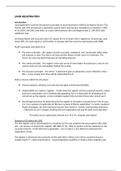
Introduction
Land registration was first introduced successfully in South Australia in 1858 by Sir Robert Torrens. The
the UK, LRA 1925 introduced a registration system which only became compulsory on transfer in 1990.
In Oct 2003, LRA 2002 took effect as a joint effort between the Land Registry and LC. LRR 2003 adds
additional rules.
LR Annual Report and Accounts (2016-17) reports 84.3% of land in EW is registered. 10 years ago, only
about 48%. The land registry is self-funded, so changes with the economy (eg housing crash 2008).
Ruoff’s principles and ideals of LR:
The mirror principle – the register should accurately, completely, and conclusively reflect titles
and interests in land. The mirror will not track the history of title, since it is irrelevant. The
mirror can never be perfect because of overriding interests
The curtain principle – the register is the sole source of information for purchasers, who do not
need to look at trusts and equities ‘behind the curtain’
The insurance principle – the mirror “is deemed to give an absolutely correct reflection of the
title,” so loss arising from flaws will be indemnified by LR
Policy concerns within the LR system:
Tension between certainty as to who has the rights and fairness/flexibility
Undesirability of a ‘perfect’ register – Cooke notes the register achieves practical security, makes
land more marketable, and is intellectually appealing, but it is impossible for all dealing to be
carried out on the register; a more complete register fails to protect those who cannot use it
Should legal outcomes be determined by the register or principles of property law? The LC says
it is “not a system of registration of title but a system of title by registration”; in Scott v Southern
Pacific Mortgages Ltd, Hale expressed concern (the system is “merely conveyancing machinery
… otherwise we are in danger of letting the land registration tail wag the land ownership dog”)
This policy issue is particularly relevant in A B C disputes (see below)
Features of LR under LRA 2002
The title register can be downloaded for a small fee (£3 for your property) for any property (LRA 2002,
s66 – any person can inspect the register; LRR 2003, Pt 13). Titles to estates must be registered on the
occasions listed in s 4 LRA 2002 (first registration – see S1 notes); s 3(2) allows for voluntary first
registration of title.
The register is deemed to be conclusive of title (LRA 2002 s 58(1)), even where caused by fraud or
mistake (Swift 1st v Chief Land Registrar – forged disposition qualified; cf Malory which originally said
Introduction
Land registration was first introduced successfully in South Australia in 1858 by Sir Robert Torrens. The
the UK, LRA 1925 introduced a registration system which only became compulsory on transfer in 1990.
In Oct 2003, LRA 2002 took effect as a joint effort between the Land Registry and LC. LRR 2003 adds
additional rules.
LR Annual Report and Accounts (2016-17) reports 84.3% of land in EW is registered. 10 years ago, only
about 48%. The land registry is self-funded, so changes with the economy (eg housing crash 2008).
Ruoff’s principles and ideals of LR:
The mirror principle – the register should accurately, completely, and conclusively reflect titles
and interests in land. The mirror will not track the history of title, since it is irrelevant. The
mirror can never be perfect because of overriding interests
The curtain principle – the register is the sole source of information for purchasers, who do not
need to look at trusts and equities ‘behind the curtain’
The insurance principle – the mirror “is deemed to give an absolutely correct reflection of the
title,” so loss arising from flaws will be indemnified by LR
Policy concerns within the LR system:
Tension between certainty as to who has the rights and fairness/flexibility
Undesirability of a ‘perfect’ register – Cooke notes the register achieves practical security, makes
land more marketable, and is intellectually appealing, but it is impossible for all dealing to be
carried out on the register; a more complete register fails to protect those who cannot use it
Should legal outcomes be determined by the register or principles of property law? The LC says
it is “not a system of registration of title but a system of title by registration”; in Scott v Southern
Pacific Mortgages Ltd, Hale expressed concern (the system is “merely conveyancing machinery
… otherwise we are in danger of letting the land registration tail wag the land ownership dog”)
This policy issue is particularly relevant in A B C disputes (see below)
Features of LR under LRA 2002
The title register can be downloaded for a small fee (£3 for your property) for any property (LRA 2002,
s66 – any person can inspect the register; LRR 2003, Pt 13). Titles to estates must be registered on the
occasions listed in s 4 LRA 2002 (first registration – see S1 notes); s 3(2) allows for voluntary first
registration of title.
The register is deemed to be conclusive of title (LRA 2002 s 58(1)), even where caused by fraud or
mistake (Swift 1st v Chief Land Registrar – forged disposition qualified; cf Malory which originally said