Sources of energy in a coastal
system
- Wind
- Waves
- Tides
- sea currents
Wind
Waves created by transfer of energy from wind blowing over sea surface (friction drag of the wind)
Abrasion – most common type of wind erosion
Waves
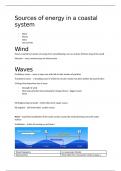
Oscillatory waves – wave in open sea with full circular motion of particles
Translatory waves – a breaking wave in which the circular motion has been broken by basal friction
3 things that determine size of wave
- Strength of wind
- How long wind has been blowing for (longer blows = bigger wave)
- Fetch
SW England (eg Cornwall) - 2,500 miles fetch, larger waves
NE England – 500 miles fetch, smaller waves
Wave = superficial undulation of the water surface caused by winds blowing across the water
surface
Undulation – action of moving up and down
Wave frequency n.o waves per minute
Wave period Time taken for 2 successive crests to pass a
system
- Wind
- Waves
- Tides
- sea currents
Wind
Waves created by transfer of energy from wind blowing over sea surface (friction drag of the wind)
Abrasion – most common type of wind erosion
Waves
Oscillatory waves – wave in open sea with full circular motion of particles
Translatory waves – a breaking wave in which the circular motion has been broken by basal friction
3 things that determine size of wave
- Strength of wind
- How long wind has been blowing for (longer blows = bigger wave)
- Fetch
SW England (eg Cornwall) - 2,500 miles fetch, larger waves
NE England – 500 miles fetch, smaller waves
Wave = superficial undulation of the water surface caused by winds blowing across the water
surface
Undulation – action of moving up and down
Wave frequency n.o waves per minute
Wave period Time taken for 2 successive crests to pass a