LOFTUS + PALMER AO1 AND AO3 (1974)
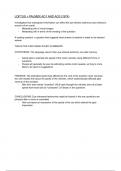
Investigated how subsequent information can affect the eye witness testimony (eye witness’s
account of an event)
- Misleading info of visual images
- Misleading info in terms of the wording of the question
A leading question: a question that suggests what answer is desired or leads to the desired
answer
THIS IS THE CAR CRASH STUDY IN MEMORY
HYPOTHESIS- The language used in their eye witness testimony can alter memory
- Asked ppts to estimate the speed of the motor vehicles using different forms of
questions
- People will generally be poor at estimating vehicle motor speeds, so they’re more
likely to be open to suggestions
FINDINGS: The estimated speed was affected by the verb of the question used, because
the verb implied info about the speed of the vehicles, which systematically affected ppts
memory of the accident.
- Ppts who were asked “smashed” (40.8 mph) thought the vehicles went at a faster
speed than those told as “contacted” (31.8mph) in the questions
CONCLUSIONS: Eye witnessed testimonies might be biased in the way questions are
phrased after a crime is committed
- Verb conveyed an impression of the speed of the car which altered the ppts
impression
Investigated how subsequent information can affect the eye witness testimony (eye witness’s
account of an event)
- Misleading info of visual images
- Misleading info in terms of the wording of the question
A leading question: a question that suggests what answer is desired or leads to the desired
answer
THIS IS THE CAR CRASH STUDY IN MEMORY
HYPOTHESIS- The language used in their eye witness testimony can alter memory
- Asked ppts to estimate the speed of the motor vehicles using different forms of
questions
- People will generally be poor at estimating vehicle motor speeds, so they’re more
likely to be open to suggestions
FINDINGS: The estimated speed was affected by the verb of the question used, because
the verb implied info about the speed of the vehicles, which systematically affected ppts
memory of the accident.
- Ppts who were asked “smashed” (40.8 mph) thought the vehicles went at a faster
speed than those told as “contacted” (31.8mph) in the questions
CONCLUSIONS: Eye witnessed testimonies might be biased in the way questions are
phrased after a crime is committed
- Verb conveyed an impression of the speed of the car which altered the ppts
impression