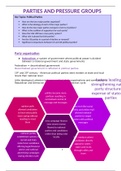
PARTIES AND PRESSURE GROUPS
Key Topics: Political Parties
How are the two major parties organised?
What is the ideology of each of the major parties?
How do the two major parties compare in terms of policies?
What is the coalition of supporters for each party?
Does the USA still have a two-party system?
What role is played by third parties?
Are the US parties in a period of decline or renewal?
Significant comparisons between US and UK political parties?
Party organisation
federalism: a system of government where political power is divided
between a national government and state governments
Federalism = decentralised government
Decentralised government is reflected in political parties.
19th and 20th century – American political parties were evident at state and local
levels than national level
Little ideological cohesion between parties’ state organisations and same party sofactors leading
Republican and Democrat = insignificant outside election cycle.
strengthening nati
party structures
politics became more expense of state/
partisan resulting in
centralised control of parties
message and messages
opinion polls new tech like social
allowed candidates media and online mail
to hear what public allowed national
were saying without parties to target
needing to meet voters with political
new campaign finance
them messages
laws meant money
flowed to national
parties and candidates
national parties rather than being raise
established systems to locally TV = medium where
recruit and train candidates directly
state/local candidates appeal to voters –
offering legal/financial state used to do
advice and national 1 through rallies and
advertising campaigns tours
during election cycle
Key Topics: Political Parties
How are the two major parties organised?
What is the ideology of each of the major parties?
How do the two major parties compare in terms of policies?
What is the coalition of supporters for each party?
Does the USA still have a two-party system?
What role is played by third parties?
Are the US parties in a period of decline or renewal?
Significant comparisons between US and UK political parties?
Party organisation
federalism: a system of government where political power is divided
between a national government and state governments
Federalism = decentralised government
Decentralised government is reflected in political parties.
19th and 20th century – American political parties were evident at state and local
levels than national level
Little ideological cohesion between parties’ state organisations and same party sofactors leading
Republican and Democrat = insignificant outside election cycle.
strengthening nati
party structures
politics became more expense of state/
partisan resulting in
centralised control of parties
message and messages
opinion polls new tech like social
allowed candidates media and online mail
to hear what public allowed national
were saying without parties to target
needing to meet voters with political
new campaign finance
them messages
laws meant money
flowed to national
parties and candidates
national parties rather than being raise
established systems to locally TV = medium where
recruit and train candidates directly
state/local candidates appeal to voters –
offering legal/financial state used to do
advice and national 1 through rallies and
advertising campaigns tours
during election cycle