2 sample 20 Mark extended response score questions answers on
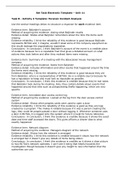
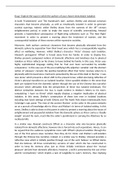
classification systems and reliability and validity of diagnosis
Evaluate the classification systems dsm-5 and icd-10 for
mental health, including reliability and validity of
diagnosis (20 marks)
Diagnostic and statistical manual of mental disorders DSM and international classification
system of diseases ICD are the two main manuals used for diagnosis in mental disorders.
The DSM is an American classification system, whereas the icd is a classification system
provided by their word Health Organization and used in Europe. These classifications
systems provide checklists of symptoms that commonly cluster together and can be used to
create clinical interview schedules that allow practitioners to identify and diagnose hundreds
of different disorders.
In terms of diagnosis, reliability refers to consistency. for our classification system to be of
any user, it must be reliable. In other words, diagnosis is considered to be reliable if more
than one clinician gives the same diagnosis to the same individual, known as inter-rater
reliability.
The strength of the DSM 5 is that there is a good level of agreement for some deserters. The
DSM describes and classifies symptoms, features and associated risk factors over 300
mental and behavioural disorders and is used for us and in many nations across the world.
Inter-rater reliability of diagnosis is checked using Cohen's kappa, which is a score for the
proportion of people who get the same diagnosis when assessed and are then reassessed
by an alternative practitioner. Regier et al. 2013 demonstrated in field trials to check the
reliability of the dsm-5 impressive agreement between clinicians for a variety of disorders. 3
disorders such as PTSD had Kappa values of 0.60-0.79 very good. Seven more disorders
such as schizophrenia had the values of 0.4 to 0.59 which is good. This is important
because the criteria for many disorders have changed in the new revision of the DSM such
as specific symptoms for a diagnosis and clinicians have clearly adapted well.
One Weakness in relation to reliability of the dsm-5 is the issue of falling standards. The
acceptable Kappa value or level of agreement between clinicians using the DSM has fallen
over the last 35 years. According to Cooper 2014, only 15% of the disorders evaluated in the
DSM-V field trials achieved a Kappa score of more than 0.6 compared with the original 0.7
identified as good agreement by Spitzer in the review of dsm-III. This is concerning Regier et
al.2013 found that in field trials, one of the disorders which was considered to be least
reliable at 0.28 agreement was major depressive disorder MDD, which is one of the most
prevalent disorders in the US. This evidence suggests that the DSM may be distinctly less
reliable than previous versions and that diagnoses of cases of MDD may have been made
in error or missed altogether. That said, it is not really appropriate to compare reliability data
for the DSM-V and previous versions as different methods were employed to evaluate DMC
III. for example, Kupfner and Kraemer (2012) explain that during the dsm-5 field trials,
practitioners were asked to work as they usually world and take patients as they come in to
mirror normal practice, whereas previously test patients were carefully screened and
classification systems and reliability and validity of diagnosis
Evaluate the classification systems dsm-5 and icd-10 for
mental health, including reliability and validity of
diagnosis (20 marks)
Diagnostic and statistical manual of mental disorders DSM and international classification
system of diseases ICD are the two main manuals used for diagnosis in mental disorders.
The DSM is an American classification system, whereas the icd is a classification system
provided by their word Health Organization and used in Europe. These classifications
systems provide checklists of symptoms that commonly cluster together and can be used to
create clinical interview schedules that allow practitioners to identify and diagnose hundreds
of different disorders.
In terms of diagnosis, reliability refers to consistency. for our classification system to be of
any user, it must be reliable. In other words, diagnosis is considered to be reliable if more
than one clinician gives the same diagnosis to the same individual, known as inter-rater
reliability.
The strength of the DSM 5 is that there is a good level of agreement for some deserters. The
DSM describes and classifies symptoms, features and associated risk factors over 300
mental and behavioural disorders and is used for us and in many nations across the world.
Inter-rater reliability of diagnosis is checked using Cohen's kappa, which is a score for the
proportion of people who get the same diagnosis when assessed and are then reassessed
by an alternative practitioner. Regier et al. 2013 demonstrated in field trials to check the
reliability of the dsm-5 impressive agreement between clinicians for a variety of disorders. 3
disorders such as PTSD had Kappa values of 0.60-0.79 very good. Seven more disorders
such as schizophrenia had the values of 0.4 to 0.59 which is good. This is important
because the criteria for many disorders have changed in the new revision of the DSM such
as specific symptoms for a diagnosis and clinicians have clearly adapted well.
One Weakness in relation to reliability of the dsm-5 is the issue of falling standards. The
acceptable Kappa value or level of agreement between clinicians using the DSM has fallen
over the last 35 years. According to Cooper 2014, only 15% of the disorders evaluated in the
DSM-V field trials achieved a Kappa score of more than 0.6 compared with the original 0.7
identified as good agreement by Spitzer in the review of dsm-III. This is concerning Regier et
al.2013 found that in field trials, one of the disorders which was considered to be least
reliable at 0.28 agreement was major depressive disorder MDD, which is one of the most
prevalent disorders in the US. This evidence suggests that the DSM may be distinctly less
reliable than previous versions and that diagnoses of cases of MDD may have been made
in error or missed altogether. That said, it is not really appropriate to compare reliability data
for the DSM-V and previous versions as different methods were employed to evaluate DMC
III. for example, Kupfner and Kraemer (2012) explain that during the dsm-5 field trials,
practitioners were asked to work as they usually world and take patients as they come in to
mirror normal practice, whereas previously test patients were carefully screened and