Structure
Four types: Ionic, metallic, giant covalent and molecular covalent
Molecular Covalent Crystals:
-Usually gases due to weak forces of attraction (molecular covalent substances)
-When solids, tend to form crystals
Examples: iodine, sulphur, ice
Sulphur exists as S8 molecules, which consists of 8 sulphur atoms covalently bonded
together in a puckered ring.
Properties:
-usually low MP/BP due to weak intermolecular forces
-Don’t conduct electricity due to no free electrons/ions to carry charge
Giant Covalent Crystals:
Carbon, graphite
High MP due to strong covalent bonds between atoms in these crystals (a lot of energy
required to break the large no. of strong covalent bonds)
Regular structure means they are crystalline
Graphite: each carbon is covalently bonded to 3 others in a layered hexagonal structure.
Delocalised electrons between layers can move and carry charge when solid.
Diamond: Each carbon is covalently bonded to four others in a tetrahedral arrangement.
Rigid 3d structure along with the strong covalent bonds cause it to be hard.
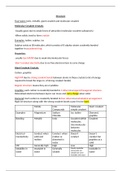
Metals Ionic Molecular Giant covalent
Compounds simple covalent
Examples Magnesium Sodium Ice, Iodine Diamond,
Chloride graphite
Bonding Metallic Ionic Covalent within Covalent
molecules.
Intermolecular
between
molecules
Electrical Conduct when Conduct when Doesn’t Doesn’t
Conductivity solid and molten or conduct conduct bar
molten dissolved in graphite as a
water solid
MP Generally high High Low High
Solubility in Insoluble in Generally Mostly insoluble, Insoluble in
some polar are
water water soluble soluble but some water
insoluble only react
Four types: Ionic, metallic, giant covalent and molecular covalent
Molecular Covalent Crystals:
-Usually gases due to weak forces of attraction (molecular covalent substances)
-When solids, tend to form crystals
Examples: iodine, sulphur, ice
Sulphur exists as S8 molecules, which consists of 8 sulphur atoms covalently bonded
together in a puckered ring.
Properties:
-usually low MP/BP due to weak intermolecular forces
-Don’t conduct electricity due to no free electrons/ions to carry charge
Giant Covalent Crystals:
Carbon, graphite
High MP due to strong covalent bonds between atoms in these crystals (a lot of energy
required to break the large no. of strong covalent bonds)
Regular structure means they are crystalline
Graphite: each carbon is covalently bonded to 3 others in a layered hexagonal structure.
Delocalised electrons between layers can move and carry charge when solid.
Diamond: Each carbon is covalently bonded to four others in a tetrahedral arrangement.
Rigid 3d structure along with the strong covalent bonds cause it to be hard.
Metals Ionic Molecular Giant covalent
Compounds simple covalent
Examples Magnesium Sodium Ice, Iodine Diamond,
Chloride graphite
Bonding Metallic Ionic Covalent within Covalent
molecules.
Intermolecular
between
molecules
Electrical Conduct when Conduct when Doesn’t Doesn’t
Conductivity solid and molten or conduct conduct bar
molten dissolved in graphite as a
water solid
MP Generally high High Low High
Solubility in Insoluble in Generally Mostly insoluble, Insoluble in
some polar are
water water soluble soluble but some water
insoluble only react