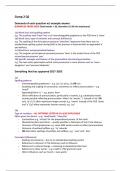
SHN169 – Introduction to Wound Management
Introduction to Wound Management
Learning Objectives
Demonstrate an understanding of the principles of wound care
Describe the five stages of wound healing
Demonstrate understanding for the need for comprehensive wound assessment and
identify factors influencing wound healing
Identify a range of dressings and their suitability for different types of wounds
What is a Wound?
‘An injury to living tissue, breaking it’s continuity’
Martin (2010)
Caused by external and internal factors
What type of wounds have you come across in clinical practice?
Leg Ulcer
Surgical Wounds
Pressure Sore
Broken Bones (open fractures)
Burns
Moisture Legions
Surgical Wounds
Acute vs Chronic Wounds
Acute – a wound which starts to heal within 6 weeks or less
o Surgical Wounds are often acute in nature
Chronic – a wound which fails to heal after 6 weeks
Components and functions of Skin
Epidermis
o Protection from the environment
o Prevents excessive water loss
o Protection from infection
Dermis
o Gives protection from bumps and knocks
o Provides oxygen and nutrients
o Provides shape by holding structures together
1
, SHN169 – Introduction to Wound Management
o Contributes to skin colour
Subcutaneous tissue and deep fascia
How do Wounds Heal?
Phase 1: Haemostasis
o Vasoconstriction – within seconds, blood vessels constrict to stop bleeding
and reduce exposure to bacteria
Good to run effected area under warm water to help remove bacteria
and encourage further bleeding
o Platelets cluster together to form a ‘clot’
o Wound healing begins
within minutes after
tissue damage
Phase 2: Inflammatory Phase
o This is the body’s early
defence system against
microbial invasion
o After haemostasis
blood vessels dilate to
allow chemical factors
such as growth
hormones that
encourage fibroblasts
and neutrophils to
migrate to the area
2
Introduction to Wound Management
Learning Objectives
Demonstrate an understanding of the principles of wound care
Describe the five stages of wound healing
Demonstrate understanding for the need for comprehensive wound assessment and
identify factors influencing wound healing
Identify a range of dressings and their suitability for different types of wounds
What is a Wound?
‘An injury to living tissue, breaking it’s continuity’
Martin (2010)
Caused by external and internal factors
What type of wounds have you come across in clinical practice?
Leg Ulcer
Surgical Wounds
Pressure Sore
Broken Bones (open fractures)
Burns
Moisture Legions
Surgical Wounds
Acute vs Chronic Wounds
Acute – a wound which starts to heal within 6 weeks or less
o Surgical Wounds are often acute in nature
Chronic – a wound which fails to heal after 6 weeks
Components and functions of Skin
Epidermis
o Protection from the environment
o Prevents excessive water loss
o Protection from infection
Dermis
o Gives protection from bumps and knocks
o Provides oxygen and nutrients
o Provides shape by holding structures together
1
, SHN169 – Introduction to Wound Management
o Contributes to skin colour
Subcutaneous tissue and deep fascia
How do Wounds Heal?
Phase 1: Haemostasis
o Vasoconstriction – within seconds, blood vessels constrict to stop bleeding
and reduce exposure to bacteria
Good to run effected area under warm water to help remove bacteria
and encourage further bleeding
o Platelets cluster together to form a ‘clot’
o Wound healing begins
within minutes after
tissue damage
Phase 2: Inflammatory Phase
o This is the body’s early
defence system against
microbial invasion
o After haemostasis
blood vessels dilate to
allow chemical factors
such as growth
hormones that
encourage fibroblasts
and neutrophils to
migrate to the area
2