Utilitarianism revision
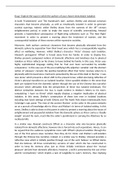
Utilitarianism is a relativist, consequentialist and hedonistic theory of ethics based on A
posteriori principles, devised in the 19th Century by Jeremy Bentham. Ultilitarianism is based
around the principle of utility which essentially means “the greatest good for the greatest
number”. Therefore Bentham used the hedonic calculus to calculate a quantitive amount of
pleasure and hence make morally ‘correct’ decisions. This type of Utilitarianism is now
called Act Utilitarianism.
Rule Utilitarianism was devised by John Stewart Mill, it stresses happiness over pleasure and
rather than using the hedonic calculus, which makes Benthams theory quantitative, Rule
Utilitarianism emphasises Quality over quantity and therefore is not calculative. There are
two forms of Rule Utilitarianism, Strong Rule and Weak Rule. Strong Rule Util is where,
Certain rules are universal and should always be kept despite circumstances. Weak Rule is
where there are rules but these may be broken depending on circumstances.
One could argue a strength is individualism when it comes to act util- assesses individual
situations one by one and therefore produces a truly unique answer that is fitting for the
complexity of human life. One could argue that it is also not discriminative as everyones
pleasure is worth the same.
This is bad because…
MacIntyre argues utilitarianism has the potential to justify horrendous acts as long as it
allows pleasure for the many, therefore it has no protection of minority rights.
However Mills rule util does not fall into the same traps rules are focused on past evidence
and experience, providing safety for some minorities. To an extent then solves the problem
raised in act and shows that LINK BACK TO QUESTION
It can be argued that the hedonic Calculus in act utilitarianism gives the theory strength
because it provides a clear, mathematical method of deciding any course of action by
balancing pleasure and pain. This makes it easy to compare options. However I am more
convinced by the challenges to the quantitative argument due to the fact that the hedonic
calculus is time consuming and not practical when faced with a situation requiring a quick
response. It also reduces the complexities of morality to a simple mathematical formula.
Hedonic Calculus is unreliable as people have different conceptions of pleasure.
Happiness is subjective? R.M. Hare. Supported Preference Utilitarianism, where the
preferences of the majority are met. He attempted to find a solution to the problem that
happiness is subjective. By replacing happiness with preference he attempts to get around
this problem.
BUT Rule Util attempts to address these issues and has a qualitative focus, where there are
higher and lower pleasures to be pursued, No calculations are needed to be made, and the
rules are clear and easy to follow. John Stewart Mill emphasised happiness over pleasure
and believed that all happiness should be universally applied. LINK BACK TO QUESTION
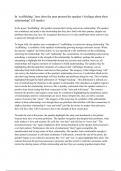
Utilitarianism is a relativist, consequentialist and hedonistic theory of ethics based on A
posteriori principles, devised in the 19th Century by Jeremy Bentham. Ultilitarianism is based
around the principle of utility which essentially means “the greatest good for the greatest
number”. Therefore Bentham used the hedonic calculus to calculate a quantitive amount of
pleasure and hence make morally ‘correct’ decisions. This type of Utilitarianism is now
called Act Utilitarianism.
Rule Utilitarianism was devised by John Stewart Mill, it stresses happiness over pleasure and
rather than using the hedonic calculus, which makes Benthams theory quantitative, Rule
Utilitarianism emphasises Quality over quantity and therefore is not calculative. There are
two forms of Rule Utilitarianism, Strong Rule and Weak Rule. Strong Rule Util is where,
Certain rules are universal and should always be kept despite circumstances. Weak Rule is
where there are rules but these may be broken depending on circumstances.
One could argue a strength is individualism when it comes to act util- assesses individual
situations one by one and therefore produces a truly unique answer that is fitting for the
complexity of human life. One could argue that it is also not discriminative as everyones
pleasure is worth the same.
This is bad because…
MacIntyre argues utilitarianism has the potential to justify horrendous acts as long as it
allows pleasure for the many, therefore it has no protection of minority rights.
However Mills rule util does not fall into the same traps rules are focused on past evidence
and experience, providing safety for some minorities. To an extent then solves the problem
raised in act and shows that LINK BACK TO QUESTION
It can be argued that the hedonic Calculus in act utilitarianism gives the theory strength
because it provides a clear, mathematical method of deciding any course of action by
balancing pleasure and pain. This makes it easy to compare options. However I am more
convinced by the challenges to the quantitative argument due to the fact that the hedonic
calculus is time consuming and not practical when faced with a situation requiring a quick
response. It also reduces the complexities of morality to a simple mathematical formula.
Hedonic Calculus is unreliable as people have different conceptions of pleasure.
Happiness is subjective? R.M. Hare. Supported Preference Utilitarianism, where the
preferences of the majority are met. He attempted to find a solution to the problem that
happiness is subjective. By replacing happiness with preference he attempts to get around
this problem.
BUT Rule Util attempts to address these issues and has a qualitative focus, where there are
higher and lower pleasures to be pursued, No calculations are needed to be made, and the
rules are clear and easy to follow. John Stewart Mill emphasised happiness over pleasure
and believed that all happiness should be universally applied. LINK BACK TO QUESTION