ME DELL
Y
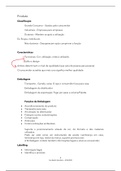
Proteins-Keratin
all living things comprised
-
are
Of cells ↑ desmin
arise pre-existing
intermediate filaments
-cells only from
maintains cell shape
+ anchors
Cells
nucleus and some other
carry genetic info
cells organelles
by DNA
-
+
motor proteins :
Passed from parent to daughter actin filaments :
-
divide animal Kensin and dynein
muscle contraction cells ;
microtubles : more
i
& chromosomes
Cell division ;
during
I' formation of cellplate
provide tracks :
for
intracellular Microvilli and Cilia
transport cell
membrane enclosed nucleus mobility
(made of
A
C microtubles)
O
↓
hollow tubes
centriese
of tublin
L proteins
lysosome ant
digestive organelle found Cells
&
S
-
in most animal
digesting and
cells
waste
-
release Spindle
Fibres during CD
=
S
-
-
processing
Peroxisomes
-contain
- hydrogen peroxide
-break down
fatty
E
via acid chains
ribosomes
B-oxidation
read' DNA molecules to make
proteins golgi apparatus
not considered ·
organelles
-
-protein and vesicle
because no membrane sorting centre
-proteins are
-
made up of RNA and proteins tagged
t resicles go
Off Golgi apparatus
FOUND IN
...
LEXOCTOSIS)
&n
I.
free in cytoplasm
...
2
. :
rough ER &
⑧ · a :
3 Mitochondrion t
⑧
chloroplasts
.
· endoplasmic reticulum
O
· Os
g g8 .
1
↑
↑ 0
.
8 rough ER : has ribosomes attached that
allows protein modifications + directs
transportation out cell ; has
chaperone
Proteins to help protein folding
2 Smooth ER
.
:
lacks ribosomes ; involved in
lipid + carbs
synthesis hormone production
nuclear ,
,
and
nucleus membrane detoxification
↓ -
double membrane
nucleolus
O
Chromos
Omes-RNA -selective
↓ Synthesis
Outer
member and
- DNA
genes-DNA coding
histones regionsers
organisin
=
↓
intermembrane
e
E
SA
&
Cristal
/
%
-I
more folds
2
mitochondrion
"
· - increase the
⑧
&
SA for Chemical -semi-autonomous ; some of their own
reactions genes
↑
+
replication by binary fission
~
⑳
*
thought
-
to have evolved
& by an
anaerobic
Na prokaryote engulfing an
aerobic
prokaryote
+
neoryl
(endosymbiotic
, N T
Simple epithelial : one layer of cells
I .
epithelial : cover the body and line its cavities stratified epithelia :
multiple layers
↑
↓ ↓
protection from pathogen absorption ,
Secretion,
invasion and sensation Pseudo stratified epithelia : One layer ,
basement membrane although appear multiple
: connective tissue
, underlying layer cuboidal : cube-shaped cells
to which epithelial cells are joined
2 . connective :
supports body , provides framework
- Columnar :
long and thin cells
-
contribute mainly to the stroma (support Structure
↓ squamous : flat and scalelike
most cells secrete collagen t elastin to form extracellular Matrix
-
-examples : bone cartilage tendons
,
,
, ligaments
2
. ?? . % % % & a
t DOMAINS :
S
Similar RNA I.
karya
no membrane bound organelles Polymerases 2 .
Archaea : extremophiles
-
lack key organelles such as mitochondria
Photosynthetic t Chemosynthetic
cell used
·
membrane for electron transport chain resistant to many antibiotics
-
primandApgeneratione divide by
budding or binary fission
3 .
bacteria :
Cell membrane + cytoplasm
Some have flagella +
fimbriae
O
&
smaller ribosomes than eukaryotes
ribosome
&
&
⑳
7 flagellum
cell wall
T
-
↑
↑
: determined by Gram staining
Cell membrane ·
I .
Gram positive
envelop absorbs crystal
-
Violet stain -> deep
DNA (nucleoid purple
cell
-
region) wall made of peptidogly can
↳Structural functions +
⑧
Pathogen protection
2 .
Gram negative
hollow made of envel Op Satranin stain
-
absorbs
,
counter
↑
flagellin >
-
pink-red
cell wall has a thinner layer of peptidoglycan
-
has an outer membrane of phospholipids
-
L
Connects
filament and lipopolysaccharides
O
+
body ↳ triggers immune response in
-
humans
When the basal body rotates it
exerts torque on the filament
which spins and propels bacterium
CLASSIFICATIONS :
Cocci Spherical bacteria
-
:
SHAP E >
- bacilli :
rod-shaped bacteria
- Spirilli :
Spiral-shaped bacteria
Obligate acrobes :
Of required for metabolism
anaerobes : does not require O2 (exfermentation
, i
feature prokaryotic eukaryotic
nucleus not present
present
DNA circular linear
DNA organisation proteins fold and condense DNA associated with proteins called histones
extra chromosoma A circular DNA called plasmids Only present in certain organelles such as
Chloroplasts and mitochondria
organelles non membrane-bound both membrane-boun & and non membrane-bound
cell wall Peptidoglycan Chitin in fungi ,
cellulose in plants , not present in animals
ribosomes smaller ,
70s larger ,
80s
Cytoskeleton present present , m o re complex
reproduction binary fission a sexual or sexual
cell unicellular unicellular and multicellular
type
cell-surface membrane present present
IBI COILCO I AIL ERIMENT
on
-
. . . - >r
Calcium ions = nerve impulse transmission ,
muscle contraction
Ca2 +
Sodiumions-nerve
impulse transmission , Kidney function n
transmission
potassiumions
: nerve impulse , stomatal opening o
hydrogen ions = Catalysis of reactions
, pH deter mination
+
H
ammonium ions -
production of nitrate ions by bac teria
NH +
+
Unionis
-
-
........ 111111111>111111
nitrate ions nitrogen supply to plants for amino acid and protein formation
NO3-
ions blood o
hydrogencarbonate
:
maintenance of a
Chloride ions-balance positive charge of Na and Kions in cells
CL-
Phosphate ions-cell membrane formation ,
nucleic acid and ATP formation , bone formation
P043-
hydroxide ions = Calalysis of reactions , pH determination
OH-
carbon
hydrogen
Carbon
hydrogen
↑
carbon
carbohydrates
↑
Lipids
hydrogen ↑
proteins
↑
-
Carbon
↑ ndrogena
↳ c (20
nitrogen
↓ ↓ ↓ ↓
Sulfur Phosphorus
Oxy gen
hydrogen Oxygen nitrogen
Y
Proteins-Keratin
all living things comprised
-
are
Of cells ↑ desmin
arise pre-existing
intermediate filaments
-cells only from
maintains cell shape
+ anchors
Cells
nucleus and some other
carry genetic info
cells organelles
by DNA
-
+
motor proteins :
Passed from parent to daughter actin filaments :
-
divide animal Kensin and dynein
muscle contraction cells ;
microtubles : more
i
& chromosomes
Cell division ;
during
I' formation of cellplate
provide tracks :
for
intracellular Microvilli and Cilia
transport cell
membrane enclosed nucleus mobility
(made of
A
C microtubles)
O
↓
hollow tubes
centriese
of tublin
L proteins
lysosome ant
digestive organelle found Cells
&
S
-
in most animal
digesting and
cells
waste
-
release Spindle
Fibres during CD
=
S
-
-
processing
Peroxisomes
-contain
- hydrogen peroxide
-break down
fatty
E
via acid chains
ribosomes
B-oxidation
read' DNA molecules to make
proteins golgi apparatus
not considered ·
organelles
-
-protein and vesicle
because no membrane sorting centre
-proteins are
-
made up of RNA and proteins tagged
t resicles go
Off Golgi apparatus
FOUND IN
...
LEXOCTOSIS)
&n
I.
free in cytoplasm
...
2
. :
rough ER &
⑧ · a :
3 Mitochondrion t
⑧
chloroplasts
.
· endoplasmic reticulum
O
· Os
g g8 .
1
↑
↑ 0
.
8 rough ER : has ribosomes attached that
allows protein modifications + directs
transportation out cell ; has
chaperone
Proteins to help protein folding
2 Smooth ER
.
:
lacks ribosomes ; involved in
lipid + carbs
synthesis hormone production
nuclear ,
,
and
nucleus membrane detoxification
↓ -
double membrane
nucleolus
O
Chromos
Omes-RNA -selective
↓ Synthesis
Outer
member and
- DNA
genes-DNA coding
histones regionsers
organisin
=
↓
intermembrane
e
E
SA
&
Cristal
/
%
-I
more folds
2
mitochondrion
"
· - increase the
⑧
&
SA for Chemical -semi-autonomous ; some of their own
reactions genes
↑
+
replication by binary fission
~
⑳
*
thought
-
to have evolved
& by an
anaerobic
Na prokaryote engulfing an
aerobic
prokaryote
+
neoryl
(endosymbiotic
, N T
Simple epithelial : one layer of cells
I .
epithelial : cover the body and line its cavities stratified epithelia :
multiple layers
↑
↓ ↓
protection from pathogen absorption ,
Secretion,
invasion and sensation Pseudo stratified epithelia : One layer ,
basement membrane although appear multiple
: connective tissue
, underlying layer cuboidal : cube-shaped cells
to which epithelial cells are joined
2 . connective :
supports body , provides framework
- Columnar :
long and thin cells
-
contribute mainly to the stroma (support Structure
↓ squamous : flat and scalelike
most cells secrete collagen t elastin to form extracellular Matrix
-
-examples : bone cartilage tendons
,
,
, ligaments
2
. ?? . % % % & a
t DOMAINS :
S
Similar RNA I.
karya
no membrane bound organelles Polymerases 2 .
Archaea : extremophiles
-
lack key organelles such as mitochondria
Photosynthetic t Chemosynthetic
cell used
·
membrane for electron transport chain resistant to many antibiotics
-
primandApgeneratione divide by
budding or binary fission
3 .
bacteria :
Cell membrane + cytoplasm
Some have flagella +
fimbriae
O
&
smaller ribosomes than eukaryotes
ribosome
&
&
⑳
7 flagellum
cell wall
T
-
↑
↑
: determined by Gram staining
Cell membrane ·
I .
Gram positive
envelop absorbs crystal
-
Violet stain -> deep
DNA (nucleoid purple
cell
-
region) wall made of peptidogly can
↳Structural functions +
⑧
Pathogen protection
2 .
Gram negative
hollow made of envel Op Satranin stain
-
absorbs
,
counter
↑
flagellin >
-
pink-red
cell wall has a thinner layer of peptidoglycan
-
has an outer membrane of phospholipids
-
L
Connects
filament and lipopolysaccharides
O
+
body ↳ triggers immune response in
-
humans
When the basal body rotates it
exerts torque on the filament
which spins and propels bacterium
CLASSIFICATIONS :
Cocci Spherical bacteria
-
:
SHAP E >
- bacilli :
rod-shaped bacteria
- Spirilli :
Spiral-shaped bacteria
Obligate acrobes :
Of required for metabolism
anaerobes : does not require O2 (exfermentation
, i
feature prokaryotic eukaryotic
nucleus not present
present
DNA circular linear
DNA organisation proteins fold and condense DNA associated with proteins called histones
extra chromosoma A circular DNA called plasmids Only present in certain organelles such as
Chloroplasts and mitochondria
organelles non membrane-bound both membrane-boun & and non membrane-bound
cell wall Peptidoglycan Chitin in fungi ,
cellulose in plants , not present in animals
ribosomes smaller ,
70s larger ,
80s
Cytoskeleton present present , m o re complex
reproduction binary fission a sexual or sexual
cell unicellular unicellular and multicellular
type
cell-surface membrane present present
IBI COILCO I AIL ERIMENT
on
-
. . . - >r
Calcium ions = nerve impulse transmission ,
muscle contraction
Ca2 +
Sodiumions-nerve
impulse transmission , Kidney function n
transmission
potassiumions
: nerve impulse , stomatal opening o
hydrogen ions = Catalysis of reactions
, pH deter mination
+
H
ammonium ions -
production of nitrate ions by bac teria
NH +
+
Unionis
-
-
........ 111111111>111111
nitrate ions nitrogen supply to plants for amino acid and protein formation
NO3-
ions blood o
hydrogencarbonate
:
maintenance of a
Chloride ions-balance positive charge of Na and Kions in cells
CL-
Phosphate ions-cell membrane formation ,
nucleic acid and ATP formation , bone formation
P043-
hydroxide ions = Calalysis of reactions , pH determination
OH-
carbon
hydrogen
Carbon
hydrogen
↑
carbon
carbohydrates
↑
Lipids
hydrogen ↑
proteins
↑
-
Carbon
↑ ndrogena
↳ c (20
nitrogen
↓ ↓ ↓ ↓
Sulfur Phosphorus
Oxy gen
hydrogen Oxygen nitrogen