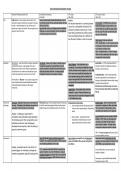
Factors Affecting the Development of Surgery
Medieval/ Middle Ages 1000-1450 Early Modern/Renaissance 19th century
1450-1800 1801-1900
War Hugh of Lucca – famous surgeon who served in army Gunshot wounds being treated with boiling oil at start of Analysis:
during the Crusades. Noticed wine was good for cleaning Early Modern period. This was extremely painful and many War has been important as it pro
wounds – soaked bandages in it. He saw that pus in a died as a result. So…. to practice on and enabled individ
wound after surgery was harmful. This went against most Paré invented a new way of sealing wounds on battlefield
solutions to problems created by
surgeons’ ideas at the time. using eggs, rose oil and turpentine. He also used ligatures
to tie blood vessels for the first time. meant that governments were wil
money on developing these new tr
save the lives of soldiers in order
Individuals John Arderne – wrote The Practice of Surgery. Advocated John Hunter – Known as the ‘Father of scientific surgery’.
James Simpson – Used chloroform
a good bedside manner, urged people not to rely on Treated knee aneurysms by tying off blood vessels to
Hippocrates and Galen’s texts. Method of operating on prevent amputation. Opened the Hunterian Museum to anaesthetic. Used during the childb
anal fistulas was very modern and showed that surgery display his specimens and work – increasing people’s Victoria and became more popular
could be successful with a survival rate of over 50%. knowledge of anatomy and acceptance of surgery. led to many more complicated ope
more operations being carried out
An Arab doctor – Albucasis – was an expert surgeon who long run was good but in the short
wrote a book describing complex abdominal operations dark period with increased deaths
and had illustrations showing over 200 surgical antiseptics.
instruments.
Joseph Lister – Used carbolic acid a
antiseptic in surgery. Reduced infe
Death rates from his operations dr
to 15% within three years.
Science and Arrow Cup – designed to help remove arrow heads from Microscopes began to be developed during the Renaissance. Developments in sterile surgery:
technology the body. Developed by John Bradmore to operate on a In 1665 the book Micrographia by Robert Hooke showed 1. Lister developed machine that
young Henry V when he had an arrow in his jaw. detailed images from magnified images for the first time. acid over entire operating thea
sterile.
Analysis - technology is closely linked to
individuals as many individuals actually developed 2. Steam steriliser – developed b
the technology used in their own operations, such Chamberland. Heated instrum
Medieval/ Middle Ages 1000-1450 Early Modern/Renaissance 19th century
1450-1800 1801-1900
War Hugh of Lucca – famous surgeon who served in army Gunshot wounds being treated with boiling oil at start of Analysis:
during the Crusades. Noticed wine was good for cleaning Early Modern period. This was extremely painful and many War has been important as it pro
wounds – soaked bandages in it. He saw that pus in a died as a result. So…. to practice on and enabled individ
wound after surgery was harmful. This went against most Paré invented a new way of sealing wounds on battlefield
solutions to problems created by
surgeons’ ideas at the time. using eggs, rose oil and turpentine. He also used ligatures
to tie blood vessels for the first time. meant that governments were wil
money on developing these new tr
save the lives of soldiers in order
Individuals John Arderne – wrote The Practice of Surgery. Advocated John Hunter – Known as the ‘Father of scientific surgery’.
James Simpson – Used chloroform
a good bedside manner, urged people not to rely on Treated knee aneurysms by tying off blood vessels to
Hippocrates and Galen’s texts. Method of operating on prevent amputation. Opened the Hunterian Museum to anaesthetic. Used during the childb
anal fistulas was very modern and showed that surgery display his specimens and work – increasing people’s Victoria and became more popular
could be successful with a survival rate of over 50%. knowledge of anatomy and acceptance of surgery. led to many more complicated ope
more operations being carried out
An Arab doctor – Albucasis – was an expert surgeon who long run was good but in the short
wrote a book describing complex abdominal operations dark period with increased deaths
and had illustrations showing over 200 surgical antiseptics.
instruments.
Joseph Lister – Used carbolic acid a
antiseptic in surgery. Reduced infe
Death rates from his operations dr
to 15% within three years.
Science and Arrow Cup – designed to help remove arrow heads from Microscopes began to be developed during the Renaissance. Developments in sterile surgery:
technology the body. Developed by John Bradmore to operate on a In 1665 the book Micrographia by Robert Hooke showed 1. Lister developed machine that
young Henry V when he had an arrow in his jaw. detailed images from magnified images for the first time. acid over entire operating thea
sterile.
Analysis - technology is closely linked to
individuals as many individuals actually developed 2. Steam steriliser – developed b
the technology used in their own operations, such Chamberland. Heated instrum