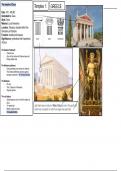
The temple of Zeus
Temples 1: GREECE
Date: 472 - 456 BC
Dedicated to: Zeus
Style: Doric
Material: Local limestone
Location: Olympia, situated within the
Sanctuary at Olympia
Function: temple and treasury
Significance: symbolises the importance
of Zeus
The Eastern Pediment:
- Chariot race
- Zeus in the center with Denoumaus and
Pelops either side
The Western pediment:
- Gods presiding over scenes of violence
- The Greeks defending women against
savages (centaurs) - the Centauromachy
The Metopes:
- His son
- The 12 labours of Heracles
- Olympic games
The cult statue:
- Small treasury room to hold the statue of
Zeus
- 13 meters tall right hand was a statue of Nike (Victory), and in the god's left
- Made of gold and ivory hand was a sceptre on which an eagle was perched.
- Chryselephantine
, The Parthenon:
Temples 2: GREECE
Date: 447 - 432 BC
Commissioned by: Pericles
Architect: Phidias
Style: Doric and Ionic
Dedicated to: Athena
Material: Marble (Pentelic (an expensive stone
due to its rarity, quality, and historical significance.))
Location: Athens (Acropolis)
Function: Temple and treasury
Significance: Decoration of symbols of
power of Athens
Nike was depicted as wingless to denote
Why it was built:
- To honour Athena
that she would not fly away and leave
Athens vulnerable to defeat;
Location of the Parthenon:
- Part of the sanctuary of Athena
- Had several buildings honouring Athena
Plan:
- It was orientated east to West
- It was surrounded by a colonnade
The Eastern Pediment:
- Depicts Athena’s birth
The Western pediment:
- The contest of naming Athens
The cult statue of Athena:
- 13 meter statue
- Chryselephantine statue
- right hand Nike the Goddess of Victory
Temples 1: GREECE
Date: 472 - 456 BC
Dedicated to: Zeus
Style: Doric
Material: Local limestone
Location: Olympia, situated within the
Sanctuary at Olympia
Function: temple and treasury
Significance: symbolises the importance
of Zeus
The Eastern Pediment:
- Chariot race
- Zeus in the center with Denoumaus and
Pelops either side
The Western pediment:
- Gods presiding over scenes of violence
- The Greeks defending women against
savages (centaurs) - the Centauromachy
The Metopes:
- His son
- The 12 labours of Heracles
- Olympic games
The cult statue:
- Small treasury room to hold the statue of
Zeus
- 13 meters tall right hand was a statue of Nike (Victory), and in the god's left
- Made of gold and ivory hand was a sceptre on which an eagle was perched.
- Chryselephantine
, The Parthenon:
Temples 2: GREECE
Date: 447 - 432 BC
Commissioned by: Pericles
Architect: Phidias
Style: Doric and Ionic
Dedicated to: Athena
Material: Marble (Pentelic (an expensive stone
due to its rarity, quality, and historical significance.))
Location: Athens (Acropolis)
Function: Temple and treasury
Significance: Decoration of symbols of
power of Athens
Nike was depicted as wingless to denote
Why it was built:
- To honour Athena
that she would not fly away and leave
Athens vulnerable to defeat;
Location of the Parthenon:
- Part of the sanctuary of Athena
- Had several buildings honouring Athena
Plan:
- It was orientated east to West
- It was surrounded by a colonnade
The Eastern Pediment:
- Depicts Athena’s birth
The Western pediment:
- The contest of naming Athens
The cult statue of Athena:
- 13 meter statue
- Chryselephantine statue
- right hand Nike the Goddess of Victory