ESS IB NOTES
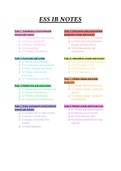
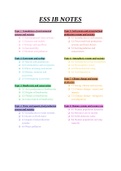
Topic 1: Foundations of environmental Topic 5: Soil systems and terrestrial food
systems and societies production systems and societies
❏ 1.1 Environmental value systems ❏ 5.1 Introduction to soil systems
❏ 1.2 Systems and models ❏ 5.2 Terrestrial food production
❏ 1.3 Energy and equilibria systems and food choices
❏ 1.4 Sustainability ❏ 5.3 Soil degradation and
❏ 1.5 Humans and pollution conservation
Topic 2: Ecosystems and ecology Topic 6: Atmospheric systems and societies
❏ 2.1 Species and populations ❏ 6.1 Introduction to the atmosphere
❏ 2.2 Communities and ecosystems ❏ 6.2 Stratospheric ozone
❏ 2.3 Flows of energy and matter ❏ 6.3 Photochemical smog
❏ 2.4 Biomes, zonation and ❏ 6.4 Acid deposition
succession
❏ 2.5 Investigating ecosystems Topic 7: Climate change and energy
production
Topic 3: Biodiversity and conservation ❏ 7.1 Energy choices and security
❏ 3.1 An introduction to biodiversity ❏ 7.2 Climate change—causes and
❏ 3.2 Origins of biodiversity impacts
❏ 3.3 Threats to biodiversity ❏ 7.3 Climate change—mitigation
❏ 3.4 Conservation of biodiversity and adaptation
Topic 4: Water and aquatic food production Topic 8: Human systems and resource use
systems and societies ❏ 8.1 Human population dynamics
❏ 4.1 Introduction to water systems ❏ 8.2 Resource use in society
❏ 4.2 Access to fresh water ❏ 8.3 Solid domestic waste
❏ 4.3 Aquatic food production ❏ 8.4 Human population carrying
systems capacity
❏ 4.4 Water pollution
, 1
Topic 3: Biodiversity and conservation
3.1 An introduction to biodiversity
BIODIVERSITY: the variety of all life on earth. It includes genetic diversity, species diversity
and habitat diversity.
- Not constant; changes over time and location
- Looks at different kinds of diversities (species, habitat, and genetic)
- 3 measurements
- Encompasses the total diversity in living systems
Diversity is good for a healthy ecosystem
SPECIES DIVERSITY:
- Component made of 2 variables:
- Species richness: amount of species
- Species evenness: proportions of species
GENETIC DIVERSITY:
- Refers to the range of genetic material present in a population or species (eg: dif cats)
HABITAT DIVERSITY:
- Refers to the range of different habitats, in an ecosystem or biome
*all of these give you a quantification of how healthy an ecosystem is*
Topic 1: Foundations of environmental Topic 5: Soil systems and terrestrial food
systems and societies production systems and societies
❏ 1.1 Environmental value systems ❏ 5.1 Introduction to soil systems
❏ 1.2 Systems and models ❏ 5.2 Terrestrial food production
❏ 1.3 Energy and equilibria systems and food choices
❏ 1.4 Sustainability ❏ 5.3 Soil degradation and
❏ 1.5 Humans and pollution conservation
Topic 2: Ecosystems and ecology Topic 6: Atmospheric systems and societies
❏ 2.1 Species and populations ❏ 6.1 Introduction to the atmosphere
❏ 2.2 Communities and ecosystems ❏ 6.2 Stratospheric ozone
❏ 2.3 Flows of energy and matter ❏ 6.3 Photochemical smog
❏ 2.4 Biomes, zonation and ❏ 6.4 Acid deposition
succession
❏ 2.5 Investigating ecosystems Topic 7: Climate change and energy
production
Topic 3: Biodiversity and conservation ❏ 7.1 Energy choices and security
❏ 3.1 An introduction to biodiversity ❏ 7.2 Climate change—causes and
❏ 3.2 Origins of biodiversity impacts
❏ 3.3 Threats to biodiversity ❏ 7.3 Climate change—mitigation
❏ 3.4 Conservation of biodiversity and adaptation
Topic 4: Water and aquatic food production Topic 8: Human systems and resource use
systems and societies ❏ 8.1 Human population dynamics
❏ 4.1 Introduction to water systems ❏ 8.2 Resource use in society
❏ 4.2 Access to fresh water ❏ 8.3 Solid domestic waste
❏ 4.3 Aquatic food production ❏ 8.4 Human population carrying
systems capacity
❏ 4.4 Water pollution
, 1
Topic 3: Biodiversity and conservation
3.1 An introduction to biodiversity
BIODIVERSITY: the variety of all life on earth. It includes genetic diversity, species diversity
and habitat diversity.
- Not constant; changes over time and location
- Looks at different kinds of diversities (species, habitat, and genetic)
- 3 measurements
- Encompasses the total diversity in living systems
Diversity is good for a healthy ecosystem
SPECIES DIVERSITY:
- Component made of 2 variables:
- Species richness: amount of species
- Species evenness: proportions of species
GENETIC DIVERSITY:
- Refers to the range of genetic material present in a population or species (eg: dif cats)
HABITAT DIVERSITY:
- Refers to the range of different habitats, in an ecosystem or biome
*all of these give you a quantification of how healthy an ecosystem is*