
Principles of homeostasis + negative feedback
1.what is homeostasis?
● Maintenance of a constant internal environment within a living organism
2.what is negative feedback?
● Its the body’s mechanism for reversing a change so that it returns back to the optimum
3.Hormones:
● Produced in glands
● Carried in blood plasma
● Act on target cells- specific receptors
● Effective in very low concentrations
● Long lasting effects
4.What size are alpha cells and what do they produce?
● Larger + produce glucagon
5.What size are beta cells and what do they produce?
● Smaller + produce insulin
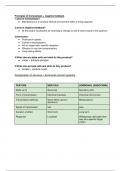
Comparison of nervous + hormonal control systems
FEATURE NERVOUS HORMONAL (ENDOCRINE)
Made up of Neurones Secretory cells
Form of transmission Electrical impulses Chemical (hormones)
Transmission pathway Nerve fibres (axons/ Blood plasma
dendrons)
Speed of transmission fast slow
Duration of effect Short term Long term
Response Localised Widespread (although there
may be a specific target
organ)
, Blood glucose control
1.the pancreas:
● Contains many digestive enzymes
● Detects changes in blood glucose levels
● Contains endocrine cells in Islets of Langerhans which release
hormones insulin + glucagon to bring glucose levels back to
normal
2.glycogenesis: (genesis= to make)
● excess glucose converted to glycogen when blood glucose
levels are high
● Occurs in liver
3.glycogenolysis: (lysis= breakdown)
● Hydrolysis of glycogen back into glucose in liver
● Occurs when blood glucose levels are low
4.gluconeogenesis: (AA/ glycerol to glucose)
● Process of creating glucose from non- carbohydrate stores in liver
● Occurs when BGL still low despite glycogenolysis occurring
5. Role of insulin when decreasing BGL:
● Binds to receptors on surfaces of muscle + liver cells - this changes tertiary structure of
channel proteins so more glucose absorbed by facilitated diffusion
● Vesicles containing glucose transporter channel protein fuses with phospholipid bilayer
so More protein carriers are incorporated into cell membranes- increases membrane
permeability + increases SA available for facilitated diffusion so more glucose is
absorbed from blood into cells
● Activates enzymes that converts glucose to glycogen (glycogenesis)
● Increases rate of respiration in muscle cells
6.role of glucagon when increasing BGL:
● Binds to receptors on liver cells
● activates enzymes involved in the conversion of glycogen to
Glucose (glycogenolysis)
● activates enzymes involved in the conversion of glycerol and
amino acids into glucose (gluconeogenesis)
1.what is homeostasis?
● Maintenance of a constant internal environment within a living organism
2.what is negative feedback?
● Its the body’s mechanism for reversing a change so that it returns back to the optimum
3.Hormones:
● Produced in glands
● Carried in blood plasma
● Act on target cells- specific receptors
● Effective in very low concentrations
● Long lasting effects
4.What size are alpha cells and what do they produce?
● Larger + produce glucagon
5.What size are beta cells and what do they produce?
● Smaller + produce insulin
Comparison of nervous + hormonal control systems
FEATURE NERVOUS HORMONAL (ENDOCRINE)
Made up of Neurones Secretory cells
Form of transmission Electrical impulses Chemical (hormones)
Transmission pathway Nerve fibres (axons/ Blood plasma
dendrons)
Speed of transmission fast slow
Duration of effect Short term Long term
Response Localised Widespread (although there
may be a specific target
organ)
, Blood glucose control
1.the pancreas:
● Contains many digestive enzymes
● Detects changes in blood glucose levels
● Contains endocrine cells in Islets of Langerhans which release
hormones insulin + glucagon to bring glucose levels back to
normal
2.glycogenesis: (genesis= to make)
● excess glucose converted to glycogen when blood glucose
levels are high
● Occurs in liver
3.glycogenolysis: (lysis= breakdown)
● Hydrolysis of glycogen back into glucose in liver
● Occurs when blood glucose levels are low
4.gluconeogenesis: (AA/ glycerol to glucose)
● Process of creating glucose from non- carbohydrate stores in liver
● Occurs when BGL still low despite glycogenolysis occurring
5. Role of insulin when decreasing BGL:
● Binds to receptors on surfaces of muscle + liver cells - this changes tertiary structure of
channel proteins so more glucose absorbed by facilitated diffusion
● Vesicles containing glucose transporter channel protein fuses with phospholipid bilayer
so More protein carriers are incorporated into cell membranes- increases membrane
permeability + increases SA available for facilitated diffusion so more glucose is
absorbed from blood into cells
● Activates enzymes that converts glucose to glycogen (glycogenesis)
● Increases rate of respiration in muscle cells
6.role of glucagon when increasing BGL:
● Binds to receptors on liver cells
● activates enzymes involved in the conversion of glycogen to
Glucose (glycogenolysis)
● activates enzymes involved in the conversion of glycerol and
amino acids into glucose (gluconeogenesis)


