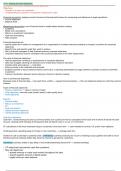
3.5.1: Setting financial objectives:
Spec point 1: the value of setting financial objectives:
Objectives:
• concept of a return on investment
• Understanding of proportion of long term funding that is debt
Financial accounting: keeping records of previous financial performance for revieweing and adherence to legal regulations:
• income statement
• Balance sheet
Management accounting: use of financial tools to enable better decision making.
• budgeting
• Break even calculations
• Return on investment calculations
• Cash flow forecasting
• Ratio analysis
Financial objectives are:
• specific goals set in relation to management of an organization’s monetary resources enabling a company to achieve its corporate
objectives
• Specific time and specific goals they want to achieve
• Set by financial managers to help business achieve corporate objectives
• Corporate objectives must be consistent with functional objectives of the other departments
The value of financial objectives:
• Well set objectives contribute to achievement of corporate objectives
• Sets clear budgets, allowing for decisions to be made about resource allocation
• Creates clarity and purpose—> motivation
• Allows success to be measured and reviewed
• Enables business to secure external finance: bank loans, or allowing shareholders to judge whether a business would be worthwhile
investment
• Improve coordination between teams acting as a focus for decision making
How to set financial objectives:
Business looks at financial data—> like cash flows, profits—> assess financial position—> then set objectives based on what they need to
improve.
Types of financial objectives:
• Revenue objectives- ^ value or volume of sales
• Cost objectives- minimize costs (careful doesn’t make quality poor)
• Profit objectives
Specific:
• financial safety
• Return on investment
• CF
• Cost minimization
• Capital structure objectives
• Capital spending objectives
Cash flow objectives
Cash flow : money flowing into and out of the business over a period of time but calculated at the exact time it enters of leaves the bank
account, whereas profit includes all transactions that will lead to cash in or out, or in the future.
CF calculations is the most important thing to a business in the short term—> cash needed for survival. LR: profit= main objective
Credit payments, spending loads of money on new machinery—> damage cash flow
Outflow of cash could lead to potential crisis= overtrading: business producing too much so needing to pay suppliers and staff so much
that they become insolvent before they have the chance to get paid by customers.
Insolvency: business unable to pay debts. If sole trader/partnership become IS—> declare bankrupt.
• CF objectives help prevent cash flow problems.
• May set objectives:
◦spread revenue or costs more evenly throughout the year.
◦acquire specific amount of liquid assets
◦target minimum cash balance.
,Cash flow objectives:
• Maintaining minimum closing balance
• Spread costs more evenly
• Achieve certain level of liquid non-cash totems
• Setting contingugency fund levels
• More even spread of sales revenue
ROCE objectives (return on capital employed): how much the business is making in return for employing the capital
Operating profit/ capital employed
Operating profit is profit before interest and tax is paid.
• ROCE exceeding previous year
• to exceed competitors
• Achieve ROCE that compares favorably to average ROCE achieved in UK.
Cost minimization:
• raw materials
• Unit labour costs
• Lower wastage
• Relocating
• Reducing spending for advertising
• Improve efficiency by reducing variable costs per unit
Improve Capital structure and spending-
Capital structure maximizes change of long term financial safety
Capital spending is for businesses in fiercely competitive markets- innovation & R&D
To improve capital structure:
• issue more shares- share capital
• Borrow more- debt capital
• Increase revenue or reduce/increase prices- to raise more retained profits
These all increase capital employed
To improve capital spending
Is the money a company uses to acquire new assets, either adding to current or non current assets, or improving existing
assets, or buying new equipment
• R&D innovation
• New product development
• New assets
• Improving existing products
• Technological advancements reduces costs
, Liquid asset: can be quickly turned into cash
Cash flow is air whereas profit is food
• Return on investment:
ROI(%)= return on investment(£)(revenue-cost of investment)/ cost of investment(£) x100
• investment: expenditure by an organization on resources that will enable the business to achieve its objectives.
• Financial gain from investment-costs
• Measures how efficient an investment is by comparing return from a project to the money invested in it
• Higher ROI= better
• Companies set target value for ROI of an investment and compare it to two potential investments seeing which is the best.
Investment appraisal: process that managers use to compare cost of an investment to expected revenues.
Factors determining investment levels:
• Management attitude to risk
• Market conditions
• Competitors’ actions
• Level of retained profit
• Interest rates/ availability of external finance
• Expected rate of ROI
• Capital expenditure objectives :
Capital= wealth in the form of money or other assets owned by a business
Capital expenditure= money spend to buy fixed assets
◦Fixed assets are things used over and over again to produce goods or services- like factories/vehicles
Business might set investment objective to help achieve set amount of capital expenditure during a year. Or may wish to
reduce CE
• Capital structure objectives
Capital structure or capital employed: the way business raises capital to purchase assets.
Capital structure objectives are targets relating to the extent the business is financed by its own owners, or by money
borrowed from external sources.
Capital employed= share(equity) capital+ debt capital+ retained profits
• a business’s capital structure is combination of its debt capital (borrowed funds) and its equity/share capital (raised by
selling shares)
• Common capital structure objective is to set a debt: equity ratio eg: 1.5:1 after 4 years.
• Sometimes they wanna reduce proportion of debt in their long-term funding.
• return on capital employees: operating profit/ capital employed (debt capital and share capital) x100.
GEARING:
• Proportion of long term funding that is debt: the proportion of their capital to fund an investment that is debt
= debt capital/total capital employed x100
EQUITY CAPITAL: DEBT CAPITAL:
• money invested into company by shareholders • money borrowed by business in order to invest
• Doesn’t need to be repaid • Money repaid over set period depending on loan
• Shareholders may expect(but not entitled to) a share • Annual interest rate charged for loan(lower then
of annual pro ts-dividends dividend payments usually)
• Therefore: Annual cost of equity capital can vary- one • Bank doesn’t get to share pro ts, but expected
year may pay high dividends, other year may pay low repayments due in years even when business doesn’t
dividends to have more funds to invest. make pro t.
• Shareholders entitled to say how company is tun,
di erent shareholders= di objectives.
Gearing: measure of risk- the more debt that has been used to fund the business, the more vulnerable the business it to
changes in interest rates, etc.
Factors influencing financial objectives:
• influences company’s ability to achieve its objectives
• Must be taken into account by managers when setting financial objectives
Spec point 1: the value of setting financial objectives:
Objectives:
• concept of a return on investment
• Understanding of proportion of long term funding that is debt
Financial accounting: keeping records of previous financial performance for revieweing and adherence to legal regulations:
• income statement
• Balance sheet
Management accounting: use of financial tools to enable better decision making.
• budgeting
• Break even calculations
• Return on investment calculations
• Cash flow forecasting
• Ratio analysis
Financial objectives are:
• specific goals set in relation to management of an organization’s monetary resources enabling a company to achieve its corporate
objectives
• Specific time and specific goals they want to achieve
• Set by financial managers to help business achieve corporate objectives
• Corporate objectives must be consistent with functional objectives of the other departments
The value of financial objectives:
• Well set objectives contribute to achievement of corporate objectives
• Sets clear budgets, allowing for decisions to be made about resource allocation
• Creates clarity and purpose—> motivation
• Allows success to be measured and reviewed
• Enables business to secure external finance: bank loans, or allowing shareholders to judge whether a business would be worthwhile
investment
• Improve coordination between teams acting as a focus for decision making
How to set financial objectives:
Business looks at financial data—> like cash flows, profits—> assess financial position—> then set objectives based on what they need to
improve.
Types of financial objectives:
• Revenue objectives- ^ value or volume of sales
• Cost objectives- minimize costs (careful doesn’t make quality poor)
• Profit objectives
Specific:
• financial safety
• Return on investment
• CF
• Cost minimization
• Capital structure objectives
• Capital spending objectives
Cash flow objectives
Cash flow : money flowing into and out of the business over a period of time but calculated at the exact time it enters of leaves the bank
account, whereas profit includes all transactions that will lead to cash in or out, or in the future.
CF calculations is the most important thing to a business in the short term—> cash needed for survival. LR: profit= main objective
Credit payments, spending loads of money on new machinery—> damage cash flow
Outflow of cash could lead to potential crisis= overtrading: business producing too much so needing to pay suppliers and staff so much
that they become insolvent before they have the chance to get paid by customers.
Insolvency: business unable to pay debts. If sole trader/partnership become IS—> declare bankrupt.
• CF objectives help prevent cash flow problems.
• May set objectives:
◦spread revenue or costs more evenly throughout the year.
◦acquire specific amount of liquid assets
◦target minimum cash balance.
,Cash flow objectives:
• Maintaining minimum closing balance
• Spread costs more evenly
• Achieve certain level of liquid non-cash totems
• Setting contingugency fund levels
• More even spread of sales revenue
ROCE objectives (return on capital employed): how much the business is making in return for employing the capital
Operating profit/ capital employed
Operating profit is profit before interest and tax is paid.
• ROCE exceeding previous year
• to exceed competitors
• Achieve ROCE that compares favorably to average ROCE achieved in UK.
Cost minimization:
• raw materials
• Unit labour costs
• Lower wastage
• Relocating
• Reducing spending for advertising
• Improve efficiency by reducing variable costs per unit
Improve Capital structure and spending-
Capital structure maximizes change of long term financial safety
Capital spending is for businesses in fiercely competitive markets- innovation & R&D
To improve capital structure:
• issue more shares- share capital
• Borrow more- debt capital
• Increase revenue or reduce/increase prices- to raise more retained profits
These all increase capital employed
To improve capital spending
Is the money a company uses to acquire new assets, either adding to current or non current assets, or improving existing
assets, or buying new equipment
• R&D innovation
• New product development
• New assets
• Improving existing products
• Technological advancements reduces costs
, Liquid asset: can be quickly turned into cash
Cash flow is air whereas profit is food
• Return on investment:
ROI(%)= return on investment(£)(revenue-cost of investment)/ cost of investment(£) x100
• investment: expenditure by an organization on resources that will enable the business to achieve its objectives.
• Financial gain from investment-costs
• Measures how efficient an investment is by comparing return from a project to the money invested in it
• Higher ROI= better
• Companies set target value for ROI of an investment and compare it to two potential investments seeing which is the best.
Investment appraisal: process that managers use to compare cost of an investment to expected revenues.
Factors determining investment levels:
• Management attitude to risk
• Market conditions
• Competitors’ actions
• Level of retained profit
• Interest rates/ availability of external finance
• Expected rate of ROI
• Capital expenditure objectives :
Capital= wealth in the form of money or other assets owned by a business
Capital expenditure= money spend to buy fixed assets
◦Fixed assets are things used over and over again to produce goods or services- like factories/vehicles
Business might set investment objective to help achieve set amount of capital expenditure during a year. Or may wish to
reduce CE
• Capital structure objectives
Capital structure or capital employed: the way business raises capital to purchase assets.
Capital structure objectives are targets relating to the extent the business is financed by its own owners, or by money
borrowed from external sources.
Capital employed= share(equity) capital+ debt capital+ retained profits
• a business’s capital structure is combination of its debt capital (borrowed funds) and its equity/share capital (raised by
selling shares)
• Common capital structure objective is to set a debt: equity ratio eg: 1.5:1 after 4 years.
• Sometimes they wanna reduce proportion of debt in their long-term funding.
• return on capital employees: operating profit/ capital employed (debt capital and share capital) x100.
GEARING:
• Proportion of long term funding that is debt: the proportion of their capital to fund an investment that is debt
= debt capital/total capital employed x100
EQUITY CAPITAL: DEBT CAPITAL:
• money invested into company by shareholders • money borrowed by business in order to invest
• Doesn’t need to be repaid • Money repaid over set period depending on loan
• Shareholders may expect(but not entitled to) a share • Annual interest rate charged for loan(lower then
of annual pro ts-dividends dividend payments usually)
• Therefore: Annual cost of equity capital can vary- one • Bank doesn’t get to share pro ts, but expected
year may pay high dividends, other year may pay low repayments due in years even when business doesn’t
dividends to have more funds to invest. make pro t.
• Shareholders entitled to say how company is tun,
di erent shareholders= di objectives.
Gearing: measure of risk- the more debt that has been used to fund the business, the more vulnerable the business it to
changes in interest rates, etc.
Factors influencing financial objectives:
• influences company’s ability to achieve its objectives
• Must be taken into account by managers when setting financial objectives