

3. Electoral systems
3.1 Different electoral systems
First Past the Post, Additional Member System, Single Transferrable Vote, Supplementary Vote,
advantages and disadvantages and comparison of FPTP to a different electoral system in a devolved
parliament/assembly
First Past the Post
· Country is divided into 650 geographical areas, based on population
· Candidate with most votes wins; other votes are discarded
· A clear constituency link is create - MP represents everyone who lives there, not just the people who
voted for them
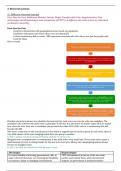
How it works:
The UK is divided up into 650 consitutencies
To stand in elections under FPTP, the candidate has
to pay a deposit. This is returned in 5% of the vote
is obtained
Electors cast their vote for one candidate in single-
member constituencies
Each voterhas one vote and indicates their choce by
an X next to a candidates name
The winner need to only achieve a plurality of votes
(one more than their nearest rival). The winner is
the one with the most voters in their constituency;
this may not be above 50% of votes cast
For a aprty to win the overall general election, they
aim to have a majority over all other parties in the
Commons. Thus, they need to get at least 326 MPs
elected (out of 650) to be in that position.
Plurality electoral systems: in a plurality electoral system, each voter can vote for only one candidate. The
candidate who achieves the most votes (a plurality) is elected. It is also know as winner-takes all as no matter
how close the vote, they win. A candidate can get much less than 50% of the vote in a constituency but still
become the MP.
Safe seats: a safe seat or safe constituency is one which is regarded as secure by a party. In such seats, there is
very little chance of the seat changing hands from one party to another
In 2017, Labour retained Liverpool Walton with 85.7% of the vote
Marginal seas: a marginal seat or constituency is one held with a very small lead. These seats only require a
small amount of votes to change hands for the seat to be lost/won. Money and campaigning almost always
focuses on marginal seats
In 2017, the SNP won North East Fife by only 2 votes
Advantages Disadvantages
It creates stability and strong governments, able to FPTP discriminated in favour of the two main
make coherent decisions, yet retaining the flexibility parties, particularly those with concentrated
necessary to adapt to changing circumstances support, so government is unrepresentative
, MPs have a close relationship with constituents; they Votes are wasted on losing candidates or on huge
meet them regularly at ‘surgeries’, represent their majorities in safe seats, so not everybody’s vote is
concerns in parliament, and deal with their ‘worth’ the same
grievances
The candidate who most people prefer wins the seat Other systems also offer constituents good local
members to represent them – for example, STV and
AMS
It is simple and easy to operate. All that is required is Most MPs do not achieve 50% of the votes in their
an X in the desired voter choice constituency, so they are not representative of their
constituency
It is quick to produce a result. Newcastle Central was Electronic voting today means the ease and speed of
the first constituency to declare a result in 2017 at operation of FPTP is overrated
11pm, only 60 minutes after the polls closed
FPTP has the effect of keeping out small, extremist It discriminates against moderate small parties with
parties by discriminating against them legitimate cause and ideologies
Additional Member System
· Used for Scotland and Wales. Blair believed no party could achieve a majority and coalitions or consensus
would be the norm
· Constituency link clear but addresses issue of proportionality so fairer than FPTP
· Parties with strong support that cannot win constituency seats receive 'top up' members from the
regional vote eg. Scotland 2021: Conservative 26 to take them to 31, Labour 20 to take them to 22. Greens
8. Successful constituency parties are handicapped eg. SNP
How it works:
With AMS, the voters have two separate votes (there are 129 seats in the
Scottish Parliament.)
The first is used to choose a member for their local consitutency The second vote is used to select a political party (using the party
(using FPTP). The person with the most votes wins (73 MSPs are list). They are known as 'top-up' members (56 MSPs are chosen
chosen this way) using a closed party list, elected from eight regions)
This produces two types of representative, one local and one
regional. The party-list element is used to 'top-up' the constituency
vote, making the overall result more proportionate.
Proportional electoral systems:
- Parties should be represented in proportion to their overall electoral strength. The percentage of seats
they win should be similar to the percentage of votes they gain
- No wasted vote – all votes are used, and the voter feels more values
- Coalition government are the normal outcome of this system
List system: parties list their candidates in order of importance. Depending on the percentage of votes each
party receives, they will be allocated seats (if a party wins 50% of the vote and there are 100 seats, the party
will be allocated 50 seats; candidates 1-50 will fill these). In a closed list, electors have no say in the order of the
candidates on the list; in an open list, voters have some say over the order
Government in the Scottish Assembly: Scottish Parliament election results, 2016:
Term Governing party Turnout: Constituency Combined
1999-2003 Labour and LD 56%
% of vote Seats (%) % of vote Seats (%)
2003-2007 Labour and LD
2007-2011 SNP SNP 47 59 (81%) 45 63 (49%)
2011-2016 SNP Conservatives 22 7 (10%) 23 31 (24%)
Labour 23 3 (4%) 21 24 (19%)
2016- SNP
Greens 1 0 (0%) 4 6 (5%)
Lib Dems 8 4 (5%) 7 5 (4%)
Total seats 73 129
Advantages Disadvantages
3.1 Different electoral systems
First Past the Post, Additional Member System, Single Transferrable Vote, Supplementary Vote,
advantages and disadvantages and comparison of FPTP to a different electoral system in a devolved
parliament/assembly
First Past the Post
· Country is divided into 650 geographical areas, based on population
· Candidate with most votes wins; other votes are discarded
· A clear constituency link is create - MP represents everyone who lives there, not just the people who
voted for them
How it works:
The UK is divided up into 650 consitutencies
To stand in elections under FPTP, the candidate has
to pay a deposit. This is returned in 5% of the vote
is obtained
Electors cast their vote for one candidate in single-
member constituencies
Each voterhas one vote and indicates their choce by
an X next to a candidates name
The winner need to only achieve a plurality of votes
(one more than their nearest rival). The winner is
the one with the most voters in their constituency;
this may not be above 50% of votes cast
For a aprty to win the overall general election, they
aim to have a majority over all other parties in the
Commons. Thus, they need to get at least 326 MPs
elected (out of 650) to be in that position.
Plurality electoral systems: in a plurality electoral system, each voter can vote for only one candidate. The
candidate who achieves the most votes (a plurality) is elected. It is also know as winner-takes all as no matter
how close the vote, they win. A candidate can get much less than 50% of the vote in a constituency but still
become the MP.
Safe seats: a safe seat or safe constituency is one which is regarded as secure by a party. In such seats, there is
very little chance of the seat changing hands from one party to another
In 2017, Labour retained Liverpool Walton with 85.7% of the vote
Marginal seas: a marginal seat or constituency is one held with a very small lead. These seats only require a
small amount of votes to change hands for the seat to be lost/won. Money and campaigning almost always
focuses on marginal seats
In 2017, the SNP won North East Fife by only 2 votes
Advantages Disadvantages
It creates stability and strong governments, able to FPTP discriminated in favour of the two main
make coherent decisions, yet retaining the flexibility parties, particularly those with concentrated
necessary to adapt to changing circumstances support, so government is unrepresentative
, MPs have a close relationship with constituents; they Votes are wasted on losing candidates or on huge
meet them regularly at ‘surgeries’, represent their majorities in safe seats, so not everybody’s vote is
concerns in parliament, and deal with their ‘worth’ the same
grievances
The candidate who most people prefer wins the seat Other systems also offer constituents good local
members to represent them – for example, STV and
AMS
It is simple and easy to operate. All that is required is Most MPs do not achieve 50% of the votes in their
an X in the desired voter choice constituency, so they are not representative of their
constituency
It is quick to produce a result. Newcastle Central was Electronic voting today means the ease and speed of
the first constituency to declare a result in 2017 at operation of FPTP is overrated
11pm, only 60 minutes after the polls closed
FPTP has the effect of keeping out small, extremist It discriminates against moderate small parties with
parties by discriminating against them legitimate cause and ideologies
Additional Member System
· Used for Scotland and Wales. Blair believed no party could achieve a majority and coalitions or consensus
would be the norm
· Constituency link clear but addresses issue of proportionality so fairer than FPTP
· Parties with strong support that cannot win constituency seats receive 'top up' members from the
regional vote eg. Scotland 2021: Conservative 26 to take them to 31, Labour 20 to take them to 22. Greens
8. Successful constituency parties are handicapped eg. SNP
How it works:
With AMS, the voters have two separate votes (there are 129 seats in the
Scottish Parliament.)
The first is used to choose a member for their local consitutency The second vote is used to select a political party (using the party
(using FPTP). The person with the most votes wins (73 MSPs are list). They are known as 'top-up' members (56 MSPs are chosen
chosen this way) using a closed party list, elected from eight regions)
This produces two types of representative, one local and one
regional. The party-list element is used to 'top-up' the constituency
vote, making the overall result more proportionate.
Proportional electoral systems:
- Parties should be represented in proportion to their overall electoral strength. The percentage of seats
they win should be similar to the percentage of votes they gain
- No wasted vote – all votes are used, and the voter feels more values
- Coalition government are the normal outcome of this system
List system: parties list their candidates in order of importance. Depending on the percentage of votes each
party receives, they will be allocated seats (if a party wins 50% of the vote and there are 100 seats, the party
will be allocated 50 seats; candidates 1-50 will fill these). In a closed list, electors have no say in the order of the
candidates on the list; in an open list, voters have some say over the order
Government in the Scottish Assembly: Scottish Parliament election results, 2016:
Term Governing party Turnout: Constituency Combined
1999-2003 Labour and LD 56%
% of vote Seats (%) % of vote Seats (%)
2003-2007 Labour and LD
2007-2011 SNP SNP 47 59 (81%) 45 63 (49%)
2011-2016 SNP Conservatives 22 7 (10%) 23 31 (24%)
Labour 23 3 (4%) 21 24 (19%)
2016- SNP
Greens 1 0 (0%) 4 6 (5%)
Lib Dems 8 4 (5%) 7 5 (4%)
Total seats 73 129
Advantages Disadvantages


