

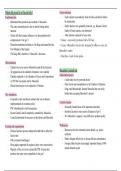
Where did power lie in Fascist Italy? Fascist ministers
Traditional elite - Each minister took authority from the Duce and had to follow
- Maintained their positions and worked w/ Mussolini his instructions
- The army remained passive due to shared foreign policy - Earlier fascists were gradually removed, e.g. Rossoni, former
interests leader of fascist unions, was dismissed
- Church still had a major influence over the population but - Able ministers replaced by lesser men
compromised w/ the gov’t → Starace - excessively promoted cult of il Duce
- Mussolini maintained relations w/ the King and named him the → Ciano - Mussolini’s son-in-law; remained in office to carry out
First Marshal of the Empire Mussolini’s orders
- The King didn’t interfere w/ Mussolini’s decisions
→ Bocchini - head of state police
Old institutions
- Cabinet was never used as Mussolini made all the decisions
- All opposition in the chamber of deputies were expelled Mussolini’s central role
- Chamber replaced w/ the Chamber of Fasces and Corporations Authoritarian power
in 1939 but was mostly run by Mussolini - Could make laws by personal decree
- Elected local mayors were replaced w/ Podestas - Only fascists and sympathisers sat in Chamber of Deputies
- King could theoretically dismiss Mussolini but was easily
New institutions bullied into accepting Mussolini’s decrees
- Cooperative state ran labour contracts but was an illusory
implementation of economic policy Control of policy
- PNF subordinated to state bureaucracy - Personally headed most of the important ministries
- Fascist Grand Council completely controlled by Mussolini - Interfered in policy issues across all aspects of gov’t
- Council determined the successor to the throne and Mussolini - W/o Mussolini’s support, it was difficult to promote policy
Existing state organisations Weaknesses
- Prefects had their powers enhanced but did little to affect the - Became involved in extremely minor details, e.g. police
fascist state uniforms
- Police remained unchanged - Didn’t delegate effectively or choose efficient subordinates
- Most judges supported the regime as they were conservatives - Foreign affairs became increasingly important during 1930s -
- Majority of the civil service joined the PNF to keep their lacked domestic goals
positions but some were sympathetic to the gov’t
Traditional elite - Each minister took authority from the Duce and had to follow
- Maintained their positions and worked w/ Mussolini his instructions
- The army remained passive due to shared foreign policy - Earlier fascists were gradually removed, e.g. Rossoni, former
interests leader of fascist unions, was dismissed
- Church still had a major influence over the population but - Able ministers replaced by lesser men
compromised w/ the gov’t → Starace - excessively promoted cult of il Duce
- Mussolini maintained relations w/ the King and named him the → Ciano - Mussolini’s son-in-law; remained in office to carry out
First Marshal of the Empire Mussolini’s orders
- The King didn’t interfere w/ Mussolini’s decisions
→ Bocchini - head of state police
Old institutions
- Cabinet was never used as Mussolini made all the decisions
- All opposition in the chamber of deputies were expelled Mussolini’s central role
- Chamber replaced w/ the Chamber of Fasces and Corporations Authoritarian power
in 1939 but was mostly run by Mussolini - Could make laws by personal decree
- Elected local mayors were replaced w/ Podestas - Only fascists and sympathisers sat in Chamber of Deputies
- King could theoretically dismiss Mussolini but was easily
New institutions bullied into accepting Mussolini’s decrees
- Cooperative state ran labour contracts but was an illusory
implementation of economic policy Control of policy
- PNF subordinated to state bureaucracy - Personally headed most of the important ministries
- Fascist Grand Council completely controlled by Mussolini - Interfered in policy issues across all aspects of gov’t
- Council determined the successor to the throne and Mussolini - W/o Mussolini’s support, it was difficult to promote policy
Existing state organisations Weaknesses
- Prefects had their powers enhanced but did little to affect the - Became involved in extremely minor details, e.g. police
fascist state uniforms
- Police remained unchanged - Didn’t delegate effectively or choose efficient subordinates
- Most judges supported the regime as they were conservatives - Foreign affairs became increasingly important during 1930s -
- Majority of the civil service joined the PNF to keep their lacked domestic goals
positions but some were sympathetic to the gov’t


