

Acquired Language Disorders
Aphasia
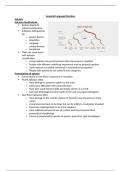
Aphasia classifications
Boston diagnostic
aphasia examination
Subtypes distinguished
by:
o Speech fluency
o Repetition
o Language
comprehension
o Paraphasia
There are some issues
with aphasia
classification
o Certain deficits may not be present when the person is classified
o People with different underlying impairment may be grouped together
o Some aspects not reliably measured in standardised assessment
o People with aphasia do not neatly fit into categories
Presentations of aphasia
Can be fluent or non-fluent, expressive or receptive
Fluent aphasias often:
o Have damage to posterior regions to the brain
o Likely have difficulties with comprehension
o Have poor word retrieval skills and empty speech as a result
o Can have phonological and semantic errors and use jargon/neologisms
Non-fluent aphasias often:
o Have damage to the anterior regions of the brain near the primary motor
cortex
o Comprehension likely to be intact but can be mildly to moderately impaired
o Expressive language likely to be more impaired
o Have relatively persevered use of content words but impoverished
grammatical morphology
o Can be accompanied by apraxia of speech, dysarthria, right hemiplegia’s
,
Aphasia
Aphasia classifications
Boston diagnostic
aphasia examination
Subtypes distinguished
by:
o Speech fluency
o Repetition
o Language
comprehension
o Paraphasia
There are some issues
with aphasia
classification
o Certain deficits may not be present when the person is classified
o People with different underlying impairment may be grouped together
o Some aspects not reliably measured in standardised assessment
o People with aphasia do not neatly fit into categories
Presentations of aphasia
Can be fluent or non-fluent, expressive or receptive
Fluent aphasias often:
o Have damage to posterior regions to the brain
o Likely have difficulties with comprehension
o Have poor word retrieval skills and empty speech as a result
o Can have phonological and semantic errors and use jargon/neologisms
Non-fluent aphasias often:
o Have damage to the anterior regions of the brain near the primary motor
cortex
o Comprehension likely to be intact but can be mildly to moderately impaired
o Expressive language likely to be more impaired
o Have relatively persevered use of content words but impoverished
grammatical morphology
o Can be accompanied by apraxia of speech, dysarthria, right hemiplegia’s
,


