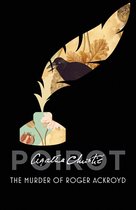
The Detective Character (Hercule Poirot)
Detectives can be differentiated and classified based on these character traits:
The Investigative Method
Piecing Together the Information
The Reveal
A detective is both defined and limited by the mystery they are solving.
Raymond Chandler's quote on what a detective is:
The detective is often in some ways an outsider, operating on the margins of the community
which he or she ultimately protects, perhaps a slightly alienated figure, a foreigner (like Poirot)
or a spinster (like Miss Marple). The detective often operates within the narrative as a teacher,
dropping hints, answering questions obliquely, and needing a ‘Watson-figureʼ to patiently
instruct, a figure who in some respects represents the reader. In some stories the character of
Captain Hastings performs the ‘Watsonʼ role, in others, such as The Murder of Roger Ackroyd, a
different character temporarily performs this function. Therefore, in many ways Poirot
reassuringly follows the genre conventions, but at the same time challenges them and pushes
at their boundaries. In some stories, he almost seems to be deliberately marginalised. In Sad
Cypress, for instance, he does not appear until half way through the book. He more often listens
to the stories other people tell exploring the gaps, evasions and implications.
Poirot as a feminine character:
, By rejecting money and fame Poirot takes an anti-capitalist stance when it comes to
investigating a crime. His own motivation is that of discovering the truth.
Poirot's Appearance
The association between Humpty Dumpty and Hercule Poirot serves to undermine the
power and authority of the detective.
Detectives can be differentiated and classified based on these character traits:
The Investigative Method
Piecing Together the Information
The Reveal
A detective is both defined and limited by the mystery they are solving.
Raymond Chandler's quote on what a detective is:
The detective is often in some ways an outsider, operating on the margins of the community
which he or she ultimately protects, perhaps a slightly alienated figure, a foreigner (like Poirot)
or a spinster (like Miss Marple). The detective often operates within the narrative as a teacher,
dropping hints, answering questions obliquely, and needing a ‘Watson-figureʼ to patiently
instruct, a figure who in some respects represents the reader. In some stories the character of
Captain Hastings performs the ‘Watsonʼ role, in others, such as The Murder of Roger Ackroyd, a
different character temporarily performs this function. Therefore, in many ways Poirot
reassuringly follows the genre conventions, but at the same time challenges them and pushes
at their boundaries. In some stories, he almost seems to be deliberately marginalised. In Sad
Cypress, for instance, he does not appear until half way through the book. He more often listens
to the stories other people tell exploring the gaps, evasions and implications.
Poirot as a feminine character:
, By rejecting money and fame Poirot takes an anti-capitalist stance when it comes to
investigating a crime. His own motivation is that of discovering the truth.
Poirot's Appearance
The association between Humpty Dumpty and Hercule Poirot serves to undermine the
power and authority of the detective.