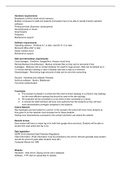
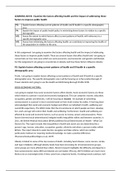
Eukaryotic Organelle Structure and Function
Nucleus
● The nucleus is a membrane-bound organelle
● The nucleus houses the cell’s genome
● The nucleus serves as the repository for the
cell’s genetic information as well as the cell’s
control centre
● The nuclear envelope separates the genome
from the cytoplasm
● The nuclear envelope is a double membrane
perforated with nuclear pores which allows for
movement of substances
● The nuclear envelope is made up of a
phospholipid bilayer, and helps maintain the
shape of the nucleus
● DNA replication, translation and RNA processing take place within the nucleus
Mitochondria
● Mitochondria have an inner and
outer membrane, with an
intermembrane space between
them
● The outer membrane contains
proteins called porins, which act
as pores and allow movement of
ions in and out of the mitochondria
● The inner membrane contains
ATP synthase, which generates ATP in the matrix, as well as transport proteins that
regulate movement of metabolites in and out of the matrix
● The inner membrane is folded into cristae, in order to increase the surface area
available for energy production via oxidative phosphorylation
● The space within the inner membrane is called the matrix, which contains the
enzymes of the Krebs and fatty acid cycles, as well as DNA, RNA, ribosomes, and
calcium granules
● Mitochondria are the site of ATP synthesis, therefore are a good indicator of the cell’s
rate of metabolic activity
● Mitochondria aid in maintaining intracellular environment; they store caspases
responsible for triggering apoptosis and are able to store calcium, contributing to
calcium homeostasis
Nucleus
● The nucleus is a membrane-bound organelle
● The nucleus houses the cell’s genome
● The nucleus serves as the repository for the
cell’s genetic information as well as the cell’s
control centre
● The nuclear envelope separates the genome
from the cytoplasm
● The nuclear envelope is a double membrane
perforated with nuclear pores which allows for
movement of substances
● The nuclear envelope is made up of a
phospholipid bilayer, and helps maintain the
shape of the nucleus
● DNA replication, translation and RNA processing take place within the nucleus
Mitochondria
● Mitochondria have an inner and
outer membrane, with an
intermembrane space between
them
● The outer membrane contains
proteins called porins, which act
as pores and allow movement of
ions in and out of the mitochondria
● The inner membrane contains
ATP synthase, which generates ATP in the matrix, as well as transport proteins that
regulate movement of metabolites in and out of the matrix
● The inner membrane is folded into cristae, in order to increase the surface area
available for energy production via oxidative phosphorylation
● The space within the inner membrane is called the matrix, which contains the
enzymes of the Krebs and fatty acid cycles, as well as DNA, RNA, ribosomes, and
calcium granules
● Mitochondria are the site of ATP synthesis, therefore are a good indicator of the cell’s
rate of metabolic activity
● Mitochondria aid in maintaining intracellular environment; they store caspases
responsible for triggering apoptosis and are able to store calcium, contributing to
calcium homeostasis