Scanning Techniques
fMRI- Functional Magnetic Resonance Imaging
● Measures changes in brain activity whilst a person performs a task… it measures
changes in blood flow in particular areas of the brain (indicating increased neural
activity)... BECAUSE increased demand for oxygen through increased blood flow…
these changes in blood flow produce maps showing which areas of the brain are
involved in a particular mental activity… fMRI can be used to identify the brain areas
where there is a matching pattern of change (activated by stimulus)
● E.g. asked to alternate between a particular task and control state
Electroencephalogram- EEG
● Measures general activity of brain e.g. awake and asleep states… measures
electrical activity in the brain (action potential)... electrodes on scalp detect small
electrical charges resulting in the activity of brain cells… graphed over time… can
detect various brain disorders e.g. epilepsy, or diagnose disorders that influence
brain activity e.g. Alzheimer’s… epilepsy is spike, and brain injury/disease slowing
ERPs- Event-Related Potential
● Carried out in the same way as an EEG… to establish a specific response to a target
stimulus requires many presentations of the stimulus and these responses are then
averaged together… extraneous neural activity not related will be inconsistent…
makes specific response to the stimulus in question stand out more clearly
● Divided into 2 categories: first 100 milliseconds after presentation of the stimulus =
‘sensory’ as they reflect an initial response to physical characteristic… after 100
milliseconds = evaluation of the stimulus ‘cognitive’
Post-Mortem Examinations
● Used to establish the underlying neurobiology of a particular behaviour… examine
the brain to look for abnormalities… e.g. Broca with Tan who displayed speech
problems when alive and was subsequently found to have a lesion in the area of the
brain that is now known as Broca’s area
● Help identify some of the brain structures in memory e.g. Jacopo Annese’s
post-mortem of HM (inability to store memories was linked to lesions in the
hippocampus)... and links between psychiatric disorders e.g. schizophrenia and
depression and underlying brain abnormalities… e.g. reduced numbers of glial cells
(help neurons work) in frontal cortex of depressed patients
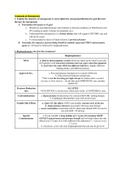
There are 4 main ways to evaluate ‘ways of studying the brain’: invasive vs non-invasive,
spatial resolution (clarity of image), temporal resolution (how quickly activity is
detected/measured), measures superficial/outer regions of the brain vs measures deeper
brain regions.
Strengths Weaknesses
fMRI Non-Invasive and doesn’t Measures change in
expose the body to harmful bloodflow so not a direct
radiation… measure of neural activity,
High spatial resolution, THEREFORE not truly
millimetres of accuracy quantitative measure of
fMRI- Functional Magnetic Resonance Imaging
● Measures changes in brain activity whilst a person performs a task… it measures
changes in blood flow in particular areas of the brain (indicating increased neural
activity)... BECAUSE increased demand for oxygen through increased blood flow…
these changes in blood flow produce maps showing which areas of the brain are
involved in a particular mental activity… fMRI can be used to identify the brain areas
where there is a matching pattern of change (activated by stimulus)
● E.g. asked to alternate between a particular task and control state
Electroencephalogram- EEG
● Measures general activity of brain e.g. awake and asleep states… measures
electrical activity in the brain (action potential)... electrodes on scalp detect small
electrical charges resulting in the activity of brain cells… graphed over time… can
detect various brain disorders e.g. epilepsy, or diagnose disorders that influence
brain activity e.g. Alzheimer’s… epilepsy is spike, and brain injury/disease slowing
ERPs- Event-Related Potential
● Carried out in the same way as an EEG… to establish a specific response to a target
stimulus requires many presentations of the stimulus and these responses are then
averaged together… extraneous neural activity not related will be inconsistent…
makes specific response to the stimulus in question stand out more clearly
● Divided into 2 categories: first 100 milliseconds after presentation of the stimulus =
‘sensory’ as they reflect an initial response to physical characteristic… after 100
milliseconds = evaluation of the stimulus ‘cognitive’
Post-Mortem Examinations
● Used to establish the underlying neurobiology of a particular behaviour… examine
the brain to look for abnormalities… e.g. Broca with Tan who displayed speech
problems when alive and was subsequently found to have a lesion in the area of the
brain that is now known as Broca’s area
● Help identify some of the brain structures in memory e.g. Jacopo Annese’s
post-mortem of HM (inability to store memories was linked to lesions in the
hippocampus)... and links between psychiatric disorders e.g. schizophrenia and
depression and underlying brain abnormalities… e.g. reduced numbers of glial cells
(help neurons work) in frontal cortex of depressed patients
There are 4 main ways to evaluate ‘ways of studying the brain’: invasive vs non-invasive,
spatial resolution (clarity of image), temporal resolution (how quickly activity is
detected/measured), measures superficial/outer regions of the brain vs measures deeper
brain regions.
Strengths Weaknesses
fMRI Non-Invasive and doesn’t Measures change in
expose the body to harmful bloodflow so not a direct
radiation… measure of neural activity,
High spatial resolution, THEREFORE not truly
millimetres of accuracy quantitative measure of