Neurogeneration & Alzheimer’s disease
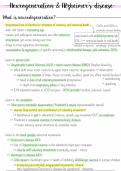
What is neurodegeneration?
- progressive loss of function or structure of neurons, and neuronal death CLIPs and HSPs m
- main risk factor = increasing age promote correct folding
- causes and pathogenic mechanisms are often unknown associated with unfolded proteins (pb
- progressive, get worse slowly over time ER...) => response leads to cell death
- drugs to treat symptoms but no cure “unfolded p response”: autophagy/ proteasomes
- accumulation & aggregation of specific abnormal p, mitochondrial damage, glial activation, ROS...
- lesion in spinal cord:
=> Amyotrophic Lateral Sclerosis (ALS) = motor neuron disease (MND): Stephen Hawking
=> affect both lower motor neurons & upper motor neurons: degeneration => denervation
=> weakness in muscles of limbs/ those to breath, swallow, speak (no effect mental function)
=> result in loss of all voluntary movements (progressive) + excitotoxicity
=> death from respiratory failure or lung infection + spasticity
=> 10% inherited mutation in SOD1 enzyme - 90% sporadic (random, unknown cause)
- lesion in the cerebellum
=> Olivo-ponco-cerebellar degeneration/ Friedreich’s ataxia (spinocerebellar ataxia)
=> ataxias (lose control and coordination of voluntary movement)
=> disturbance in gait (= démarche), balance, speech, eye movement BUT no weakness
=> Friedreich’s: recessive mutation in mitochondrial p frataxin
=> lesion sensory spinal structures & cerebellar nuclei
- lesion in the basal ganglia: abnormal movements
=> Parkinson’s disease (PD)
=> loss of dopaminergic neurons in the substantia nigra pars compacta
=> slow & stiff voluntary movements (eventually cease) - tremor
=> Huntington’s disease (HD)
=> CAG repeat in huntingtin gene => death of inhibitory GABAergic neurons in corpus striatum
=> involuntary uncontrolled, exaggerated movements: ‘chorea’
then, hypokinesia (Parkinson’s disease-like symptoms) - dementia
, - lesion in the cerebral cortex
=> Alzheimer’s disease (AD)
Neuronal death in neurodegeneration genetically programmed self-
digestion to survive starvation
- neurodegeneration progresses slowly => no necrotic cell death
=> excessive programmed cell death (clean removal of the cell): apoptosis or autophagy
=> remove damaged/ malfunctioning cell components via activation of genes & TFs
=> cell do not lyse & only a few degenerating neurons at the time
=> abundance neurons => clinical signs only when large part degenerated => can’t compensate
=> cellular stresses (aggregated p, mitochondrial damage, ROS) are triggers
What is dementia?
- neurodegeneration cerebral cortex => impairment higher cognitive functions
memory, spatial awareness, language, personality,
judgement, emotions, abstract thoughts...
- dementia = progressive loss of memory + at least 1 other function, interfering w/ everyday activities
=> reversible (alcohol abuse...)
=> irreversible (neurodegenerative diseases)
Types of dementia:
- AD: cause of 50-80% dementia cases
=> cortical degeneration w/ a specific pattern of pathological features
- vascular/ multi-infarct dementia: caused by many small strokes
a-synuclein
- dementia w/ Lewy bodies: accumulation of an aggregated p => troubles come & go (hallucinations..)
- frontotemporal degeneration: loss of language & behavioural change in a young pop
- Parkinson’s & Huntington’s diseases
- early manifestation w/ mild cognitive impairment (impairment performance complex everyday tasks)
Alzheimer’s disease (AD)
- first described in 1906 by Aloïs Alzheimer
What is neurodegeneration?
- progressive loss of function or structure of neurons, and neuronal death CLIPs and HSPs m
- main risk factor = increasing age promote correct folding
- causes and pathogenic mechanisms are often unknown associated with unfolded proteins (pb
- progressive, get worse slowly over time ER...) => response leads to cell death
- drugs to treat symptoms but no cure “unfolded p response”: autophagy/ proteasomes
- accumulation & aggregation of specific abnormal p, mitochondrial damage, glial activation, ROS...
- lesion in spinal cord:
=> Amyotrophic Lateral Sclerosis (ALS) = motor neuron disease (MND): Stephen Hawking
=> affect both lower motor neurons & upper motor neurons: degeneration => denervation
=> weakness in muscles of limbs/ those to breath, swallow, speak (no effect mental function)
=> result in loss of all voluntary movements (progressive) + excitotoxicity
=> death from respiratory failure or lung infection + spasticity
=> 10% inherited mutation in SOD1 enzyme - 90% sporadic (random, unknown cause)
- lesion in the cerebellum
=> Olivo-ponco-cerebellar degeneration/ Friedreich’s ataxia (spinocerebellar ataxia)
=> ataxias (lose control and coordination of voluntary movement)
=> disturbance in gait (= démarche), balance, speech, eye movement BUT no weakness
=> Friedreich’s: recessive mutation in mitochondrial p frataxin
=> lesion sensory spinal structures & cerebellar nuclei
- lesion in the basal ganglia: abnormal movements
=> Parkinson’s disease (PD)
=> loss of dopaminergic neurons in the substantia nigra pars compacta
=> slow & stiff voluntary movements (eventually cease) - tremor
=> Huntington’s disease (HD)
=> CAG repeat in huntingtin gene => death of inhibitory GABAergic neurons in corpus striatum
=> involuntary uncontrolled, exaggerated movements: ‘chorea’
then, hypokinesia (Parkinson’s disease-like symptoms) - dementia
, - lesion in the cerebral cortex
=> Alzheimer’s disease (AD)
Neuronal death in neurodegeneration genetically programmed self-
digestion to survive starvation
- neurodegeneration progresses slowly => no necrotic cell death
=> excessive programmed cell death (clean removal of the cell): apoptosis or autophagy
=> remove damaged/ malfunctioning cell components via activation of genes & TFs
=> cell do not lyse & only a few degenerating neurons at the time
=> abundance neurons => clinical signs only when large part degenerated => can’t compensate
=> cellular stresses (aggregated p, mitochondrial damage, ROS) are triggers
What is dementia?
- neurodegeneration cerebral cortex => impairment higher cognitive functions
memory, spatial awareness, language, personality,
judgement, emotions, abstract thoughts...
- dementia = progressive loss of memory + at least 1 other function, interfering w/ everyday activities
=> reversible (alcohol abuse...)
=> irreversible (neurodegenerative diseases)
Types of dementia:
- AD: cause of 50-80% dementia cases
=> cortical degeneration w/ a specific pattern of pathological features
- vascular/ multi-infarct dementia: caused by many small strokes
a-synuclein
- dementia w/ Lewy bodies: accumulation of an aggregated p => troubles come & go (hallucinations..)
- frontotemporal degeneration: loss of language & behavioural change in a young pop
- Parkinson’s & Huntington’s diseases
- early manifestation w/ mild cognitive impairment (impairment performance complex everyday tasks)
Alzheimer’s disease (AD)
- first described in 1906 by Aloïs Alzheimer