100% satisfaction guarantee Immediately available after payment Both online and in PDF No strings attached 4.2 TrustPilot
logo-home
Exam (elaborations)

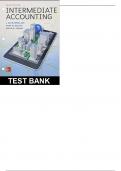
Test Bank For Intermediate Accounting 9th Edition By Spiceland

Rating
5.0
(1)
Sold
1
Pages
2384
Grade
A
Uploaded on
26-09-2023
Written in
2022/2023

Chapter 3 The Balance Sheet and Financial Disclosures True/False Questions 1. The balance sheet reports a company's financial position at a point in time. Answer: True Level of Learning: 1 Easy Learning Objective: 03-01 Topic Area: Balance sheet–Usefulness-Limits-Elements Blooms: Remember AACSB: Reflective thinking AICPA: BB Critical thinking AICPA: FN Measurement 2. A company’s market value is generally less than its book value. Answer: False Level of Learning: 1 Easy Learning Objective: 03-01 Topic Area: Balance sheet–Usefulness-Limits-Elements Blooms: Understand AACSB: Reflective thinking AICPA: BB Critical thinking AICPA: FN Measurement 3. All current assets are either cash or assets that will be converted into cash or consumed within 12 months or the operating cycle, whichever is longer. Answer: True Level of Learning: 1 Easy Learning Objective: 03-02 Topic Area: Classify assets―Current assets Blooms: Remember AACSB: Reflective thinking AICPA: BB Critical thinking AICPA: FN Measurement 4. The balance of net receivables represents the amount expected to be collected. Answer: True Level of Learning: 1 Easy Learning Objective: 03-02 Topic Area: Classify assets―Current assets Blooms: Understand AACSB: Reflective thinking AICPA: BB Critical thinking AICPA: FN Measurement 5. Prepaid expenses are classified as current assets if the services purchased are expected to 3–1 Chapter 3 The Balance Sheet and Financial Disclosures expire within 12 months or the operating cycle, whichever is longer. Answer: True Level of Learning: 1 Easy Learning Objective: 03-02 Topic Area: Classify assets―Current assets Blooms: Remember AACSB: Reflective thinking AICPA: BB Critical thinking AICPA: FN Measurement 6. Assets classified as property, plant, and equipment include machinery, equipment, and inventories. Answer: False Level of Learning: 1 Easy Learning Objective: 03-02 Topic Area: Classify assets―Long-term assets Blooms: Remember AACSB: Reflective thinking AICPA: BB Critical thinking AICPA: FN Measurement 7. Intangible assets usually are reported in the balance sheet as current assets. Answer: False Level of Learning: 1 Easy Learning Objective: 03-02 Topic Area: Classify assets―Long-term assets Blooms: Remember AACSB: Reflective thinking AICPA: BB Critical thinking AICPA: FN Measurement 8. Accrued salaries and wages in a balance sheet represent salaries and wages that have been earned by employees but not yet paid. Answer: True Level of Learning: 1 Easy Learning Objective: 03-03 Topic Area: Classify liabilities―Current liabilities Blooms: Remember AACSB: Reflective thinking AICPA: BB Critical thinking AICPA: FN Measurement 9. The criteria for determining which items comprise cash equivalents often is disclosed in the summary of significant accounting policies. 3–2 Chapter 3 The Balance Sheet and Financial Disclosures Answer: True Level of Learning: 1 Easy Learning Objective: 03-04 Topic Area: Disclosure–Notes to financial statements Blooms: Remember AACSB: Reflective thinking AICPA: BB Critical thinking AICPA: FN Measurement 10. Payment terms, interest rates, and other details of long-term liabilities usually are reported in disclosure notes. Answer: True Level of Learning: 1 Easy Learning Objective: 03-04 Topic Area: Disclosure–Notes to financial statements Blooms: Remember AACSB: Reflective thinking AICPA: BB Critical thinking AICPA: FN Measurement 11. Subsequent events are significant developments that take place after a firm's year-end, and after the financial statements are issued or available to be issued. Answer: False Level of Learning: 1 Easy Learning Objective: 03-04 Topic Area: Disclosure–Notes to financial statements Blooms: Remember AACSB: Reflective thinking AICPA: BB Critical thinking AICPA: FN Measurement 12. All illegal acts should be disclosed in the notes to the financial statements. Answer: False Level of Learning: 1 Easy Learning Objective: 03-04 Topic Area: Disclosure–Notes to financial statements Blooms: Remember AACSB: Reflective thinking AICPA: BB Critical thinking AICPA: FN Measurement 13. The ultimate responsibility for the financial statements lies with the auditors. Answer: False Level of Learning: 1 Easy Learning Objective: 03-06 3–3 Chapter 3 The Balance Sheet and Financial Disclosures Learning Objective: 03-05 Topic Area: Audit and Auditor’s report Topic Area: Disclosure–Management-Directors-Executives Blooms: Remember AACSB: Reflective thinking AICPA: BB Legal AICPA: FN Reporting 14. The compensation of top executives is disclosed in the proxy statement. Answer: True Level of Learning: 1 Easy Learning Objective: 03-05 Topic Area: Disclosure–Management-Directors-Executives Blooms: Remember AACSB: Reflective thinking AICPA: BB Legal 15. Horizontal analysis involves expressing each item in the financial statements as a percentage of an appropriate total, or base amount, within the same year. Answer: False Level of Learning: 1 Easy Learning Objective: 03-07 Topic Area: Using information―Analysis and methods Blooms: Remember AACSB: Reflective thinking AICPA: BB Critical thinking AICPA: FN Measurement 16. Vertical analysis involves expressing each item in the financial statements as a percentage of an appropriate total, or base amount, within the same year. Answer: True Level of Learning: 1 Easy Learning Objective: 03-07 Topic Area: Using information―Analysis and methods Blooms: Remember AACSB: Reflective thinking AICPA: BB Critical thinking AICPA: FN Measurement 17. An example of vertical analysis would be comparing inventory this year to inventory last year to calculate the percentage change in inventory. Answer: False Level of Learning: 2 Medium Learning Objective: 03-07 Topic Area: Using information―Analysis and methods Blooms: Understand 3–4 Chapter 3 The Balance Sheet and Financial Disclosures AACSB: Reflective thinking AICPA: BB Critical thinking AICPA: FN Measurement 18. An example of vertical analysis would be stating each individual asset as a percentage of total assets. Answer: True Level of Learning: 1 Easy Learning Objective: 03-07 Topic Area: Using information―Analysis and methods Blooms: Remember AACSB: Reflective thinking AICPA: BB Critical thinking AICPA: FN Measurement 19. Liquidity refers to the riskiness of a company with regard to the amount of total assets in its capital structure. Answer: False Level of Learning: 2 Medium Learning Objective: 03-01 Learning Objective: 03-08 Topic Area: Balance sheet–Usefulness-Limits-Elements Topic Area: Using information―Liquidity ratios Blooms: Remember AACSB: Reflective thinking AICPA: BB Resource Management AICPA: FN Risk Analysis 20. A payment on account has no effect on working capital but will increase the current ratio if it is already greater than 1.0. Answer: True Level of Learning: 2 Medium Learning Objective: 03-08 Topic Area: Using information―Liquidity ratios Blooms: Analyze AACSB: Analytical thinking AICPA: BB Resource Management AICPA: FN Risk Analysis 21. Balance sheets prepared under IFRS often report long-term items before current items. Answer: True Level of Learning: 1 Easy Learning Objective: 03-09 Topic Area: IFRS―Balance sheet presentation Blooms: Remember AACSB: Reflective thinking 3–5 Chapter 3 The Balance Sheet and Financial Disclosures AACSB: Diversity AICPA: BB Global AICPA: FN Measurement 22. Balance sheets prepared under IFRS often exclude a shareholders’ equity section. Answer: False Level of Learning: 1 Easy Learning Objective: 03-09 Topic Area: IFRS―Balance sheet presentation Blooms: Remember AACSB: Reflective thinking AACSB: Diversity AICPA: BB Global AICPA: FN Measurement 23. Segment reporting requires disclosure of each customer that accounts for more than 5% of total enterprise revenue. Answer: False Level of Learning: 1 Easy Learning Objective: 03-Appendix 3 Topic Area: Segment reporting–Appendix Blooms: Remember AACSB: Reflective thinking AICPA: BB Critical thinking AICPA: FN Measurement Multiple Choice Questions 25. 24. The balance sheet reports: a. Net income at a point in time. b. Cash flows for a period of time. c. Assets and equities at a point in time. d. Assets and liabilities for a period of time. Answer: c Level of Learning: 2 Medium Learning Objective: 03-01 Topic Area: Balance sheet–Usefulness-Limits-Elements Blooms: Remember AACSB: Reflective thinking AICPA: BB Critical thinking AICPA: FN Measurement Current assets include cash and all other assets expected to become cash or be consumed: a. Within one year. b. Within one operating cycle. c. Within one year or one operating cycle, whichever is shorter. 3–6 Chapter 3 The Balance Sheet and Financial Disclosures d. Within one year or one operating cycle, whichever is longer. Answer: d Level of Learning: 1 Easy Learning Objective: 03-02 Topic Area: Classify assets―Current assets Blooms: Remember AACSB: Reflective thinking AICPA: BB Critical thinking AICPA: FN Measurement 26. Red Onion Restaurant would classify a six-month prepaid insurance policy as: a. Property, plant, and equipment. b. Investment. c. Current asset. d. Goodwill. Answer: c Level of Learning: 1 Easy Learning Objective: 03-02 Topic Area: Classify assets―Current assets Blooms: Remember AACSB: Reflective thinking AICPA: BB Critical thinking AICPA: FN Measurement 27. An asset that is generally not expected to be converted to cash or consumed within one year or the operating cycle is: a. Building. b. Accounts receivable. c. Inventory. d. Supplies. Answer: a Level of Learning: 1 Easy Learning Objective: 03-02 Topic Area: Classify assets―Long-term assets Blooms: Remember AACSB: Reflective thinking AICPA: BB Critical thinking AICPA: FN Measurement 28. Long-term solvency refers to: a. The efficiency with which a company manages its resources. b. The profitability of a company over a long-term period of time. c. The amount of current assets relative to long-term assets. d. The risk that a company will not be able to pay its long-term debt. Answer: d Level of Learning: 1 Easy 3–7 Chapter 3 The Balance Sheet and Financial Disclosures Learning Objective: 03-01 Learning Objective: 03-08 Topic Area: Balance sheet–Usefulness-Limits-Elements Topic Area: Using information―Solvency ratios Blooms: Remember AACSB: Reflective thinking AICPA: BB Critical thinking AICPA: FN Measurement 29. Which is a shareholders' equity account in the balance sheet? a. Accumulated depreciation. b. Paid-in capital. c. Salaries payable. d. Accounts receivable. Answer: b Level of Learning: 1 Easy Learning Objective: 03-01 Topic Area: Classify shareholders’ equity Blooms: Remember AACSB: Reflective thinking AICPA: BB Critical thinking AICPA: FN Measurement 30. Rent collected in advance is: a. An asset account in the balance sheet. b. A liability account in the balance sheet. c. A shareholders' equity account in the balance sheet. d. A temporary account, not in the balance sheet at all. Answer: b Level of Learning: 1 Easy Learning Objective: 03-03 Topic Area: Classify liabilities―Current liabilities Blooms: Understand AACSB: Reflective thinking AICPA: BB Critical thinking AICPA: FN Measurement 31. Notes payable that are due in two years are: a. Current liabilities. b. Long-term intangible assets. c. Long-term liabilities. d. Long-term investments. Answer: c Level of Learning: 1 Easy Learning Objective: 03-03 Topic Area: Classify liabilities―Long-term liabilities Blooms: Understand 3–8 Chapter 3 The Balance Sheet and Financial Disclosures AACSB: Reflective thinking AICPA: BB Critical thinking AICPA: FN Measurement 32. Which of the following is not a current liability account? a. Accrued payroll. b. Dividends payable. c. Prepaid rent. d. Subscriptions collected in advance from customers. Answer: c Level of Learning: 1 Easy Learning Objective: 03-03 Topic Area: Classify liabilities―Current liabilities Blooms: Remember AACSB: Reflective thinking AICPA: BB Critical thinking AICPA: FN Measurement 33. New Oaks Winery requires two months to make wine, two years to age it, one month to bottle it, two months to sell it, and one month to collect the receivable. Its operating cycle is: a. Twelve months. b. Thirty months. c. Six months. d. Three months. Answer: b Level of Learning: 2 Medium Learning Objective: 03-02 Topic Area: Classify assets―Current assets Blooms: Understand AACSB: Reflective thinking AICPA: BB Critical thinking AICPA: FN Measurement 34. Long-term assets generally include: a. Inventory held for sale. b. Prepaid rent. c. Accounts receivable. d. Land held for a possible future plant site. Answer: d Level of Learning: 1 Medium Learning Objective: 03-02 Topic Area: Classify assets―Long-term assets Blooms: Remember AACSB: Reflective thinking AICPA: BB Critical thinking AICPA: FN Measurement 3–9 Chapter 3 The Balance Sheet and Financial Disclosures Use the following to answer questions 35 – 38: Listed below are year-end account balances (in $millions) taken from the records of Symphony Stores. Accounts receivable–trade Building and equipment Cash–checking Interest receivable Inventory Land Notes receivable (long-term) Petty cash fund Prepaid rent Supplies Trademark Accounts payable–trade Accumulated depreciation Additional paid-in capital Allowance for uncollectible accounts Cash dividends payable Common stock, at par Income tax payable Notes payable (long-term) Retained earnings Deferred revenues Debit Credit 730 920 34 30 16 150 450 5 20 8 40 _____ TOTALS 2,403 2,403 35. What would Symphony report as total current assets? a. $823. b. $838. c. $843. d. $1,696. Answer: a Level of Learning: 3 Hard Learning Objective: 03-02 Topic Area: Classify assets―Current assets Blooms: Apply Blooms: Analyze AACSB: Analytical thinking AACSB: Knowledge application AICPA: BB Critical thinking AICPA: FN Measurement Feedback: Total current assets: ($730 – 20) + 34 + 30 + 16 + 5 + 20 + 8 = $823 36. What would Symphony report as total assets? a. $2,338. b. $2,323. _____ 3–10 Chapter 3 The Balance Sheet and Financial Disclosures c. $2,318. d. $2,303. Answer: d Level of Learning: 3 Hard Learning Objective: 03-02 Topic Area: Total assets Blooms: Apply Blooms: Analyze AACSB: Analytical thinking AACSB: Knowledge application AICPA: BB Critical thinking AICPA: FN Measurement Feedback: Total assets: ($730 – 20) + ($920 – 80) + 34 + 30 + 16 + 150 + 450 + 5 + 20 + 8 + 40 = $2,303 37. What would Symphony report as total shareholders' equity? a. $323. b. $808. c. $838. d. $928. Answer: b Level of Learning: 2 Medium Learning Objective: 03-01 Topic Area: Classify shareholders’ equity Blooms: Apply Blooms: Analyze AACSB: Knowledge application AACSB: Analytical thinking AICPA: BB Critical thinking AICPA: FN Measurement Feedback: Total shareholders’ equity: $485 + 15 + 308 = $808 38. What is the amount of working capital for Symphony? a. $98. b. $143. c. $128. d. $113. Answer: c Level of Learning: 3 Hard Learning Objective: 03-08 Topic Area: Using information―Liquidity ratios Blooms: Apply Blooms: Analyze AACSB: Analytical thinking AACSB: Knowledge application AICPA: BB Resource Management AICPA: FN Risk Analysis Feedback: Current assets: ($730 – 20) + 34 + 30 + 16 + 5 + 20 + 8 = $823 3–11 Chapter 3 The Balance Sheet and Financial Disclosures Current liabilities: $560 + 30 + 65 + 40 = 695 Working capital $128 39. Assets do not include: a. Property, plant, and equipment. b. Investments. c. Paid-in capital. d. Nontrade receivables. Answer: c Level of Learning: 1 Easy Learning Objective: 03-02 Topic Area: Total assets Blooms: Remember AACSB: Reflective thinking AICPA: BB Critical thinking AICPA: FN Measurement 40. Cash equivalents would not include: a. Cash not available for current operations. b. Money market funds. c. U.S. treasury bills. d. Bank drafts. Answer: a Level of Learning: 1 Easy Learning Objective: 03-02 Topic Area: Classify assets―Current assets Blooms: Remember AACSB: Reflective thinking AICPA: BB Critical thinking AICPA: FN Measurement 41. Cash equivalents would include: a. Highly liquid investments that can be quickly converted to cash. b. Accounts receivable from customers. c. Cash restricted for special purposes such as to repay debt in the future. d. Prepaid expenses that were purchased with cash. Answer: a Level of Learning: 1 Easy Learning Objective: 03-02 Topic Area: Classify assets―Current assets Blooms: Remember AACSB: Reflective thinking AICPA: BB Critical thinking AICPA: FN Measurement 42. Accrued liabilities: 3–12 Chapter 3 The Balance Sheet and Financial Disclosures a. Are generally paid in services rather than cash. b. Result from payment before services are received. c. Result from services received before payment is made. d. Are deferred charges to expense. Answer: c Level of Learning: 2 Medium Learning Objective: 03-03 Topic Area: Classify liabilities―Current liabilities Blooms: Understand AACSB: Reflective thinking AICPA: BB Critical thinking AICPA: FN Measurement 43. Janson Corporation Co.'s trial balance included the following account balances at December 31, 2018: Accounts receivable Inventories Patent Investments Prepaid insurance Note receivable, due 2021 $12,000 40,000 12,000 30,000 6,000 50,000 Investments consist of treasury bills that were purchased in November, 2018 and mature in January, 2019. Prepaid insurance is for the next two years. What amount should be included in the current asset section of Janson’s December 31, 2018, balance sheet? a. $ 88.000. b. $ 85,000. c. $ 55,000. d. $135,000. Answer: b Level of Learning: 2 Medium Learning Objective: 03-02 Topic Area: Classify assets―Current assets Blooms: Apply Blooms: Analyze AACSB: Analytical thinking AACSB: Knowledge application AICPA: BB Critical thinking AICPA: FN Measurement Feedback: $12,000 + 40,000 + 30,000 + 3,000 (1/2 of prepaid insurance) = $85,000. 44. Janson Corporation Co.'s trial balance included the following account balances at December 31, 2018: Accounts payable Bond payable, due 2027 Salaries payable Note payable, due 2019 $25,000 22,000 16,000 20,000 3–13 Chapter 3 The Balance Sheet and Financial Disclosures Note payable, due 2023 40,000 What amount should be included in the current liabilities section of Janson’s December 31, 2018, balance sheet? a. $ 63,000. b. $ 41,000. c. $ 61,000. d. $101,000. Answer: c Level of Learning: 2 Medium Learning Objective: 03-03 Topic Area: Classify liabilities―Current liabilities Blooms: Apply Blooms: Analyze AACSB: Knowledge application AACSB: Analytical thinking AICPA: BB Critical thinking AICPA: FN Measurement Feedback: $25,000 + 16,000 + 20,000 = $61,000. 45. The usual difference between accounts payable and notes payable is: a. Legally enforceable debt. b. Current–Long-term classification. c. Known payment terms. d. Explicitly stated interest. Answer: d Level of Learning: 2 Medium Learning Objective: 03-03 Topic Area: Classify liabilities―Current liabilities Topic Area: Classify liabilities―Long-term liabilities Blooms: Understand AACSB: Reflective thinking AICPA: BB Critical thinking AICPA: FN Measurement 46. Which of the following would be disclosed in the summary of significant accounting policies disclosure note? Composition of Long-term debt Depreciation Method a. b. c. d.No No Answer: a Level of Learning: 1 Easy No Yes Yes No Yes Yes 3–14 Chapter 3 The Balance Sheet and Financial Disclosures Learning Objective: 03-04 Topic Area: Disclosure–Notes to financial statements Blooms: Remember AACSB: Reflective thinking AICPA: BB Critical thinking AICPA: FN Measurement 47. Which of the following is not a required disclosure for related-party transactions? a. The nature of the relationship. b. A description of the transactions. c. The amounts due from or to related parties. d. The impact of the transactions on current year’s income. Answer: d Level of Learning: 1 Easy Learning Objective: 03-04 Topic Area: Disclosure–Notes to financial statements Blooms: Remember AACSB: Reflective thinking AICPA: BB Critical thinking AICPA: FN Measurement 48. Disclosure notes would not include: a. Depreciation methods used and estimated useful life. b. Definition of cash equivalents. c. Details of pension plans. d. Data to adjust the financial statements so that they are not misleading. Answer: d Level of Learning: 1 Easy Learning Objective: 03-04 Topic Area: Disclosure–Notes to financial statements Blooms: Remember AACSB: Reflective thinking AICPA: BB Critical thinking AICPA: FN Measurement 49. The principal concern with accounting for related-party transactions is: a. The size of the transactions. b. Differences between economic substance and legal form. c. The absence of legally binding contracts. d. The lack of accurate data to record transactions. Answer: b Level of Learning: 2 Medium Learning Objective: 03-04 Topic Area: Disclosure–Notes to financial statements Blooms: Understand AACSB: Reflective thinking AICPA: BB Critical thinking 3–15 Chapter 3 The Balance Sheet and Financial Disclosures AICPA: FN Measurement 50. A subsequent event for an entity with a December 31, 2018, year-end would not include: a. A change in the estimated useful lives of equipment in January 2019. b. An issuance of bonds in January 2019. c. An acquisition of another company in January 2019. d. A major uncertainty at December 31, resolved in January 2019. Answer: a Level of Learning: 2 Medium Learning Objective: 03-04 Topic Area: Disclosure–Notes to financial statements Blooms: Understand AACSB: Reflective thinking AICPA: BB Critical thinking AICPA: FN Measurement 51. How are management's responsibility and the auditors’ opinion on internal controls represented in the unqualified auditor's report? Management’s Responsibility a. Not stated b. Stated c. Not stated d. Stated Auditors’ Responsibility Stated Stated Not stated Not stated Answer: b Level of Learning: 1 Easy Learning Objective: 03-06 Topic Area: Audit and Auditor’s report Blooms: Remember AACSB: Reflective thinking AICPA: BB Critical thinking AICPA: FN Reporting 52. Management’s Report on Internal Control Over Financial Reporting: a. Provides the auditor’s opinion on the fairness of the financial statements. b. Contains personal certification of the financial statements by the company’s executives. c. Contains a detailed description of compensation of the company’s executives for the year. d. Provides a summary of significant accounting policies used to prepare financial statements. Answer: b Level of Learning: 1 Easy Learning Objective: 03-06 Topic Area: Disclosure–Management-Directors-Executives Blooms: Remember AACSB: Reflective thinking AICPA: BB Legal 3–16 Chapter 3 The Balance Sheet and Financial Disclosures 53. The Management’s Discussion and Analysis section of the annual report can best be described as: a. Frank but objective. b. Independent but precise. c. Legalistic and lengthy. d. Biased but informative. Answer: d Level of Learning: 2 Medium Learning Objective: 03-05 Topic Area: Disclosure–Management-Directors-Executives Blooms: Understand AACSB: Reflective thinking AICPA: BB Critical Thinking 54. An example of fraud would be: a. Issuing a purchase order without first securing bids. b. Buying raw materials from an affiliated company. c. Knowingly classifying a material long-term receivable as a current receivable. d. Forgetting to accrue salaries and wages payable. Answer: c Level of Learning: 2 Medium Learning Objective: 03-04 Topic Area: Disclosure–Notes to financial statements AACSB: Ethics AACSB: Analytical thinking Blooms: Analyze AICPA: BB Critical thinking AICPA: FN Risk Analysis 55. An example of an error would be: a. Purchasing inventory from a related party. b. Counting an inventory item twice when taking a physical inventory. c. Holding back invoices so that accounts payable are understated. d. Receiving kickbacks in exchange for issuing a purchase order to a vendor. Answer: b Level of Learning: 2 Medium Learning Objective: 03-04 Topic Area: Disclosure–Notes to financial statements AACSB: Reflective thinking Blooms: Understand AICPA: BB Critical thinking AICPA: FN Risk Analysis 56. An omission in the notes to the financial statements that is so serious that even a qualified opinion is not justified would result in: 3–17 Chapter 3 The Balance Sheet and Financial Disclosures a. A disclaimer. b. An unqualified opinion. c. An adverse opinion. d. A consistency exception. Answer: c Level of Learning: 2 Medium Learning Objective: 03-06 Topic Area: Audit and Auditor’s report Blooms: Understand AACSB: Reflective thinking AICPA: BB Critical thinking AICPA: FN Reporting 57. A company may compare the amount of receivables in the current year to the amount of receivables in the previous year to estimate a trend in the company’s ability to collect cash from customers. This type of analysis is known as: a. Horizontal analysis. b. Time analysis. c. V ertical analysis. d. Turnover analysis. Answer: a Level of Learning: 1 Easy Learning Objective: 03-07 Topic Area: Using information―Analysis and methods Blooms: Understand AACSB: Reflective thinking AICPA: BB Critical thinking AICPA: FN Measurement 58. To understand the components of a company’s profitability, an analyst may compute the ratio of each major expense classification to total sales. This type of analysis is known as: a. Cost analysis. b. Horizontal analysis. c. Comparative analysis. d. V ertical analysis. Answer: d Level of Learning: 1 Easy Learning Objective: 03-07 Topic Area: Using information―Analysis and methods Blooms: Understand AACSB: Reflective thinking AICPA: BB Critical thinking AICPA: FN Measurement 59. Which of the following would be an amount computed using horizontal analysis? a. The ratio of cost of goods sold to total sales for the current year. b. The percentage change in the cash balance from last year to this year. c. The difference between current assets and current liabilities at the end of the year. 3–18 Chapter 3 The Balance Sheet and Financial Disclosures d. The ratio of inventory to total assets at the end of the year. Answer: b Level of Learning: 2 Medium Learning Objective: 03-07 Topic Area: Using information―Analysis and methods Blooms: Analyze AACSB: Analytical thinking AICPA: BB Critical thinking AICPA: FN Measurement 60. Liquidity refers to: a. The amount of cash on hand at a given time. b. The readiness of an asset to be converted to cash. c. The period until cash is used and refinancing becomes necessary. d. Financial leverage. Answer: b Level of Learning: 1 Easy Learning Objective: 03-01 Learning Objective: 03-08 Topic Area: Balance sheet–Usefulness-Limits-Elements Topic Area: Using information―Liquidity ratios Blooms: Remember AACSB: Reflective thinking AICPA: BB Resource Management AICPA: FN Risk Analysis 61. Lack of long-term solvency refers to: a. Risk of nonpayment of long-term liabilities. b. The length of time before long-term debt becomes due. c. The ability to refinance long-term debt when it becomes due. d. Long-term assets. Answer: a Level of Learning: 1 Easy Learning Objective: 03-01 Learning Objective: 03-08 Topic Area: Balance sheet–Usefulness-Limits-Elements Topic Area: Using information―Solvency ratios Blooms: Understand AACSB: Reflective thinking AICPA: BB Resource Management AICPA: FN Risk Analysis 62. The current ratio is calculated as: a. Current assets divided by long-term assets. b. Current assets divided by total assets. c. Current assets divided by current liabilities. d. Current assets divided by total liabilities. 3–19 Chapter 3 The Balance Sheet and Financial Disclosures Answer: c Level of Learning: 1 Easy Learning Objective: 03-08 Topic Area: Using information―Liquidity ratios Blooms: Remember AACSB: Reflective thinking AICPA: BB Resource Management AICPA: FN Risk Analysis 63. The acid-test ratio is also known as the: a. Current ratio. b. Debt to equity ratio. c. Times interest earned ratio. d. Quick ratio. Answer: d Level of Learning: 1 Easy Learning Objective: 03-08 Topic Area: Using information―Liquidity ratios Blooms: Remember AACSB: Reflective thinking AICPA: BB Resource Management AICPA: FN Risk Analysis 64. The quick ratio is: a. The liquidity ratio divided by the equity ratio. b. Current assets minus inventory divided by current liabilities minus accounts payable. c. Current assets minus inventory and prepaid items divided by current liabilities. d. Cash divided by accounts payable. Answer: c Level of Learning: 1 Easy Learning Objective: 03-08 Topic Area: Using information―Liquidity ratios Blooms: Remember AACSB: Reflective thinking AICPA: BB Resource Management AICPA: FN Risk Analysis 65. Working capital is equal to: a. Current assets. b. Current liabilities. c. Current assets plus current liabilities. d. Current assets minus current liabilities. Answer: d Level of Learning: 1 Easy Learning Objective: 03-08 Topic Area: Using information―Liquidity ratios 3–20 Chapter 3 The Balance Sheet and Financial Disclosures Blooms: Remember AACSB: Reflective thinking AICPA: BB Resource Management AICPA: FN Risk Analysis 66. Which of the following is not used when analyzing long-term solvency? a. Times interest earned ratio. b. Debt to equity ratio. c. Acid-test ratio. d. Total liabilities. Answer: c Level of Learning: 2 Medium Learning Objective: 03-08 Topic Area: Using information―Solvency ratios Blooms: Remember AACSB: Reflective thinking AICPA: BB Resource Management AICPA: FN Risk Analysis 67. When a company pays its bill from a plumber for previous services on account: a. Its debt to equity ratio always decreases. b. Its acid-test ratio always remains unchanged. c. Its current ratio always remains unchanged. d. Its working capital decreases. Answer: a Level of Learning: 3 Hard Learning Objective: 03-08 Topic Area: Using information―Liquidity ratios Topic Area: Using information―Solvency ratios Blooms: Analyze AACSB: Analytical thinking AICPA: BB Resource Management AICPA: FN Risk Analysis 68. When a company accrues salaries at the end of the accounting period: a. Its acid-test ratio increases. b. Its current ratio increases. c. Its debt to equity ratio decreases. d. Its debt to equity ratio increases. Answer: d Level of Learning: 2 Medium Learning Objective: 03-08 Topic Area: Using information―Liquidity ratios Topic Area: Using information―Solvency ratios Blooms: Analyze AACSB: Analytical thinking AICPA: BB Resource Management 3–21 Chapter 3 The Balance Sheet and Financial Disclosures AICPA: FN Risk Analysis 69. Assume a company's liquidity ratios all are less than 1.0 before it purchases inventory on credit. When it makes the purchase: a. Its current ratio decreases. b. Its quick ratio decreases. c. Its current ratio remains unchanged. d. Its quick ratio remains unchanged. Answer: b Level of Learning: 3 Hard Learning Objective: 03-08 Topic Area: Using information―Liquidity ratios Blooms: Analyze AACSB: Analytical thinking AICPA: BB Resource Management AICPA: FN Risk Analysis 70. When a company sells land for cash and recognizes a $25,000 gain: a. Its acid-test ratio decreases. b. Its current ratio decreases. c. Its debt to equity ratio decreases. d. Cannot determine from the given information. Answer: c Level of Learning: 3 Hard Learning Objective: 03-08 Topic Area: Using information―Liquidity ratios Topic Area: Using information―Solvency ratios Blooms: Analyze AACSB: Analytical thinking AICPA: BB Resource Management AICPA: FN Risk Analysis Use the following to answer questions 71 – 74: The following partial balance sheet ($ in thousands) for Paisano Seafood Inc. is shown below. Current assets: Cash Accounts receivable (net) Notes receivable Inventories 200 Prepaid expenses Total current assets Plant assets (net) Total assets $760 $ 60 170 50 Current liabilities: Accounts payable $240 Other liabilities 80 Total current liabilities 320 Long-term liabilities 110 Total liabilities 430 Shareholders' equity: Capital stock 150 Retained earnings 180 Total shareholders' equity 330 Total liabilities and equity $760 3–22 Chapter 3 The Balance Sheet and Financial Disclosures 71. The current ratio is (rounded): a. 1.98. b. 1.58. c. 1.17. d. 0.66. Answer: b Level of Learning: 2 Medium Learning Objective: 03-08 Topic Area: Liquidity Ratios Blooms: Apply AACSB: Knowledge application AICPA: BB Resource Management AICPA: FN Risk Analysis Feedback: Current ratio: $505/$320 = 1.58 72. Working capital is: a. $505. b. $265. c. $185. d. $75. Answer: c Level of Learning: 2 Medium Learning Objective: 03-08 Topic Area: Liquidity Ratios Blooms: Apply AACSB: Knowledge application AICPA: BB Resource Management AICPA: FN Risk Analysis Feedback: Working capital: $505 – 320 = 185 73. Quick assets total: a. $60. b. $230. c. $280. d. $305. Answer: c Level of Learning: 2 Medium Learning Objective: 03-08 Topic Area: Liquidity Ratios Blooms: Apply AICPA: BB Resource Management AICPA: FN Risk Analysis AACSB: Knowledge application Feedback: Quick assets: $505 – 200 – 25 = 280 74. The acid-test ratio is (rounded): a. 0.25. b. 0.88. c. 1.17. 3–23 Chapter 3 The Balance Sheet and Financial Disclosures d. 1.58. Answer: b Level of Learning: 2 Medium Learning Objective: 03-08 Topic Area: Liquidity Ratios Blooms: Apply AACSB: Knowledge application AICPA: BB Resource Management AICPA: FN Risk Analysis Feedback: Acid-test ratio: ($505 – 200 – 25)/$320 = 0.88 Use the following to answer questions 75 – 77: Recent financial statement data for Harmony Health Foods (HHF) Inc. is shown below. Current liabilities 10% Bonds, long-term Total liabilities Shareholders' equity Capital stock Retained earnings Total shareholders' equity Total liabilities and equity $ 180 Income before interest and taxes $ 125 36 89 27 $ 62 75. HHF's debt to equity ratio is (rounded): a. 0.75. b. 1.13. c. 0.53. d. 1.80. Answer: b Level of Learning: 2 Medium Learning Objective: 03-08 Topic Area: Using information―Solvency ratios Blooms: Apply AACSB: Knowledge application AICPA: BB Resource Management AICPA: FN Risk Analysis Feedback: Debt to equity ratio: $540/$480 = 1.13 76. HHF's times interest earned ratio is (rounded): a. 3.47. b. 1.73. c. 2.47. d. 10.0. Answer: a Level of Learning: 3 Hard Learning Objective: 03-08 Topic Area: Using information―Solvency ratios 360 Interest expense 540 Income before tax Income tax 200 Net income 280 480 $1,020 3–24 Chapter 3 The Balance Sheet and Financial Disclosures Blooms: Apply AACSB: Knowledge application AICPA: BB Resource Management AICPA: FN Risk Analysis Feedback: Times interest earned ratio: ($62 + $27 + $36) = $125 for numerator. $125/$36 = 3.47 77. HHF's long-term debt to equity ratio equity is: a. 133.3%. b. 75%. c. 180%. d. 0%. Answer: b Level of Learning: 2 Medium Learning Objective: 03-08 Topic Area: Using information―Solvency ratios Blooms: Apply AACSB: Knowledge application AICPA: BB Resource Management AICPA: FN Risk Analysis Feedback: Long-term debt to equity ratio: $360/$480 = 75% 78. Using borrowed funds to generate additional profits for shareholders is referred to as: a. Liquidity management. b. Operational expansion. c. Capital budgeting. d. Financial leverage. Answer: d Level of Learning: 1 Easy Learning Objective: 03-08 Topic Area: Using information―Return on equity Blooms: Remember AACSB: Reflective thinking AICPA: BB Resource Management AICPA: FN Risk Analysis 79. A company that borrows funds at 6% and then generates a return on those funds of 9% typically has: a. Greater default risk. b. Favorable financial leverage. c. Higher return on equity. d. All of the other answers are true. Answer: d Level of Learning: 2 Medium Learning Objective: 03-08 Topic Area: Using information―Return on equity Blooms: Analyze AACSB: Analytical thinking AICPA: BB Resource Management 3–25 Chapter 3 The Balance Sheet and Financial Disclosures AICPA: FN Risk Analysis 80. Which of the following features is typical of a balance sheet prepared under IFRS? a. A shareholders’ equity section often is not included. b. Assets often are listed after liabilities. c. Long-term items often are listed before current items. d. Assets sometimes do not equal liabilities plus shareholders’ equity. Answer: c Level of Learning: 1 Easy Learning Objective: 03-09 Topic Area: IFRS―Balance sheet presentation Blooms: Remember AACSB: Reflective thinking AACSB: Diversity AICPA: BB Global AICPA: FN Measurement 81. For a balance sheet prepared under IFRS, long-term liabilities typically are listed: a. Just before the current assets section. b. In the shareholders’ equity section. c. In the long-term asset section. d. Just before the current liabilities section. Answer: d Level of Learning: 1 Easy Learning Objective: 03-09 Topic Area: IFRS―Balance sheet presentation Blooms: Remember AACSB: Reflective thinking AACSB: Diversity AICPA: BB Global AICPA: FN Measurement 82. Which of the following is not a required segment reporting disclosure according to U.S. GAAP? a. Segment profit or loss. b. Segment assets. c. Segment liabilities. d. General information about the operating segment. Answer: c Level of Learning: 1 Easy Learning Objective: 03-Appendix 3 Topic Area: Segment reporting–Appendix Blooms: Remember AACSB: Reflective thinking AICPA: BB Critical thinking AICPA: FN Measurement 3–26 Chapter 3 The Balance Sheet and Financial Disclosures 83. Which of the following is not a required segment reporting disclosure according to International Financial Reporting Standards (IFRS)? a. Segment profit or loss. b. Segment assets. c. Segment liabilities. d. All are required disclosures. Answer: d Level of Learning: 1 Easy Learning Objective: 03-09 Learning Objective: 03-Appendix 3 Topic Area: IFRS―Segment reporting–Appendix Blooms: Remember AACSB: Reflective thinking AACSB: Diversity AICPA: BB Global AICPA: FN Measurement 84. Which of the following is not a characteristic that defines a reportable operating segment according to U.S. GAAP? a. Operating results are regularly reviewed by the enterprise’s chief operating officer. b. Discrete financial information is available. c. Engages in business activities from which it may recognize revenues and incur expenses. d. Represents more than 20% of total company revenues, assets, or net income. Answer: d Level of Learning: 1 Easy Learning Objective: 03-Appendix 3 Topic Area: Segment reporting–Appendix Blooms: Remember AACSB: Reflective thinking AICPA: BB Critical thinking AICPA: FN Measurement Matching Pair Questions 85. Listed below are 5 terms followed by a list of phrases that describe or characterize the terms. Match each phrase with the correct term. 3–27 Chapter 3 The Balance Sheet and Financial Disclosures 1. Unqualified opinion 2. Disclaimer 3. Auditors’ report 4. Qualified opinion 5. Adverse opinion Answer: c 1. Unqualified opinion e 2. Disclaimer a 3. Auditors’ report b 4. Qualified opinion d 5. Adverse opinion a. Independent and professional report about the fairness of the financial statements. b. Given by an auditor when there is a limitation of audit procedures or a departure from GAAP. c. Given by an auditor when financial statements are presented fairly in conformity with GAAP. d. Given by an auditor when there are substantial reporting errors and a qualified opinion is not appropriate. e. Given by an auditor when information is insufficient to express an opinion. a. Independent and professional report about the fairness of the financial statements. b. Given by an auditor when there is a limitation of audit procedures or a departure from GAAP. c. Given by an auditor when financial statements are presented fairly in conformity with GAAP. d. Given by an auditor when there are substantial reporting errors and a qualified opinion is not appropriate. e. Given by an auditor when information is insufficient to express an opinion. Level of Learning: 2 Medium Learning Objective: 03-06 Topic Area: Audit and Auditor’s report Blooms: Understand AACSB: Reflective thinking AICPA: FN Reporting 86. Listed below are 5 terms followed by a list of phrases that describe or characterize the terms. Match each phrase with the correct term. 1. Current ratio 2. Acid-test ratio 3. Long-term solvency 4. Liquidity 5. Debt to equity ratio a. Also known as the quick ratio. b. Refers to riskiness of a company with regard to the amount of liabilities in its capital structure. c. Relates to the amount of time before an asset is converted to cash or a liability is paid. d. If four to one, 80% of assets are debt-financed. e. Current assets divided by current liabilities. 3–28 Chapter 3 The Balance Sheet and Financial Disclosures Answer: e 1. Current ratio a 2. Acid-test ratio b 3. Long-term solvency c 4. Liquidity d 5. Debt to equity ratio a. Also known as the quick ratio. b. Refers to riskiness of a company with regard to the amount of liabilities in its capital structure. c. Relates to the amount of time before an asset is converted to cash or a liability is paid. d. If four to one, 80% of assets are debt-financed. e. Current assets divided by current liabilities. Level of Learning: 2 Medium Learning Objective: 03-08 Topic Area: Using information―Liquidity ratios Topic Area: Using information―Solvency ratios Blooms: Understand AACSB: Reflective thinking AICPA: BB Resource Management AICPA: FN Risk Analysis 87. Listed below are 5 terms followed by a list of phrases that describe or characterize the terms. Match each phrase with the correct term. 1. Long-term liabilities 2. Current liabilities 3. Intangible asset 4. Current assets 5. Property, plant, and equipment Answer: a 1. Long-term liabilities d 2. Current liabilities b 3. Intangible asset c 4. Current assets e 5. Property, plant, and equipment a. Obligations payable in more than one year or longer than the operating cycle. b. Ownership of an exclusive right. c. Items expected to be converted to cash or consumed within one year or the operating cycle. d. Obligations payable within one year or the operating cycle. e. Includes buildings and land used in operations. a. Obligations payable in more than one year or longer than the operating cycle. b. Ownership of an exclusive right. c. Items expected to be converted to cash or consumed within one year or the operating cycle. d. Obligations payable within one year or the operating cycle. e. Includes buildings and land used in operations. Level of Learning: 1 Easy Learning Objective: 03-02 Learning Objective: 03-03 Topic Area: Classify assets―Current assets Topic Area: Classify assets―Long-term assets Topic Area: Classify liabilities―Current liabilities 3–29 Chapter 3 The Balance Sheet and Financial Disclosures Topic Area: Classify liabilities―Long-term liabilities Blooms: Understand AACSB: Reflective thinking AICPA: BB Critical thinking AICPA: FN Measurement 88. Listed below are 5 terms followed by a list of phrases that describe or characterize the terms. Match each phrase with the correct term. 1. Notes receivable 2. Short-term investments 3. Inventories 4. Accounts receivable 5. Prepaid expenses Answer: d 1. Notes receivable e 2. Short-term investments b 3. Inventories c 4. Accounts receivable a 5. Prepaid expenses a. Insurance premiums paid in advance. b. Goods to be sold in the ordinary course of business. c. Due from customers in the ordinary course of business. d. Formal agreement that specifies customer’s payment terms. e. Liquid investments not classified as cash equivalents. a. Insurance premiums paid in advance. b. Goods to be sold in the ordinary course of business. c. Due from customers in the ordinary course of business. d. Formal agreement that specifies customer’s payment terms. e. Liquid investments not classified as cash equivalents. Level of Learning: 1 Easy Learning Objective: 03-02 Topic Area: Classify assets―Current assets Blooms: Understand AACSB: Reflective thinking AICPA: BB Critical thinking AICPA: FN Measurement 89. Listed below are 5 terms followed by a list of phrases that describe or characterize the terms. Match each phrase with the correct term. 3–30 Chapter 3 The Balance Sheet and Financial Disclosures 1. Subsequent events 2. Proxy statement 3. MD&A 4. Auditors’ report 5. Summary of significant accounting policies Answer: d 1. Subsequent events b 2. Proxy statement a 3. MD&A c 4. Auditors’ report e 5. Summary of significant accounting policies a. Management’s views on its operations, liquidity, and capital resources. b. Includes disclosures of executive compensation. c. Independent and professional opinion about the fairness of the financial statements. d. Occurs after the fiscal year-end, but before the statements are issued. e. Information about the company’s choices from among various alternative accounting methods. a. Management’s views on its operations, liquidity, and capital resources. b. Includes disclosures of executive compensation. c. Independent and professional report about the fairness of the financial statements. d. Occurs after the fiscal year-end, but before the statements are issued. e. Information about the company’s choices from among various alternative accounting methods. Level of Learning: 2 Medium Learning Objective: 03-04 Learning Objective: 03-05 Learning Objective: 03-06 Topic Area: Disclosure–Notes to financial statements Topic Area: Disclosure–Management-Directors-Executives Topic Area: Audit and Auditor’s report Blooms: Understand AACSB: Reflective thinking AICPA: Critical thinking AICPA: BB Legal AICPA: FN Reporting AICPA: FN Measurement 90. Listed below are 5 terms followed by a list of phrases that describe or characterize the terms. Match each phrase with the correct term. 3–31 Chapter 3 The Balance Sheet and Financial Disclosures 1. Paid-in capital 2. Prepaid expense 3. Deferred revenue 4. Operating cycle 5. Retained earnings Answer: e 1. Paid-in capital d 2. Prepaid expense b 3. Deferred revenue c 4. Operating cycle a 5. Retained earnings a. Accumulated net income less dividends since the inception of the corporation. b. Cash received from a customer for goods or services to be provided in a future period. c. Converting cash to inventory to receivables to cash. d. Cash paid in advance for a cost of the company. e. Amounts invested by shareholders in the corporation. a. Accumulated net income less dividends since the inception of the corporation. b. Cash received from a customer for goods or services to be provided in a future period. c. Converting cash to inventory to receivables to cash. d. Cash paid in advance for a cost of the company. e. Amounts invested by shareholders in the corporation. Level of Learning: 2 Medium Learning Objective: 03-01 Learning Objective: 03-02 Learning Objective: 03-03 Topic Area: Classify assets―Current assets Topic Area: Classify liabilities―Current liabilities Topic Area: Classify shareholders’ equity Blooms: Understand AACSB: Reflective thinking AICPA: BB Critical thinking AICPA: FN Measurement 91. Listed below are ten terms followed by a list of phrases that describe or characterize the terms. Match each phrase with the correct term. 1. Related-party transactions 2. Deferred revenues 3. Accounts receivable 4. Inventories 5. Accounts payable 6. Prepaid expense 7. Retained earnings 8. Subsequent events 9. MD&A 10. Franchise a. Material events that occur after the end of the fiscal year and before the statements are issued. b. Obligations to suppliers of merchandise or of services purchased on account. c. Transactions with owners, managers, and affiliated companies. d. Net income less dividends since inception of the corporation. e. Management's views on significant events. f. Amounts due from customers. g. Goods to be sold in the ordinary course of business. h. Asset recorded when an expense is paid for in advance. i. Cash received from a customer in advance of providing a good or service. j. An intangible asset. Answer: 3–32 Chapter 3 The Balance Sheet and Financial Disclosures c i f g b h d a e j 1. Related-party transactions 2. Deferred revenues 3. Accounts receivable 4. Inventories 5. Accounts payable 6. Prepaid expense 7. Retained earnings 8. Subsequent events 9. MD&A 10. Franchise a. Material events that occur after the end of the fiscal year and before the statements are issued. b. Obligations to suppliers of merchandise or of services purchased on account. c. Transactions with owners, managers, and affiliated companies. d. Net income less dividends since inception of the corporation. e. Management's views on significant events. f. Amounts due from customers. g. Goods to be sold in the ordinary course of business. h. Asset recorded when an expense is paid for in advance. i. Cash received from a customer in advance of providing a good or service. j. An intangible asset. 92. Level of Learning: 2 Medium Learning Objective: 03-01 Learning Objective: 03-02 Learning Objective: 03-03 Learning Objective: 03-04 Learning Objective: 03-05 Topic Area: Classify assets―Current assets Topic Area: Classify assets―Long-term assets Topic Area: Classify liabilities―Current liabilities Topic Area: Classify shareholders’ equity Topic Area: Disclosure–Notes to financial statements Topic Area: Disclosure–Management-Directors-Executives Blooms: Understand AACSB: Reflective thinking AICPA: BB Critical thinking AICPA: FN Measurement Listed below are 4 terms followed by a list of phrases that describe or characterize the terms. Match each phrase with the correct term. 1. Default risk 2. Operational risk 3. Horizontal analysis 4. Vertical analysis a. An indication of whether a company won’t be able to pay its obligations when they come due. b. Each item in a financial statement is expressed as a percentage of that same item in the financial statements of another year (base amount). c. Each item in the financial statements is expressed as a percentage of an appropriate corresponding total, or base amount, but within the same year. d. An indication of how adept a company is at withstanding various events and circumstances that might impair its ability to earn profits. 3–33 Chapter 3 The Balance Sheet and Financial Disclosures a d b c Answer: 1. Default risk 2. Operational risk 3. Horizontal analysis 4. Vertical analysis a. An indication of whether a company won’t be able to pay its obligations when they come due. b. Each item in a financial statement is expressed as a percentage of that same item in the financial statements of another year (base amount). c. Each item in the financial statements is expressed as a percentage of an appropriate corresponding total, or base amount, but within the same year. d. An indication of how adept a company is at withstanding various events and circumstances that might impair its ability to earn profits. 93. Level of Learning: 2 Medium Learning Objective: 03-07 Topic Area: Using information―Analysis and methods Blooms: Remember AACSB: Reflective thinking AICPA: BB Critical thinking AICPA: FN Measurement Carter Appliances is preparing its annual report for the current fiscal year. The company’s controller has asked for your help in determining how best to disclose information about the following items: 1. A subsequent event. 2. Inventory costing method. 3. Composition of accrued liabilities. 4. Useful lives of depreciable assets. 5. Information on long-term leases. 6. Allowance for uncollectible accounts. 7. Revenue recognition policy. 8. Pension plans. Required: Indicate whether the above items should be disclosed (a) in the summary of significant accounting policies note, (b) in a separate disclosure note, or (c) on the face of the balance sheet Answers: 1. (b) in a separate disclosure note. 2. (a) in the summary of significant policies note. 3. (c) in a separate disclosure note or (a) on the face of the balance sheet. 4. (a) in the summary of significant policies note. 5. (b) in a separate disclosure note. 6. (a) on the face of the balance sheet. 7. (a) in the summary of significant policies note. 8. (b) in a separate disclosure note. Level of Learning: 3 Hard Learning Objective: 03-04 3–34 Chapter 3 The Balance Sheet and Financial Disclosures Topic Area: Disclosure–Notes to financial statements Blooms: Understand AACSB: Reflective thinking AICPA: BB Critical thinking AICPA: FN Measurement 3–35 Chapter 3 The Balance Sheet and Financial Disclosures Problems 94. As controller for Henderson, you are attempting to reconstruct and revise the following balance sheet prepared by a staff accountant. Current assets: Cash $ 1,600 4,300 (500) 5,000 2,400 12,800 2,000 3,200 18,000 (8,000) ? $? $6,200 8,000 200 2,400 16,800 7,000 200 ? $ ? Accounts receivable Allowance for uncollectible accounts Finished goods inventory Prepaid expenses Total current assets Long-term assets: Investments Raw materials and work in process inventory Equipment Accumulated depreciation–equipment Franchise Total assets Current liabilities: Accounts payable Note payable Interest payable–note Deferred revenue Total current liabilities Long-term liabilities: Bonds payable Interest payable–bonds Shareholders’ equity: Common stock Retained earnings Total liabilities and shareholders’ equity Additional information ($ in 000s): Henderson Manufacturing Company Balance Sheet At December 31, 2018 ($ in 000s) Assets Liabilities and Shareholders’ Equity 1. Certain records that included the account balances for the franchise and shareholders’ equity items were lost. However, a complete, preliminary balance sheet prepared before the records were lost showed a debt to equity ratio of 1.5. That is, total liabilities are 150% of total shareholders’ equity. Retained earnings at the beginning of the year was $4,300. Net income for 2018 was $2,500, and $800 in cash dividends were declared and paid to shareholders. 2. The investments represent treasury bills purchased in December 2018 that mature in January 2019. These are considered cash equivalents. 3. Interest on both the note and the bonds is payable annually. 4. The note payable is due in annual installments of $800 each. $ ? ? 3–36 Chapter 3 The Balance Sheet and Financial Disclosures 5. Deferred revenue will be recognized equally over the next 18 months. 6. The common stock represents 500,000 shares of no par stock authorized, 300,000 shares issued and outstanding. Required: Prepare a complete, corrected, classified balance sheet. Answer: Solve for missing amounts: Liabilities ÷ Equity = 1.5 $24,000 ÷ Equity = 1.5 Equity = $24,000 ÷ 1.5 = $16,000 Beginning retained earnings + net income – dividends = Ending retained earnings $4,300 + 2,500 – 800 = $6,000 Total equity – retained earnings = Common stock $16,000 – 6,000 = $10,000 Assets = Liabilities + equity Assets = $24,000 + 16,000 = $40,000 $40,000 – all other assets = Franchise $40,000 – 28,000 = $12,000 3–37 Chapter 3 The Balance Sheet and Financial Disclosures Current assets: Henderson Manufacturing Company Balance Sheet At December 31, 2018 ($ in 000s, except share data) Assets Cash and cash equivalents* ....................................... Accounts receivable, net of $500 allowance for uncollectible accounts ............................................ Inventories: Raw materials and work in process ........................ Finished goods ........................................................ Prepaid expenses . ...................................................... Total current assets ................................................... Property, plant, and equipment: Equipment ................................................................. Less: Accumulated depreciation ............................... Net property, plant, and equipment ........................... Intangibles: Franchise ................................................................... Total assets ............................................................. Liabilities and Shareholders' Equity Current liabilities: Accounts payable . ..................................................... Interest payable . ......................................................... Deferred revenue** . .................................................. Current maturities of long-term debt ........................ Total current liabilities .............................................. Long-term liabilities: Deferred revenue ....................................................... Note payable ............................................................. Bonds payable ........................................................... Total liabilities Shareholders’ equity: Common stock, no par, 500,000 shares authorized, .. 300,000 shares issued and outstanding Retained earnings ...................................................... Total shareholders’ equity ......................................... Total liabilities and shareholders’ equity $ 3,200 5,000 18,000 (8,000) $ 3,600 3,800 8,200 2,400 18,000 10,000 12,000 $40,000 $ 6,200 400 1,600 800 9,000 15,000 24,000 16,000 $40,000 800 7,200 7,000 10,000 6,000 * Cash of $1,600 + treasury bills of $2,000 (cash equivalents) **($2,400 ÷ 18 months) × 12 months = $1,600 = current portion Level of Learning: 3 Hard Learning Objective: 03-01 Learning Objective: 03-02 3–38 Chapter 3 The Balance Sheet and Financial Disclosures Learning Objective: 03-03 Learning Objective: 03-08 Topic Area: Balance sheet–Usefulness-Limits-Elements Topic Area: Total assets Topic Area: Total liabilities Topic Area: Classify shareholders’ equity Topic Area: Using information―Solvency ratios Blooms: Apply Blooms: Analyze AACSB: Analytical thinking AACSB: Knowledge application AICPA: BB Critical Thinking AICPA: FN Measurement 95. You recently joined the internal auditing department of Kaitlyn Sportswear Corporation. As one of your first assignments, you are examining a balance sheet prepared by a staff accountant. Kaitlyn Sportswear Corporation Balance Sheet At December 31, 2018 3–39 Chapter 3 The Balance Sheet and Financial Disclosures Assets Current assets: Cash . ................................................ Accounts receivable, net .................. Note receivable ................................ Inventories ....................................... Prepaid expenses .............................. Total current assets ........................ Other assets: Land . ................................................ Buildings, net ................................... Equipment, net.................................. Investments....................................... Patent . .............................................. Total other assets ........................... Total assets ................................. $ 500,000 2,200,000 400,000 50,000 60,000 $ 220,000 340,000 80,000 600,000 40,000 1,280,000 3,156,000 $4,346,000 $ 165,000 75,000 45,000 285,000 880,000 1,165,000 3,181,000 $4,346,000 Liabilities and Shareholders’ Equity Current liabilities: Accounts payable ............................ Salaries payable ............................... Interest payable ................................ Total current liabilities .................. Long-term liabilities: Note payable . Bonds payable . Total long-term liabilities .............. DTefoetrarleldiarbeivlietnieuse .............................. Shareholders’ equity: Common stock ................................. Retained earnings ............................ Total shareholders’ equity ............ Total liabilities and shareholders’ equity ................ $300,000 500,000 80,000 $2,000,000 1,181,000 In the course of your examination you uncover the following information pertaining to the balance sheet: 1. The land and buildings represent the corporate headquarters and manufacturing facilities. 2. The note receivable is due in 2020. The balance of $80,000 includes $5,000 of accrued interest. The next interest payment is due in July 2019. 3. The note payable is due in installments of $50,000 per year. Interest on both the notes and bonds is payable annually. 4. The company’s investments consist of marketable equity securities of other corporations. Management does not intend to liquidate any investments in the coming year. 5. Deferred revenue will be recognized ratably (equally) over the next two years. Required: Identify and explain the deficiencies in the statement prepared by the company’s accountant. Include in your answer items that require additional disclosure, either on the face of the statement or in a note. Answer: 3–40 Chapter 3 The Balance Sheet and Financial Disclosures 1. Accounts receivable – if material, the allowance for uncollectible accounts should be disclosed, usually parenthetically on the face of the statement. 2. Note receivable – only the interest receivable of $5,000 should be classified as a current asset. The $75,000 note receivable should be classified in the long-term investments category. 3. Inventories – the method used to measure inventory should be disclosed in a note. 4. Land, buildings, and equipment – should be classified in the long-term property, plant, and equipment category 5. Buildings and equipment, net – Original cost should be disclosed along with the accumulated depreciation to arrive at the net amount. Also, the method used to compute depreciation should be disclosed in a note. 6. Investments – should be classified in the long-term investments category. A description of the types of investments should be disclosed in a note. 7. Patent – should be classified in the intangibles category of long-term assets. 8. Note payable – $50,000, the next installment, should be classified as a current liability as current maturities of long-term debt. Also, note disclosure is required for the note and bonds payable that provides information such as payment terms, interest rates, and collateral pledged as security for the debt. 9. Deferred revenue – half of the balance, $40,000, should be classified as a current liability. 10. Common stock – the par value, if any, and the number of shares authorized, issued, and outstanding should be disclosed, usually on the face of the statement. Level of Learning: 3 Hard Learning Objective: 03-01 Learning Objective: 03-0 2 Learning Objective: 03-03 Learning Objective: 03-04 Topic Area: Balance sheet–Usefulness-Limits-Elements Topic Area: Total assets Topic Area: Total liabilities Topic Area: Classify shareholders’ equity Topic Area: Disclosure–Notes to financial statements Blooms: Analyze AACSB: Analytical thinking AICPA: BB Critical thinking AICPA: FN Measurement 3–41 Chapter 3 The Balance Sheet and Financial Disclosures 96. Presented below is a partial trial balance for the Messenger Corporation at December 31, 2018. Account Title Cash and cash equivalents Accounts receivable Raw materials inventory Note receivable Interest receivable Interest payable Marketable securities investments Land Buildings Accumulated depreciation–buildings Work in process inventory Finished goods inventory Equipment Accumulated depreciation–equipment Franchise (net of amortization) Prepaid insurance (for the next year) Deferred revenue Accounts payable Note payable Salaries payable Allowance for uncollectible accounts Sales revenue Cost of goods sold Salaries expense Additional information: Debits 30,000 195,000 36,000 120,000 4,000 48,000 100,000 1,500,000 38,000 98,000 400,000 120,000 60,000 500,000 48,000 Credits 7,000 740,000 230,000 48,000 240,000 500,000 6,000 24,000 900,000 1. The note receivable, along with any accrued interest, is due on November 1, 2019. 2. The

Show more Read less


Whoops! We can’t load your doc right now. Try again or contact support.

Document information

Uploaded on
September 26, 2023
Number of pages
2384
Written in
2022/2023
Type
Exam (elaborations)
Contains
Questions & answers

Subjects

Content preview

,Chapter 1 Environment and Theoretical Structure of Financial Accounting


True/False Questions

1. The primary function of financial accounting is to provide relevant financial information to
parties external to business enterprises.

Answer: True
Level of Learning: 1 Easy
Learning Objective: 01-01
Topic Area: Environment of financial accounting and reporting
Blooms: Remember
AACSB: Reflective thinking
AICPA: BB Critical Thinking


2. Accrual accounting attempts to measure revenues and expenses that occurred during
accounting periods so they equal net operating cash flow.

Answer: False
Level of Learning: 1 Easy
Learning Objective: 01-02
Topic Area: Cash versus accrual accounting
Blooms: Understand
AACSB: Reflective thinking
AICPA: FN Measurement


3. The FASB is currently the public-sector organization responsible for setting accounting
standards in the United States.

Answer: False
Level of Learning: 1 Easy
Learning Objective: 01-03
Topic Area: Development of accounting and reporting standards
Blooms: Remember
AACSB: Reflective thinking
AICPA: BB Legal


4. The FASB’s due process invites various interested parties to indicate their opinions about
whether financial accounting standards should be changed.

Answer: True
Level of Learning: 1 Easy
Learning Objective: 01-04
Topic Area: GAAP―Standard-setting process
Blooms: Remember
AACSB: Reflective thinking
AICPA: BB Legal


5. Accounting for stock-based compensation is an area in which the FASB has received little
political interference.

1–1

,Chapter 1 Environment and Theoretical Structure of Financial Accounting

Answer: False
Level of Learning: 1 Easy
Learning Objective: 01-04
Topic Area: GAAP―Standard-setting process
Blooms: Remember
AACSB: Reflective thinking
AICPA: BB Legal


6. The Public Reform and Investor Protection Act of 2002 (Sarbanes-Oxley) changed the entity
responsible for setting auditing standards in the United States.

Answer: True
Level of Learning: 1 Easy
Learning Objective: 01-05
Topic Area: Encouraging high-quality financial reporting
Blooms: Remember
AACSB: Reflective thinking
AICPA: BB Legal


7. A rules-based approach to standard-setting stresses professional judgment as opposed to
following a list of rules.

Answer: False
Level of Learning: 1 Easy
Learning Objective: 01-05
Topic Area: Encouraging high-quality financial reporting
Blooms: Remember
AACSB: Reflective thinking
AICPA: BB Critical Thinking


8. Under federal securities laws, the SEC has the authority to set accounting standards in the
United States.

Answer: True
Level of Learning: 1 Easy
Learning Objective: 01-03
Topic Area: Development of accounting and reporting standards
Blooms: Remember
AACSB: Reflective thinking
AICPA: BB Legal


9. The primary responsibility for properly applying GAAP when communicating with investors
and creditors through financial statements lies with a firm's auditors.

Answer: False
Level of Learning: 1 Easy
Learning Objective: 01-05
Topic Area: Encouraging high-quality financial reporting

1–2

, Chapter 1 Environment and Theoretical Structure of Financial Accounting

Blooms: Remember
AACSB: Reflective thinking
AICPA: BB Critical Thinking


10. Auditors play an important role in the resource allocation process by adding credibility to
financial statements.

Answer: True
Level of Learning: 1 Easy
Learning Objective: 01-05
Topic Area: Encouraging high-quality financial reporting
Blooms: Understand
AACSB: Reflective thinking
AICPA: BB Critical Thinking


11. The purpose of the conceptual framework is to provide a structure and framework for a
consistent set of GAAP.

Answer: True
Level of Learning: 1 Easy
Learning Objective: 01-06
Topic Area: Conceptual framework―Purpose
Blooms: Remember
AACSB: Reflective thinking
AICPA: BB Critical Thinking


12. In the United States the conceptual framework indicates GAAP when a more specific
accounting standard does not apply.

Answer: False
Level of Learning: 1 Easy
Learning Objective: 01-06
Topic Area: Conceptual framework―Purpose
Blooms: Remember
AACSB: Reflective thinking
AICPA: BB Critical Thinking


13. Materiality can be affected by the dollar amount of an item, the nature of the item, or both.

Answer: True
Level of Learning: 1 Easy
Learning Objective: 01-07
Topic Area: Concepts―Qualitative characteristics
Blooms: Remember
AACSB: Reflective thinking
AICPA: BB Critical Thinking
AICPA: FN Measurement


1–3

Reviews from verified buyers

Showing all reviews
1 year ago

5.0

1 reviews

5
1
4
0
3
0
2
0
1
0
Trustworthy reviews on Stuvia

All reviews are made by real Stuvia users after verified purchases.

Get to know the seller

Seller avatar
Reputation scores are based on the amount of documents a seller has sold for a fee and the reviews they have received for those documents. There are three levels: Bronze, Silver and Gold. The better the reputation, the more your can rely on the quality of the sellers work.
ExamsExpert (self)
View profile
Follow You need to be logged in order to follow users or courses
Sold
613
Member since
2 year
Number of followers
313
Documents
2838
Last sold
11 hours ago
ExamsExpert

We as a team provide best and Latest Test Banks that helps students to get A Grade we have vast range of test banks you can order us any test bank that you need

4.5

85 reviews

5
58
4
15
3
9
2
1
1
2

Recently viewed by you

Why students choose Stuvia

Created by fellow students, verified by reviews

Quality you can trust: written by students who passed their exams and reviewed by others who've used these revision notes.

Didn't get what you expected? Choose another document

No problem! You can straightaway pick a different document that better suits what you're after.

Pay as you like, start learning straight away

No subscription, no commitments. Pay the way you're used to via credit card and download your PDF document instantly.

Student with book image

“Bought, downloaded, and smashed it. It really can be that simple.”

Alisha Student

Frequently asked questions