

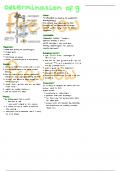
Aims :
To calculate the value or the accevation
due to
gravity , I
This is done
by measuring the fire
it takes for the ball to fall a certain
distance ad then SurAt
using to
find the
acceleration
variables :
independent variable-height ,
h
dependent variable -> time , t
control variables -> same steel ball
bearing , electromagnet and distance
Equipment :
behuter light gates
->
steel ball bearing ad
electromagnet
-> I light gates
-> timer
Analysing results :
-> +i at'
use s : ut
reararged to
-> refort stand and clamps
E = zu +
at
-> cushion to break the fall of the ball being
->
put inte the form
=
mx+c= =
gt 2
y
+
where is ehlt a is t gradient is m
=
a =
g
y , ,
method :
and the y intercept is ze
experiment
with
1 Set the scow 10cm
up h =
.
as
->
plot a
graph of ch/t against t
2 . tur n the electroraquet a ad attach the ball
->
daw a line or best fit
bearing the gradient
->
calculate :
I
3 . t r n the ragnet of and the ball should drop
->
assess the uncertainties in had I ad the
through the first light gate starting the time
therefore g
4 . the timer will
siop as it
passes through the
second
light gate
Evaluation :
S . record time ,
t for that value of had repeat
It is easy to
compart the result wish the
2 more times
ac tival value o 9 81 .
.
6 ,
repeat for multiple values o n
render errors :
7 the table
plot results in a
->
uncertainty in measuring h
->
parallax er ror from reading h
sayety !
-> not down
the ball may fall acurately
->
the electromagnes has a current
-
don't
the light gate
get it wet
-> rendan errors are reduced by repeating
-
only switch magnet on when needed
->
the experiment ad finding multiple
a cushion or mat is needed to catch the
values of t .
bal bearing
iclor shad be attached with G
-> must a
damp
so it is stable
To calculate the value or the accevation
due to
gravity , I
This is done
by measuring the fire
it takes for the ball to fall a certain
distance ad then SurAt
using to
find the
acceleration
variables :
independent variable-height ,
h
dependent variable -> time , t
control variables -> same steel ball
bearing , electromagnet and distance
Equipment :
behuter light gates
->
steel ball bearing ad
electromagnet
-> I light gates
-> timer
Analysing results :
-> +i at'
use s : ut
reararged to
-> refort stand and clamps
E = zu +
at
-> cushion to break the fall of the ball being
->
put inte the form
=
mx+c= =
gt 2
y
+
where is ehlt a is t gradient is m
=
a =
g
y , ,
method :
and the y intercept is ze
experiment
with
1 Set the scow 10cm
up h =
.
as
->
plot a
graph of ch/t against t
2 . tur n the electroraquet a ad attach the ball
->
daw a line or best fit
bearing the gradient
->
calculate :
I
3 . t r n the ragnet of and the ball should drop
->
assess the uncertainties in had I ad the
through the first light gate starting the time
therefore g
4 . the timer will
siop as it
passes through the
second
light gate
Evaluation :
S . record time ,
t for that value of had repeat
It is easy to
compart the result wish the
2 more times
ac tival value o 9 81 .
.
6 ,
repeat for multiple values o n
render errors :
7 the table
plot results in a
->
uncertainty in measuring h
->
parallax er ror from reading h
sayety !
-> not down
the ball may fall acurately
->
the electromagnes has a current
-
don't
the light gate
get it wet
-> rendan errors are reduced by repeating
-
only switch magnet on when needed
->
the experiment ad finding multiple
a cushion or mat is needed to catch the
values of t .
bal bearing
iclor shad be attached with G
-> must a
damp
so it is stable


