

12D: Understand how the human body responds to diseases and infections.
Body defences
Introduction
In this assignment the topic that is discussed is the body's defences mechanisms. What is
covered in this topic is the components of the defence mechanisms and how they work, what
are benefits of these systems their strengths and weakness. How these systems are similar
to each other when tackling a foreign substance that has entered the body. A case study is
also covered in this assignment as it goes into detail how the body defences itself from
pathogens,
Produce an illustrated report that evaluates the relevance, significance, advantages and
disadvantages, strengths and weaknesses of the humoral and cell-mediated immune
responses.
For the humoral response you must include the action of B-lymphocytes, memory cells and
T-cells, and the role of antibodies and antigens to a named pathogen.
For the cell-mediated response you must include the response to invasion of a named
pathogen.
You must detail the significance of the speed and specificity of the response in relation to the
defence process and progression of the disease in the body.
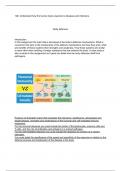
, The humoral and cell-mediated immune response. The difference between these two
responses is the humoral response is when the immune system produces specific antibodies
and antigens and are activated by B cells. Cell- mediated response consists of T cells that
activate the response.
The key components of these responses are:
B-lymphocytes: B-lymphocytes or B cells are a type of white blood cell that are in charge of
making antibodies. When these cells come into contact with an antigen ( a foreign
substance) it will bind to it and internalise it.
Antibodies: The function of antibodies which are also known as immunoglobulins. These
antibodies are
Antigens:Antigens are cells that can cause an immunological reaction. The majority of the
time, pathogens like bacteria or viruses have proteins or other compounds on their surface.
The immune response is started when antigens and antibodies attach to one another.
T-cells: T-cells are another kind of white blood cell that contributes to the humoral immune
response of the T-cell. T-cells come in a variety of varieties, including cytotoxic T-cells and
helper T-cells. Cytotoxic T-cells actively assault and kill infected cells, whereas helper T-cells
are essential for coordinating the immune response.
Memory cells:Some B-cells and T-cells develop into memory cells after their first exposure to
an antigen. When exposed to the same antigen again the memory cells "remember" it and
create a quicker and more potent immune response. Immunological memory and vaccination
are based on this.
Advantages and weakness:
The advantages of these mechanisms are the specificity and reaction quickly after exposure.
Since antibodies and memory cells are produced to specifically target certain antigens, the
humoral immune response is very focused. This sensitivity makes it possible to target the
infections for eradication, minimising collateral harm to healthy cells.
When the same antigen is exposed again, memory cells help the immune system react more
quickly. This quick reaction might reduce the intensity and duration of the illness or avoid
reinfection.
The limitations of these mechanisms are initial response delay and lack of capacity to target
intracellular pathogens. The first exposure to a pathogen, the humoral immune response
normally takes some time to develop. This lag is brought on by the time needed for B-cells to
detect the antigen, multiply, and make enough antibodies.When it comes to specific viruses
or bacteria that may dwell inside host cells, the humoral immune response is less efficient
than other types of immune responses. This is due to antibodies' tendency to function mostly
outside of cells and their inability to actively eradicate intracellular infections.
There is a connection between humoral and cell-mediated reactions. Both reactions are
crucially coordinated by helper T-cells. In the humoral response, helper T-cells stimulate B-
cells to make antibodies, but in the cell-mediated response, cytotoxic T-cells specifically
target and destroy infected cells.
How the humoral response you must include the action of B-lymphocytes, memory cells and
T-cells, and the role of antibodies and antigens to a named pathogen.
For the cell-mediated response you must include the response to invasion of a named
pathogen.
Body defences
Introduction
In this assignment the topic that is discussed is the body's defences mechanisms. What is
covered in this topic is the components of the defence mechanisms and how they work, what
are benefits of these systems their strengths and weakness. How these systems are similar
to each other when tackling a foreign substance that has entered the body. A case study is
also covered in this assignment as it goes into detail how the body defences itself from
pathogens,
Produce an illustrated report that evaluates the relevance, significance, advantages and
disadvantages, strengths and weaknesses of the humoral and cell-mediated immune
responses.
For the humoral response you must include the action of B-lymphocytes, memory cells and
T-cells, and the role of antibodies and antigens to a named pathogen.
For the cell-mediated response you must include the response to invasion of a named
pathogen.
You must detail the significance of the speed and specificity of the response in relation to the
defence process and progression of the disease in the body.
, The humoral and cell-mediated immune response. The difference between these two
responses is the humoral response is when the immune system produces specific antibodies
and antigens and are activated by B cells. Cell- mediated response consists of T cells that
activate the response.
The key components of these responses are:
B-lymphocytes: B-lymphocytes or B cells are a type of white blood cell that are in charge of
making antibodies. When these cells come into contact with an antigen ( a foreign
substance) it will bind to it and internalise it.
Antibodies: The function of antibodies which are also known as immunoglobulins. These
antibodies are
Antigens:Antigens are cells that can cause an immunological reaction. The majority of the
time, pathogens like bacteria or viruses have proteins or other compounds on their surface.
The immune response is started when antigens and antibodies attach to one another.
T-cells: T-cells are another kind of white blood cell that contributes to the humoral immune
response of the T-cell. T-cells come in a variety of varieties, including cytotoxic T-cells and
helper T-cells. Cytotoxic T-cells actively assault and kill infected cells, whereas helper T-cells
are essential for coordinating the immune response.
Memory cells:Some B-cells and T-cells develop into memory cells after their first exposure to
an antigen. When exposed to the same antigen again the memory cells "remember" it and
create a quicker and more potent immune response. Immunological memory and vaccination
are based on this.
Advantages and weakness:
The advantages of these mechanisms are the specificity and reaction quickly after exposure.
Since antibodies and memory cells are produced to specifically target certain antigens, the
humoral immune response is very focused. This sensitivity makes it possible to target the
infections for eradication, minimising collateral harm to healthy cells.
When the same antigen is exposed again, memory cells help the immune system react more
quickly. This quick reaction might reduce the intensity and duration of the illness or avoid
reinfection.
The limitations of these mechanisms are initial response delay and lack of capacity to target
intracellular pathogens. The first exposure to a pathogen, the humoral immune response
normally takes some time to develop. This lag is brought on by the time needed for B-cells to
detect the antigen, multiply, and make enough antibodies.When it comes to specific viruses
or bacteria that may dwell inside host cells, the humoral immune response is less efficient
than other types of immune responses. This is due to antibodies' tendency to function mostly
outside of cells and their inability to actively eradicate intracellular infections.
There is a connection between humoral and cell-mediated reactions. Both reactions are
crucially coordinated by helper T-cells. In the humoral response, helper T-cells stimulate B-
cells to make antibodies, but in the cell-mediated response, cytotoxic T-cells specifically
target and destroy infected cells.
How the humoral response you must include the action of B-lymphocytes, memory cells and
T-cells, and the role of antibodies and antigens to a named pathogen.
For the cell-mediated response you must include the response to invasion of a named
pathogen.


