Photosynthesis
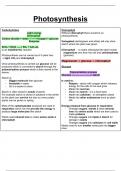
Carbohydrates Chlorophyll
Light energy Without chlorophyll there would be no
Chlorophyll photosynthesis
Carbon dioxide + water --------->oxygen + glucose
Enzymes Variegated plants(green and white) will only store
starch where the plant was green
6CO2 + 6H2O -----> 6O2 + C6H12O6
Is an endothermic reaction Chlorophyll - to make chlorophyll the plant needs
magnesium ions from the soil and carbohydrates
Photosynthesis can be carried out if a plant has: (glucose)
→ light, CO2 and chlorophyll
Magnesium + glucose → chlorophyll
Once photosynthesis is carried out glucose will be
produced which is converted to starch through the Glucose
polymerization process which is then stored in the
leaves. Polymerization process
Glucose -----------------------> starch
Starch is:
- Bigger molecule than glucose Is used to:
- Insoluble in water - Respire - reacts with oxygen which releases
- So it is easier to store. energy for the cells to live and grow
- Made into sucrose
Starch is often stored in seeds of plants - Made into starch - it is a food store
For example starch is stored in potatoes in the winter - Made into cellulose - to strengthen plants
so the plant can survive but also so more potato - Made into other substances such as plant
plants can be grown in spring. oils
Most of the carbohydrates produced are used in Energy released from glucose in respiration:
respiration which can the provide the energy to - Changes sugars, nitrate & other mineral
produce large molecules like starch ions into amino acids which are then used to
make proteins
Plants need mineral ions to make amino acids & - Changes sugars into lipids & starch for
chlorophyll storage in seeds
- Changes sugars into cellulose for cell walls
Mainly used to turn smaller molecules into bigger
ones
Carbohydrates Chlorophyll
Light energy Without chlorophyll there would be no
Chlorophyll photosynthesis
Carbon dioxide + water --------->oxygen + glucose
Enzymes Variegated plants(green and white) will only store
starch where the plant was green
6CO2 + 6H2O -----> 6O2 + C6H12O6
Is an endothermic reaction Chlorophyll - to make chlorophyll the plant needs
magnesium ions from the soil and carbohydrates
Photosynthesis can be carried out if a plant has: (glucose)
→ light, CO2 and chlorophyll
Magnesium + glucose → chlorophyll
Once photosynthesis is carried out glucose will be
produced which is converted to starch through the Glucose
polymerization process which is then stored in the
leaves. Polymerization process
Glucose -----------------------> starch
Starch is:
- Bigger molecule than glucose Is used to:
- Insoluble in water - Respire - reacts with oxygen which releases
- So it is easier to store. energy for the cells to live and grow
- Made into sucrose
Starch is often stored in seeds of plants - Made into starch - it is a food store
For example starch is stored in potatoes in the winter - Made into cellulose - to strengthen plants
so the plant can survive but also so more potato - Made into other substances such as plant
plants can be grown in spring. oils
Most of the carbohydrates produced are used in Energy released from glucose in respiration:
respiration which can the provide the energy to - Changes sugars, nitrate & other mineral
produce large molecules like starch ions into amino acids which are then used to
make proteins
Plants need mineral ions to make amino acids & - Changes sugars into lipids & starch for
chlorophyll storage in seeds
- Changes sugars into cellulose for cell walls
Mainly used to turn smaller molecules into bigger
ones