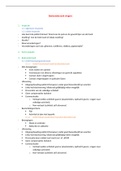
EVALUATE EXPANSIONARY FISCAL POLICY
Pros
Changes to government spending and taxation in order to increase AD
This aims to boost growth, reduce unemployment, increase inflation and
redistribute income
Examples include:
o Reducing income tax
o Reducing corporation tax
o Increase in government spending
Cons
Demand pull inflation
o Conflict of macro objectives
Current account deficit
o Conflict of macro objectives
o Economic growth= increase in spending on
imports
Worsening of government finances
o Budget deficits could rise
o National debt could increase as well
o How will these policies be funded?
o Increase in regressive taxes? Increases income inequality
Crowding out effect
o when the government borrows money for extra spending it affect the market
for saving and borrowing
o saving increases and so public spending decreases
o more dependency on the economy which isn’t good for the government long
term
X inefficiency
o Government spending could be wasteful and costs may spiral
Time lags
o Government spending on infrastructure will need rounds of spending, will
take time for effects to be seen
Evaluation
1. Size of output gap
a. The effectiveness of the expansionary fiscal policy depends on it
b. If the economy is close to full employment with a very small negative output
gap it means that expansionary fiscal policy is less likely to be effective in
boosting growth and reducing unemployment
i. Shift from AD1 to AD2- demand pull inflation is more likely to occur
than any benefits of high growth
c. However if the economy is in a deep recession and there is a large negative
output gap, expansionary fiscal policy has potential to be effective in boosting
growth and reducing unemployment without much conflict with inflationary
pressure
2. Size of the multiplier
Pros
Changes to government spending and taxation in order to increase AD
This aims to boost growth, reduce unemployment, increase inflation and
redistribute income
Examples include:
o Reducing income tax
o Reducing corporation tax
o Increase in government spending
Cons
Demand pull inflation
o Conflict of macro objectives
Current account deficit
o Conflict of macro objectives
o Economic growth= increase in spending on
imports
Worsening of government finances
o Budget deficits could rise
o National debt could increase as well
o How will these policies be funded?
o Increase in regressive taxes? Increases income inequality
Crowding out effect
o when the government borrows money for extra spending it affect the market
for saving and borrowing
o saving increases and so public spending decreases
o more dependency on the economy which isn’t good for the government long
term
X inefficiency
o Government spending could be wasteful and costs may spiral
Time lags
o Government spending on infrastructure will need rounds of spending, will
take time for effects to be seen
Evaluation
1. Size of output gap
a. The effectiveness of the expansionary fiscal policy depends on it
b. If the economy is close to full employment with a very small negative output
gap it means that expansionary fiscal policy is less likely to be effective in
boosting growth and reducing unemployment
i. Shift from AD1 to AD2- demand pull inflation is more likely to occur
than any benefits of high growth
c. However if the economy is in a deep recession and there is a large negative
output gap, expansionary fiscal policy has potential to be effective in boosting
growth and reducing unemployment without much conflict with inflationary
pressure
2. Size of the multiplier