

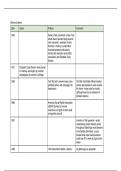
Women timeline
Date Social Political Economic
1848 Seneca Falls convention in New York
where idea of women being equal to
men discussed - example of early
feminism + held by Lucretia Mott
(founded american anti-slavery
society and american equal rights
association) and Elizabeth Cady
Stanton
1851 Elizabeth Cady Stanton meets Susan
B. Anthony and begins to prioritize
campaigning for women’s suffrage
1865 Civil War led to women being more Civil War had briefly offered married
politically active with campaigns for women opportunities to work outside
temperance the home - many acted as nurses
(although seen as an extension of
domestic sphere)
1866 American Equal Rights Association
(AERA) founded to remove
restrictions on rights on both racial
and gender grounds
1867 Invention of the typewriter - would
revolutionise clerical industry which
throughout Gilded Age would become
more female dominated - young
female white collar clerical workers
could earn $7 a week and gain some
status
1868 14th amendment ratified - leaders (in gilded age) as typewriter
, such as Stanton and Anthony developments led to young white
campaigned against the black man women leaving the factory floor, their
gaining the vote before women - racial places were increasingly taken by
views creates divisions but also young women from minority groups
gained them support for women’s who due to laissez-faire gov attitude
suffrage (people opposed black had no rights in law protection
enfranchisement > women)
1869 NWSA (National Woman Suffrage
Association) formed by Susan B
Anthony and Elizabeth Cady Stanton -
no men and campaigned for all
women (nationally and globally to get
the vote) + white only
AWSA (American Woman Suffrage
Association) formed by Lucy Stone -
did include men and campaigned for
specific states to allow women to vote
1870 15th amendment ratified - national By 1870, 13% unmarried women
vote for AAs - AWSA supported this, working
NWSA opposed it
1873 Comstock Act - made the distribution Susan B Anthony v. US - was
of contraceptives a federal offence arrested for voting in New York but
claimed this violated 14th amendment
- judge didn't even allow jury to vote +
ordered them to find her guilty for
malpractice
1874 WCTU (women’s christian temperance WCTU organised campaigns lobbying
union) formed - wanted to ban alcohol and activities - temperance
using religious and domestic appeal galvanised women for first time
despite domestic links
Date Social Political Economic
1848 Seneca Falls convention in New York
where idea of women being equal to
men discussed - example of early
feminism + held by Lucretia Mott
(founded american anti-slavery
society and american equal rights
association) and Elizabeth Cady
Stanton
1851 Elizabeth Cady Stanton meets Susan
B. Anthony and begins to prioritize
campaigning for women’s suffrage
1865 Civil War led to women being more Civil War had briefly offered married
politically active with campaigns for women opportunities to work outside
temperance the home - many acted as nurses
(although seen as an extension of
domestic sphere)
1866 American Equal Rights Association
(AERA) founded to remove
restrictions on rights on both racial
and gender grounds
1867 Invention of the typewriter - would
revolutionise clerical industry which
throughout Gilded Age would become
more female dominated - young
female white collar clerical workers
could earn $7 a week and gain some
status
1868 14th amendment ratified - leaders (in gilded age) as typewriter
, such as Stanton and Anthony developments led to young white
campaigned against the black man women leaving the factory floor, their
gaining the vote before women - racial places were increasingly taken by
views creates divisions but also young women from minority groups
gained them support for women’s who due to laissez-faire gov attitude
suffrage (people opposed black had no rights in law protection
enfranchisement > women)
1869 NWSA (National Woman Suffrage
Association) formed by Susan B
Anthony and Elizabeth Cady Stanton -
no men and campaigned for all
women (nationally and globally to get
the vote) + white only
AWSA (American Woman Suffrage
Association) formed by Lucy Stone -
did include men and campaigned for
specific states to allow women to vote
1870 15th amendment ratified - national By 1870, 13% unmarried women
vote for AAs - AWSA supported this, working
NWSA opposed it
1873 Comstock Act - made the distribution Susan B Anthony v. US - was
of contraceptives a federal offence arrested for voting in New York but
claimed this violated 14th amendment
- judge didn't even allow jury to vote +
ordered them to find her guilty for
malpractice
1874 WCTU (women’s christian temperance WCTU organised campaigns lobbying
union) formed - wanted to ban alcohol and activities - temperance
using religious and domestic appeal galvanised women for first time
despite domestic links


