Key Definitions
Adoption A research method where genetically related family members which were adopted are
Studies compared to their genetic family and adopted family to compare the effects of genes and the
environment.
Allele A different version of the same gene.
Dizygotic Non identical twins – two different sperm and two different eggs.
Genes The DNA sequence.
Genome The entire genetic material of an organism (all the DNA sequences).
Heritability An indicator of genetic influence on variation.
Intelligence The overall mental capacity for problem solving memory and verbal/visual reasoning.
IQ A test made to test cognitive abilities where a value of 100 represents the average intelligence of
the population.
Monozygotic Identical twins – occur when a single egg cell is fertilised by a single sperm cell.
Polygenic Coded for by two or more genes (many genes).
Trait Specific characteristic or feature of a person.
Twin Tests A research method conducted on identical and non-identical twins to reveal the importance of
genetic and environmental influences on certain traits.
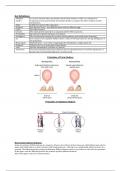
Principles of Twin Studies:
Principles of Adoption Studies:
How Genes Code for features:
Genes are sections of DNA made up of a sequence of bases. Sets of three of these bases are called triplets and code for
amino acid which leads to a chain of amino acids being produced – referred to as a polypeptide chain (structure of a
protein). The different proteins produced determine different features such as eye colour or what cells are produced.
As the genes code for different proteins, the proteins produce different features.
This is how genes control our characteristics.
Adoption A research method where genetically related family members which were adopted are
Studies compared to their genetic family and adopted family to compare the effects of genes and the
environment.
Allele A different version of the same gene.
Dizygotic Non identical twins – two different sperm and two different eggs.
Genes The DNA sequence.
Genome The entire genetic material of an organism (all the DNA sequences).
Heritability An indicator of genetic influence on variation.
Intelligence The overall mental capacity for problem solving memory and verbal/visual reasoning.
IQ A test made to test cognitive abilities where a value of 100 represents the average intelligence of
the population.
Monozygotic Identical twins – occur when a single egg cell is fertilised by a single sperm cell.
Polygenic Coded for by two or more genes (many genes).
Trait Specific characteristic or feature of a person.
Twin Tests A research method conducted on identical and non-identical twins to reveal the importance of
genetic and environmental influences on certain traits.
Principles of Twin Studies:
Principles of Adoption Studies:
How Genes Code for features:
Genes are sections of DNA made up of a sequence of bases. Sets of three of these bases are called triplets and code for
amino acid which leads to a chain of amino acids being produced – referred to as a polypeptide chain (structure of a
protein). The different proteins produced determine different features such as eye colour or what cells are produced.
As the genes code for different proteins, the proteins produce different features.
This is how genes control our characteristics.