
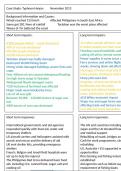
Case Study: Typhoon Haiyan November 2013
Background Information and Causes:
Winds reached 313 km/h Affected Philippines in South East Africa
Some got 281.9mm of rainfall Tacloban was the worst place affected
Waves of 7m battered the coast
Short term impacts: Long term impacts:
6300 people killed – most drowned 14 million people affected, man
90% of city was destroyed 6 million people lost their sourc
600,000 people displaced Flooding caused landslides and
40,000 homes destroyed cutting off aid to remote comm
Tacloban airport was badly damaged Power supplies in some areas c
Destroyed 30,000 fishing boats Ferry services and airline flights
Strong winds damaged buildings, power lines and weeks, slowing down aid effort
crops Shortages of water, food and sh
Over 400mm of rain caused widespread flooding many people, leading to outbre
5m high storm surge in Tacloban Many jobs were lost
Widespread floods damaged coasts Hospitals, schools and shops de
7100 hectares of farmland was affected livelihoods and education
Major roads were blocked by trees Looting and violence broke out
Lots of oil was spilt areas, particularly Tacloban
Between 50,000 – 120,000 tonnes of sugar was $5.8 billion economic impact
lost Major rice and sugar farms wer
4000 tonnes of corn was destroyed affecting trade and farmers inco
Less affected areas population d
Short term responses Long term responses:
International governments and aid agencies The UN and countries including
responded quickly with food aid, water and Japan and the US donated finan
temporary shelters and medical support
US aircraft carriers and helicopters assisted with Rebuilding of roads, bridges and
search and rescue and the delivery of aid Cash for work programmes, cle
UK sent shelter kits, providing emergency rebuilding
shelters US, Australia + EU supported ne
French, Belgian and Israeli field hospitals were opportunities
set up to help the injured Rice farming and fishing industr
The Philippines Red Cross delivered basic food established
aid, including rice, canned food, sugar, salt and Aid agencies such as Oxfam sup
cooking oil replacement of fishing boats
Background Information and Causes:
Winds reached 313 km/h Affected Philippines in South East Africa
Some got 281.9mm of rainfall Tacloban was the worst place affected
Waves of 7m battered the coast
Short term impacts: Long term impacts:
6300 people killed – most drowned 14 million people affected, man
90% of city was destroyed 6 million people lost their sourc
600,000 people displaced Flooding caused landslides and
40,000 homes destroyed cutting off aid to remote comm
Tacloban airport was badly damaged Power supplies in some areas c
Destroyed 30,000 fishing boats Ferry services and airline flights
Strong winds damaged buildings, power lines and weeks, slowing down aid effort
crops Shortages of water, food and sh
Over 400mm of rain caused widespread flooding many people, leading to outbre
5m high storm surge in Tacloban Many jobs were lost
Widespread floods damaged coasts Hospitals, schools and shops de
7100 hectares of farmland was affected livelihoods and education
Major roads were blocked by trees Looting and violence broke out
Lots of oil was spilt areas, particularly Tacloban
Between 50,000 – 120,000 tonnes of sugar was $5.8 billion economic impact
lost Major rice and sugar farms wer
4000 tonnes of corn was destroyed affecting trade and farmers inco
Less affected areas population d
Short term responses Long term responses:
International governments and aid agencies The UN and countries including
responded quickly with food aid, water and Japan and the US donated finan
temporary shelters and medical support
US aircraft carriers and helicopters assisted with Rebuilding of roads, bridges and
search and rescue and the delivery of aid Cash for work programmes, cle
UK sent shelter kits, providing emergency rebuilding
shelters US, Australia + EU supported ne
French, Belgian and Israeli field hospitals were opportunities
set up to help the injured Rice farming and fishing industr
The Philippines Red Cross delivered basic food established
aid, including rice, canned food, sugar, salt and Aid agencies such as Oxfam sup
cooking oil replacement of fishing boats


