MEMORY
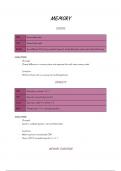
CODING
STM Accousically coded
LTM Semantically coded
Baddley Gave different lists testing acoustic/ semantic similar/dissimilar words and he found the above
EVALUATION
Strength:
- Showed differences in memory stores and supported the multi-store memory model
Limitation:
- Artificial stimuli with no meaning has limited application
CAPACITY
STM Capacity on average 7 +/- 2
LTM Capacity is practically unlimited
Jacobs Digit span: digits 9-3, letters 7-3
Miller Thought span 7 +/- 2 through chunking
EVALUATION
Strength:
- Jacobs is validated by later, well controlled studies
Limitation:
- Miller may have overestimated STM
- Cowan (2001) concluded capacity is 4 +/- 1
MEMORY DURATION
, STM 18 seconds
LTM Up to a lifetime
Peterson and Peterson 18 seconds without (verbal) maintenance rehearsal
Bahrick Meaningful material maintained after 48 years with decrease from 90% to
70% in photo recognition
EVALUATION
Strength:
- Bahrick has high external validity as meaningful memories were investigated
Limitation:
- Peterson used artificial stimuli which meant the study lacked external validity
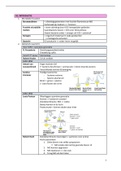
MULTI-STORE MODEL OF MEMORY
Sensory register Iconic (visual), echoic (sound) stores from the environment. Millions of receptors
and information no more than ½ second
STM Acoustic, limited (18 secs), limited capacity
LTM Semantic, up to a lifetime, unlimited
Main processes Information transferred by rehearsal and retrieval
EVALUATE
Strength:
- Atkinson and Shiffrin are supported by
Baddley that agrees there are separate
stores
Limitations:
- Studies are artificial, low external validity
- The KF study on amnesia shows different STM stores for visual and auditory functions, suggesting the
MSM is wrong. E.g. KF was better at recalling digits when reading to himself rather than someone
for him.
- Prolonged rehearsal is not needed to transfer information. Instead elaborative rehearsal is more
effective, link to existing knowledge
CODING
STM Accousically coded
LTM Semantically coded
Baddley Gave different lists testing acoustic/ semantic similar/dissimilar words and he found the above
EVALUATION
Strength:
- Showed differences in memory stores and supported the multi-store memory model
Limitation:
- Artificial stimuli with no meaning has limited application
CAPACITY
STM Capacity on average 7 +/- 2
LTM Capacity is practically unlimited
Jacobs Digit span: digits 9-3, letters 7-3
Miller Thought span 7 +/- 2 through chunking
EVALUATION
Strength:
- Jacobs is validated by later, well controlled studies
Limitation:
- Miller may have overestimated STM
- Cowan (2001) concluded capacity is 4 +/- 1
MEMORY DURATION
, STM 18 seconds
LTM Up to a lifetime
Peterson and Peterson 18 seconds without (verbal) maintenance rehearsal
Bahrick Meaningful material maintained after 48 years with decrease from 90% to
70% in photo recognition
EVALUATION
Strength:
- Bahrick has high external validity as meaningful memories were investigated
Limitation:
- Peterson used artificial stimuli which meant the study lacked external validity
MULTI-STORE MODEL OF MEMORY
Sensory register Iconic (visual), echoic (sound) stores from the environment. Millions of receptors
and information no more than ½ second
STM Acoustic, limited (18 secs), limited capacity
LTM Semantic, up to a lifetime, unlimited
Main processes Information transferred by rehearsal and retrieval
EVALUATE
Strength:
- Atkinson and Shiffrin are supported by
Baddley that agrees there are separate
stores
Limitations:
- Studies are artificial, low external validity
- The KF study on amnesia shows different STM stores for visual and auditory functions, suggesting the
MSM is wrong. E.g. KF was better at recalling digits when reading to himself rather than someone
for him.
- Prolonged rehearsal is not needed to transfer information. Instead elaborative rehearsal is more
effective, link to existing knowledge