
Unit 14: Applications of Organic Chemistry
Designing molecules
Introduction
Isomers are molecules that have the same molecular formula but different structures. Molecular
formulas consist of the number of each atom in one molecule of a compound. The two main groups
of isomerism consist of structural and stereoisomerism. Structural isomerism consists of chain
isomerism, position isomerism, and functional isomerism. Alternatively, stereoisomerism consists of
geometric isomerism and optical isomerism.
Structural Isomerism
Structural isomers are molecules that have the same molecular formula but a different arrangement
of covalent bonds. The different arrangement of covalent bonds could arise from different factors
such as the functional group being in different positions, carbon atoms arranged differently, or
different functional groups. These factors cause structural isomerism to consist of three different
types, which are, chain isomerism, position isomerism, and functional isomerism.
● Chain Isomerism
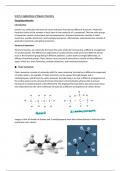
Chain isomerism consists of molecules with the same molecular formula but a different arrangement
of carbon atoms. An example of chain isomerism can be viewed through butane and 2-
methylpropane, which have the same molecular formula being C 4H10 but a different arrangement of
the carbon atoms as the structural formula of butane is CH 3CH2CH2CH3 whereas the structural
formula of 2-methyl propane is CH3CH(CH3)CH3. The displayed formula below also shows how these
two molecules have the same molecular formula but a different arrangement of carbon atoms:
Images of the 3d models of butane and 2-methylpropane have been shown below to illustrate chain
isomerism more clearly:
[1] [2]


