English Romantic Verse: Summary Sheets
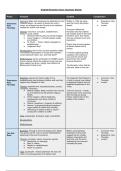
Poem Analysis Context Comparison
Summary: Blake both expresses his admiration for and Written in 1789, the same ● Experience: Holy
Innocence: critiques religion. He seems to admire the unity it year the French Revolution Thursday
Holy brings, but critiques how the Church as an institution started. ● London
Thursday imposes its control over society.
The poem reflects the
Themes: innocence, corruption, establishment, Romantic idea that children
freedom, purity, charity. are innately closer to God and
● Semantic field of purity and natural imagery. therefore ‘purer’ than adults,
● Colour imagery = contrast between adults who are corrupted by sin and
and children. experience.
● St. Paul’s → ‘Paul’s’ reflects disregard for
establishment. Plato’s idea of souls together
● Judgement Day? as flames before birth in
heaven.
Structure/form: form is free, but strict quatrains reflect
unavoidable regimentation of society and institution. A reaction against growing
Could represent Father, Son, and Holy Spirit? capitalism and institutions
such and the Church and
Rhythm/rhyme: iambic pentameter and AABB nursery government who restrict
rhyme scheme reflects the children’s purity, but also personal freedoms.
them walking ‘two & two’; rigidity. Also reflects the
Biblical idea of Noah’s Ark. The Romantic notion that the
child was ‘father to the man’.
Summary: exposes the harsh reality of how The statement that England is ● Innocence: Holy
Experience: establishments treat orphaned children and how they a ‘land of poverty’ was radical Thursday
Holy neglect their obligation of care. considering England was the ● London
Thursday wealthiest superpower in the
Themes: establishment, inequality/injustice, poverty, 1790s.
corruption, innocence.
● Biblical imagery: Blake condemns the Church ‘Cold and usurous’ - charity
as an institution but still upholds religious schools were more concerned
beliefs. with churning out young
● Winter imagery: reflects bleakness, factory workers than for the
hopelessness and decay. Similar to welfare of the children.
Innocence.
● Stanza 3 anaphora = longevity of suffering.
● Stanza 2 hypophora/rhetorical questions:
urges readers to rethink their morality.
● Well-being of children linked to nature =
unnatural for children to suffer.
Tone: exasperated, frustrated, angry, sympathetic.
Structure/form:
Rhythm/rhyme:
Summary: Through a short and simple poem, Blake Blake’s accompanying ● Innocence: Holy
The Sick has opened up the ‘rose’ to several interpretations illustrations to this poem Thursday
Rose pertaining to the loss of innocence. suggest that it’s a battle ● Experience: Holy
between masculinity and Thursday
Themes: corruption, nature, innocence, gender. femininity, with the worm ● London
● Masculinity vs. femininity. ‘deflowering’ the rose and
● Man vs. nature. corrupting its purity.
● Rebels vs. establishment.
● Active vs. passive.
Tone: apostrophe - directly addresses the rose, the
victim, to bring awareness of its status under
, oppression?
Structure/form: 2 quatrains are simple but impactful.
Rhythm/rhyme: ABCB.
Summary: Blake dually highlights both the beauty and Published in 1794. ● Sonnet on the
The Tyger ferocity of a tiger, and explores the nature of God’s A sister poem to Blake’s The Sea
intentions in creating both the tiger and the lamb. The Lamb. ● Ode to the West
poem presents an idea but doesn’t reach a conclusion. The visual nature of Blake’s Wind
poems was influenced by his ● Ode to a
Themes: industrialisation, nature, the sublime, experience copying images in Nightingale
creation, revolution. Westminster Abbey. ● Skull
● Semantic field of industry.
● References to Satan, Icarus; parallels to
Frankenstein.
● The tiger = revolution born from
industrialisation.
Tone: fascinated, in awe, fearful.
Structure/form: cyclical and symmetrical structure /
syntactic parallel allows for comparison and
development. 6 stanzas = 6 days of creation?
Rhythm/rhyme: AABB rhyme scheme reflects
symmetry, and its simplicity makes the poem
accessible to children and all readers. The trochaic
rhythm is insistent and aggressive; intense.
Summary: Blake exhibits a battle between frustration ‘Runs in blood down Palace ● Innocence: Holy
London at institutions that impose suffering and sympathy for walls’ → French Revolution. Thursday
those who suffer. Through London, he exposes the ● Experience: Holy
harsh reality of oppressive social hierarchies. ‘The youthful Harlots’ → Blake Thursday
sympathised with women and ● Tintern Abbey -
Themes: establishment, poverty, inequality/injustice, criticised how they were locations
corruption, suffering. controlled through marriage;
● Acrostic in stanza 3: HEAR. he believed in free love.
● Repetition of ‘every’ humanises/individualises Growing feminism: Mary
sufferers. Wollstonecraft’s A Vindication
● ‘Charter’d Thames’: nature vs. industry, class of the Rights of Women.
divide.
● Stanza 3: Blake critiques capitalism, Church,
military and monarchy.
● ‘Marriage hearse’ = oxymoronic; marriage =
death.
● Blake = voice for the voiceless who can only
‘cry’ and ‘sigh’ etc.
Tone: resentful, passionate, sympathetic, solemn,
despairing. The poetic voice resembles that of a
flaneur or keen observer.
Structure/form: rigid quatrains reflect regimentation
imposed by establishment.
Rhythm/rhyme: the metre is iambic tetrameter,
switching to trochaic tetrameter when passionate,
angry, or emphasising something. The simple ABAB
rhyme scheme makes the poem digestible ro ordinary
readers but also reflects the rigidity of ‘mind forg'd
manacles’.
Poem Analysis Context Comparison
Summary: Blake both expresses his admiration for and Written in 1789, the same ● Experience: Holy
Innocence: critiques religion. He seems to admire the unity it year the French Revolution Thursday
Holy brings, but critiques how the Church as an institution started. ● London
Thursday imposes its control over society.
The poem reflects the
Themes: innocence, corruption, establishment, Romantic idea that children
freedom, purity, charity. are innately closer to God and
● Semantic field of purity and natural imagery. therefore ‘purer’ than adults,
● Colour imagery = contrast between adults who are corrupted by sin and
and children. experience.
● St. Paul’s → ‘Paul’s’ reflects disregard for
establishment. Plato’s idea of souls together
● Judgement Day? as flames before birth in
heaven.
Structure/form: form is free, but strict quatrains reflect
unavoidable regimentation of society and institution. A reaction against growing
Could represent Father, Son, and Holy Spirit? capitalism and institutions
such and the Church and
Rhythm/rhyme: iambic pentameter and AABB nursery government who restrict
rhyme scheme reflects the children’s purity, but also personal freedoms.
them walking ‘two & two’; rigidity. Also reflects the
Biblical idea of Noah’s Ark. The Romantic notion that the
child was ‘father to the man’.
Summary: exposes the harsh reality of how The statement that England is ● Innocence: Holy
Experience: establishments treat orphaned children and how they a ‘land of poverty’ was radical Thursday
Holy neglect their obligation of care. considering England was the ● London
Thursday wealthiest superpower in the
Themes: establishment, inequality/injustice, poverty, 1790s.
corruption, innocence.
● Biblical imagery: Blake condemns the Church ‘Cold and usurous’ - charity
as an institution but still upholds religious schools were more concerned
beliefs. with churning out young
● Winter imagery: reflects bleakness, factory workers than for the
hopelessness and decay. Similar to welfare of the children.
Innocence.
● Stanza 3 anaphora = longevity of suffering.
● Stanza 2 hypophora/rhetorical questions:
urges readers to rethink their morality.
● Well-being of children linked to nature =
unnatural for children to suffer.
Tone: exasperated, frustrated, angry, sympathetic.
Structure/form:
Rhythm/rhyme:
Summary: Through a short and simple poem, Blake Blake’s accompanying ● Innocence: Holy
The Sick has opened up the ‘rose’ to several interpretations illustrations to this poem Thursday
Rose pertaining to the loss of innocence. suggest that it’s a battle ● Experience: Holy
between masculinity and Thursday
Themes: corruption, nature, innocence, gender. femininity, with the worm ● London
● Masculinity vs. femininity. ‘deflowering’ the rose and
● Man vs. nature. corrupting its purity.
● Rebels vs. establishment.
● Active vs. passive.
Tone: apostrophe - directly addresses the rose, the
victim, to bring awareness of its status under
, oppression?
Structure/form: 2 quatrains are simple but impactful.
Rhythm/rhyme: ABCB.
Summary: Blake dually highlights both the beauty and Published in 1794. ● Sonnet on the
The Tyger ferocity of a tiger, and explores the nature of God’s A sister poem to Blake’s The Sea
intentions in creating both the tiger and the lamb. The Lamb. ● Ode to the West
poem presents an idea but doesn’t reach a conclusion. The visual nature of Blake’s Wind
poems was influenced by his ● Ode to a
Themes: industrialisation, nature, the sublime, experience copying images in Nightingale
creation, revolution. Westminster Abbey. ● Skull
● Semantic field of industry.
● References to Satan, Icarus; parallels to
Frankenstein.
● The tiger = revolution born from
industrialisation.
Tone: fascinated, in awe, fearful.
Structure/form: cyclical and symmetrical structure /
syntactic parallel allows for comparison and
development. 6 stanzas = 6 days of creation?
Rhythm/rhyme: AABB rhyme scheme reflects
symmetry, and its simplicity makes the poem
accessible to children and all readers. The trochaic
rhythm is insistent and aggressive; intense.
Summary: Blake exhibits a battle between frustration ‘Runs in blood down Palace ● Innocence: Holy
London at institutions that impose suffering and sympathy for walls’ → French Revolution. Thursday
those who suffer. Through London, he exposes the ● Experience: Holy
harsh reality of oppressive social hierarchies. ‘The youthful Harlots’ → Blake Thursday
sympathised with women and ● Tintern Abbey -
Themes: establishment, poverty, inequality/injustice, criticised how they were locations
corruption, suffering. controlled through marriage;
● Acrostic in stanza 3: HEAR. he believed in free love.
● Repetition of ‘every’ humanises/individualises Growing feminism: Mary
sufferers. Wollstonecraft’s A Vindication
● ‘Charter’d Thames’: nature vs. industry, class of the Rights of Women.
divide.
● Stanza 3: Blake critiques capitalism, Church,
military and monarchy.
● ‘Marriage hearse’ = oxymoronic; marriage =
death.
● Blake = voice for the voiceless who can only
‘cry’ and ‘sigh’ etc.
Tone: resentful, passionate, sympathetic, solemn,
despairing. The poetic voice resembles that of a
flaneur or keen observer.
Structure/form: rigid quatrains reflect regimentation
imposed by establishment.
Rhythm/rhyme: the metre is iambic tetrameter,
switching to trochaic tetrameter when passionate,
angry, or emphasising something. The simple ABAB
rhyme scheme makes the poem digestible ro ordinary
readers but also reflects the rigidity of ‘mind forg'd
manacles’.