
Atomic Structure
The Nuclear Atom
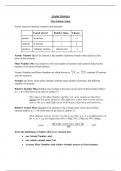
Atoms consist of protons, neutrons and electrons:
Found where? Relative Mass Charge
proton in nucleus 1 +1
neutron in nucleus 1 0
electron ‘orbiting’ nucleus almost zero –1
Atomic Number (Z) of an element is the number of protons found in the nucleus of one
atom of that element.
Mass Number (M) of an element is the total number of protons and neutrons found in the
nucleus of one atom of that element.
M 238
Atomic Numbers and Mass Numbers are often shown as Z X, so 92 U contains 92 protons
and 146 neutrons.
Isotopes are atoms of the same element, with the same number of protons, but different
numbers of neutrons.
Relative Isotopic Mass (r.i.m.) of an isotope is the mass of one atom of that isotope relative
to 1/12 th of the mass of an atom of carbon-12.
The values of the Mass Number and the r.i.m. of an isotope are therefore
almost (but not quite) identical. (The difference comes from several sources,
such as the very small differences in the masses of protons and neutrons.)
Relative Atomic Mass (r.a.m.) of an element is the average mass of one atom of that
element relative to 1/12 th of the mass of an atom of carbon-12.
Most elements exist as isotopes, in which case the r.a.m. is a weighted mean of
the r.i.m.’s, e.g. for magnesium (80% 24Mg, 10% 25Mg and 10% 26Mg)...
(80 x 24) + (10 x 25) + (10 x 26)
r.a.m. = = 24.3
100
From the definitions, it follows that every element has:
• one Atomic Number, and
• one relative atomic mass, but
• as many Mass Numbers and relative isotopic masses as it has isotopes.
,Relative Molecular Mass (r.m.m.) of a compound is the average mass of one molecule of
that compound relative to 1/12 th of the mass of an atom of carbon-12.
From the definitions, it follows that the r.m.m. of a compound is the sum of the
r.a.m.’s of its constituent elements, e.g. for H2SO4...
r.m.m. = (2 x 1) + 32 + (4 x 16) = 98
• Define Atomic Number, Mass Number, r.i.m., r.a.m. and r.m.m.
• Calculate r.a.m.’s from r.i.m.’s, given suitable data.
• Calculate r.m.m.’s from r.a.m.’s.
You should M
be able to: • Represent isotopes as Z X .
Mass Spectrometry See also
The best direct evidence for the relative masses of atoms and molecules
comes from mass spectrometry. A simplified mass spectrometer is shown
below. (Be able to draw and label such a diagram.)
Section
2.1
negatively variable field
charged magnet
electron slits
source
— mass
collector spectrum
source
to
+ vacuum
pump slit
ionisation amplifier
chamber
, The sequence of operation is:
Source The atoms/molecules of the sample are vaporised (with a little heat, if
necessary).
Ionisation The molecules are bombarded by a stream of high energy electrons.
Chamber The electrons have too much energy to be captured (giving a negative
(Bombardment ion), but they may ‘knock’ another electron out of a molecule, giving a
Chamber) positive ion.
bombardment by high
M — e– M+
energy electrons
neutral positive
atom or ion
molecule
Note: • The ‘usual rules’ about the stability of ions (full outer shell,
etc.) are irrelevant here. There is so much energy in the
bombardment chamber that even ions such as Ne+ are easily
formed.
• Only a small fraction of the molecules are ionised. Most are not
‘hit’ by an electron at all, and very few are hit twice to give
M2+ ions.
Negatively The M+ ions accelerate towards the negative plates, so all ions of the
Charged Plates same mass reach the same velocity. The slits in the plates allow a
(with Slits) narrow, straight beam of ions to pass through into the variable
magnetic field.
Variable Ions are deflected by magnetic fields in much the same way as they are
Magnetic Field deflected by positive and negative plates. For ions moving at the same
speed,...
e where e = the charge on the ion, and
deflection α m m = mass of the ion (r.i.m.)
Since (almost) all the ions have the same (1+) charge, the magnetic
field separates the ions into beams of the same mass, with high masses
being deflected least and low masses deflected most.
Collector Ions of a particular mass hit the collector, where they are recorded.
(There is another slit, just in front of the collector, to filter out ions of
slightly higher or lower mass.)
Vacuum Pump The mass spectrometer must operate at high vacuum, or the collisions
between the ions and the molecules in the air will make the results
meaningless. The pump also sweeps out any atoms or molecules of the
sample that are not ionised, or ions with the ‘wrong’ mass. (These
become neutral when they strike the side of the spectrometer).
The Nuclear Atom
Atoms consist of protons, neutrons and electrons:
Found where? Relative Mass Charge
proton in nucleus 1 +1
neutron in nucleus 1 0
electron ‘orbiting’ nucleus almost zero –1
Atomic Number (Z) of an element is the number of protons found in the nucleus of one
atom of that element.
Mass Number (M) of an element is the total number of protons and neutrons found in the
nucleus of one atom of that element.
M 238
Atomic Numbers and Mass Numbers are often shown as Z X, so 92 U contains 92 protons
and 146 neutrons.
Isotopes are atoms of the same element, with the same number of protons, but different
numbers of neutrons.
Relative Isotopic Mass (r.i.m.) of an isotope is the mass of one atom of that isotope relative
to 1/12 th of the mass of an atom of carbon-12.
The values of the Mass Number and the r.i.m. of an isotope are therefore
almost (but not quite) identical. (The difference comes from several sources,
such as the very small differences in the masses of protons and neutrons.)
Relative Atomic Mass (r.a.m.) of an element is the average mass of one atom of that
element relative to 1/12 th of the mass of an atom of carbon-12.
Most elements exist as isotopes, in which case the r.a.m. is a weighted mean of
the r.i.m.’s, e.g. for magnesium (80% 24Mg, 10% 25Mg and 10% 26Mg)...
(80 x 24) + (10 x 25) + (10 x 26)
r.a.m. = = 24.3
100
From the definitions, it follows that every element has:
• one Atomic Number, and
• one relative atomic mass, but
• as many Mass Numbers and relative isotopic masses as it has isotopes.
,Relative Molecular Mass (r.m.m.) of a compound is the average mass of one molecule of
that compound relative to 1/12 th of the mass of an atom of carbon-12.
From the definitions, it follows that the r.m.m. of a compound is the sum of the
r.a.m.’s of its constituent elements, e.g. for H2SO4...
r.m.m. = (2 x 1) + 32 + (4 x 16) = 98
• Define Atomic Number, Mass Number, r.i.m., r.a.m. and r.m.m.
• Calculate r.a.m.’s from r.i.m.’s, given suitable data.
• Calculate r.m.m.’s from r.a.m.’s.
You should M
be able to: • Represent isotopes as Z X .
Mass Spectrometry See also
The best direct evidence for the relative masses of atoms and molecules
comes from mass spectrometry. A simplified mass spectrometer is shown
below. (Be able to draw and label such a diagram.)
Section
2.1
negatively variable field
charged magnet
electron slits
source
— mass
collector spectrum
source
to
+ vacuum
pump slit
ionisation amplifier
chamber
, The sequence of operation is:
Source The atoms/molecules of the sample are vaporised (with a little heat, if
necessary).
Ionisation The molecules are bombarded by a stream of high energy electrons.
Chamber The electrons have too much energy to be captured (giving a negative
(Bombardment ion), but they may ‘knock’ another electron out of a molecule, giving a
Chamber) positive ion.
bombardment by high
M — e– M+
energy electrons
neutral positive
atom or ion
molecule
Note: • The ‘usual rules’ about the stability of ions (full outer shell,
etc.) are irrelevant here. There is so much energy in the
bombardment chamber that even ions such as Ne+ are easily
formed.
• Only a small fraction of the molecules are ionised. Most are not
‘hit’ by an electron at all, and very few are hit twice to give
M2+ ions.
Negatively The M+ ions accelerate towards the negative plates, so all ions of the
Charged Plates same mass reach the same velocity. The slits in the plates allow a
(with Slits) narrow, straight beam of ions to pass through into the variable
magnetic field.
Variable Ions are deflected by magnetic fields in much the same way as they are
Magnetic Field deflected by positive and negative plates. For ions moving at the same
speed,...
e where e = the charge on the ion, and
deflection α m m = mass of the ion (r.i.m.)
Since (almost) all the ions have the same (1+) charge, the magnetic
field separates the ions into beams of the same mass, with high masses
being deflected least and low masses deflected most.
Collector Ions of a particular mass hit the collector, where they are recorded.
(There is another slit, just in front of the collector, to filter out ions of
slightly higher or lower mass.)
Vacuum Pump The mass spectrometer must operate at high vacuum, or the collisions
between the ions and the molecules in the air will make the results
meaningless. The pump also sweeps out any atoms or molecules of the
sample that are not ionised, or ions with the ‘wrong’ mass. (These
become neutral when they strike the side of the spectrometer).


